Dewatering pump for flood control
Heavy rainfall can quickly turn a construction site into a waterlogged work area. Excavations may fill with rainwater, groundwater can rise, and muddy conditions can delay machinery, affect site access and interrupt construction activities.
For contractors working in Saudi Arabia and the UAE, choosing the right dewatering pump is an important part of site preparation and water management. Although many projects operate in dry climates, intense rainfall can create sudden drainage challenges, particularly in excavations, urban developments, road projects and low-lying areas.
But how do you choose the right pump? Should you select a 6-inch, 8-inch or 12-inch dewatering pump? Is a diesel-powered pump better than an electric model? And how much pumping capacity does your site actually need?
The answer depends on the volume of water, pumping height, pipe layout, water quality and operating conditions.
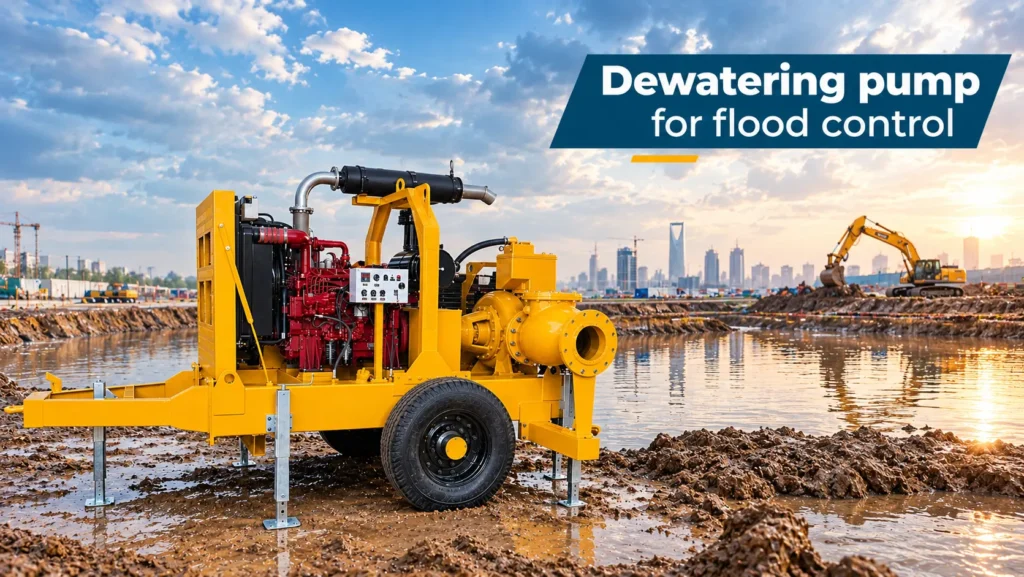
In this guide, we explain how to select a suitable Dewatering pump for flood control and construction sites, helping you make a more informed equipment decision.
What Is a Dewatering Pump?
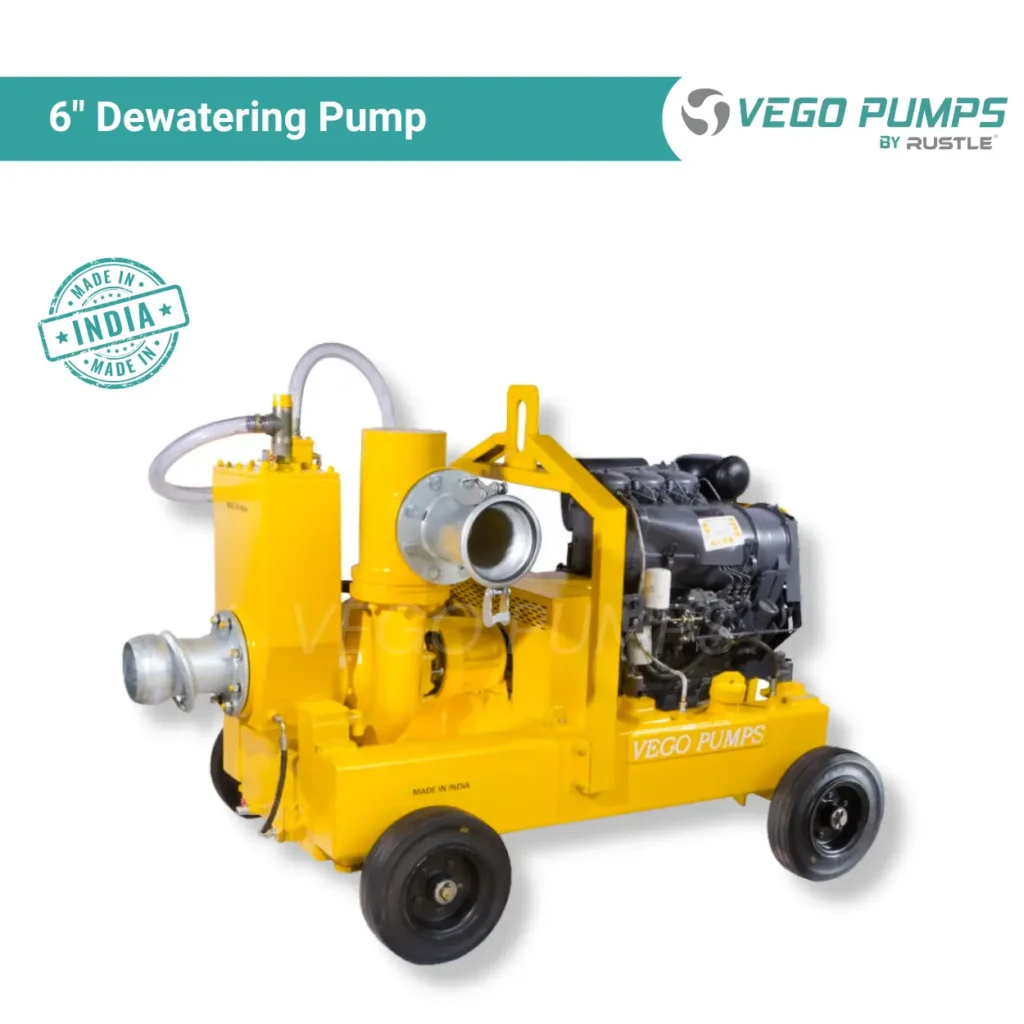
A dewatering pump is designed to remove unwanted water from areas such as construction excavations, mines, trenches, basements, industrial sites and flooded roads.
Depending on the pump design, it can handle relatively clean water, muddy water or water containing suspended solids.
For construction projects, dewatering helps maintain workable ground conditions and supports safer access for workers and equipment. In flood response applications, a suitably sized pump can help remove accumulated water and support drainage operations.
Common dewatering pump types include:
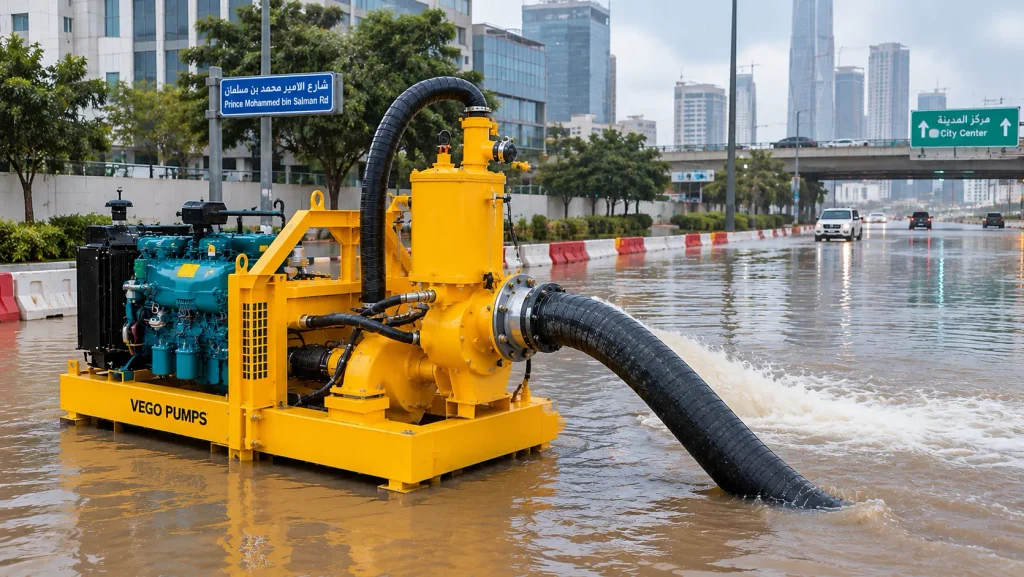
- Self-priming centrifugal pumps: Useful for temporary site drainage and applications requiring suction from a water source, subject to the pump’s priming and suction limits.
- High-capacity dewatering pumps: Suitable for applications requiring large water volumes to be moved efficiently.
- Submersible pumps: Designed to operate while submerged in water, depending on their construction and application.
- Solids-handling pumps: Designed for water containing specified quantities and sizes of suspended solids.
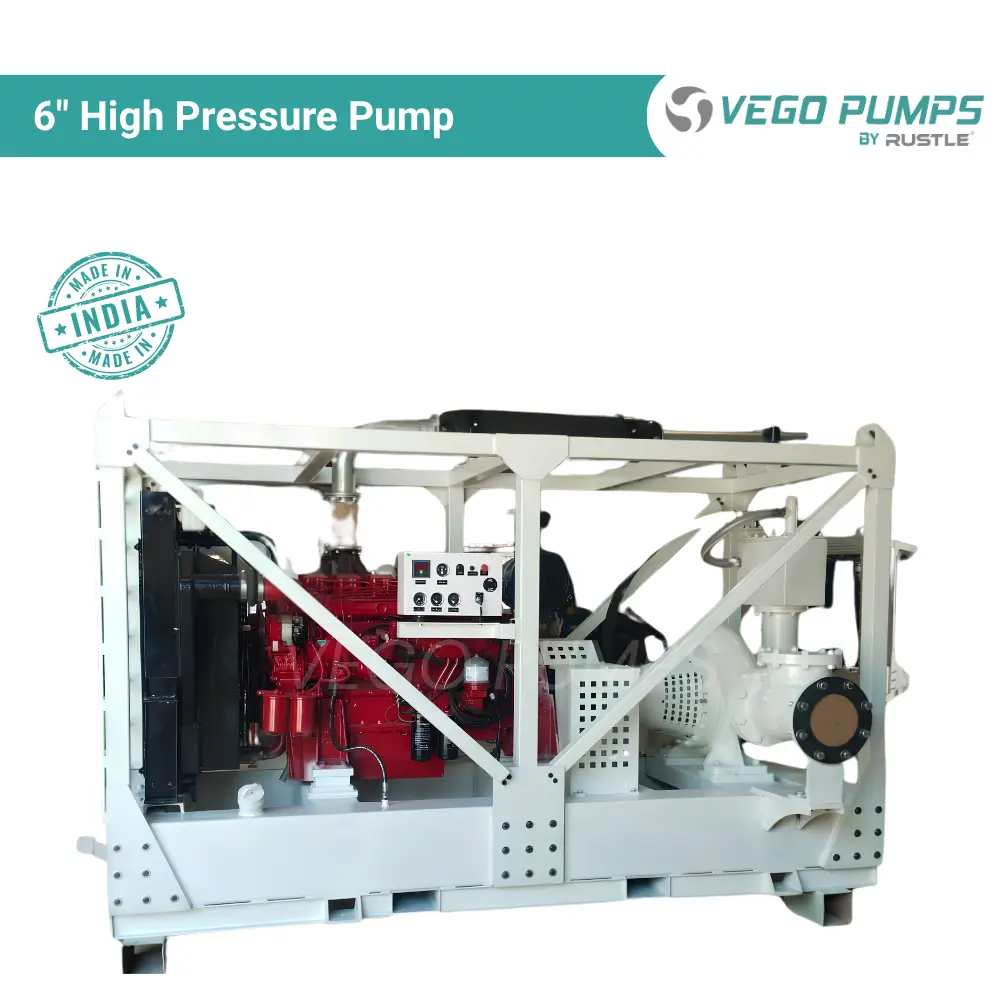
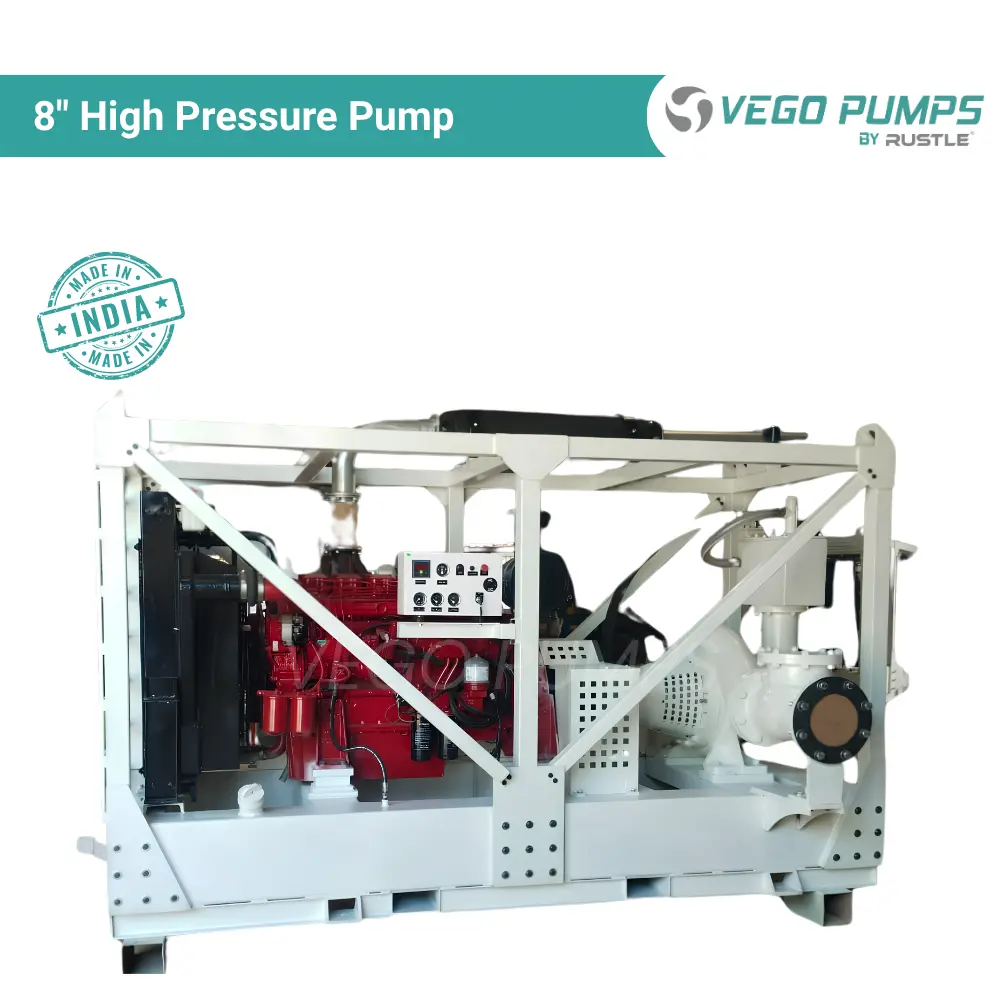
- High-pressure pumps: Suitable where the application requires greater discharge pressure or pumping head.
Choosing the right type starts with understanding the water you need to remove and the conditions in which the pump will operate.
1. Calculate the Required Flow Rate
The first step in selecting a dewatering pump is estimating how much water needs to be removed and how quickly the site must be drained.
Pump capacity is commonly expressed in litres per minute (L/min), litres per second (L/s) or cubic metres per hour (m³/h).
For example, a small excavation with limited water accumulation may need a different pump from a large infrastructure project receiving continuous groundwater inflow and rainfall runoff.
To estimate the required flow rate, consider:
- The size and depth of the excavation.
- The expected rainfall runoff entering the area.
- Groundwater seepage or other continuous inflows.
- The volume of standing water that must be removed.
- The time available to complete the drainage operation.
A simple starting calculation is:
Required flow rate = Water volume to remove ÷ Available pumping time
For example, if an excavation contains 300 m³ of water and the target is to remove it within 5 hours, the theoretical average flow rate is:
300 m³ ÷ 5 hours = 60 m³/h.
This is only a starting estimate. Actual pump selection must also account for ongoing inflow, total pumping head, pipe friction, pump performance and operating conditions.
For heavy rainfall or emergency flood control, allow for changing water inflows and confirm the design capacity with a qualified engineer.
2. Check the Total Head, Not Just the Pump Capacity
A pump’s flow rate alone does not tell you whether it can perform effectively at your site.
You also need to calculate the total dynamic head (TDH), which represents the total resistance the pump must overcome to move water through the system.
Total dynamic head generally includes:
- Static head: The vertical difference between the water source and discharge point.
- Friction losses: Resistance caused by water flowing through pipes, hoses, bends, valves and fittings.
- Other system losses: Additional resistance from the discharge arrangement and connected equipment.
For example, a pump may be capable of moving a large volume of water under low-head conditions, but its flow can decrease when pumping water through a long discharge hose or to a much higher outlet.
Always check the manufacturer’s pump performance curve at your required flow rate and total dynamic head.
For construction and flood-control projects in Riyadh, Jeddah, Dammam, Dubai and Abu Dhabi, the actual discharge route can significantly influence the pump configuration you need.
3. Choose the Correct Pump Size: 6-Inch, 8-Inch or 12-Inch
The correct pump size depends on the required flow rate, head, pipe arrangement and water conditions. A larger discharge connection does not automatically mean better performance for every application.
| Pump size | Potential applications | Important considerations |
|---|---|---|
| 6-inch dewatering pump | Construction excavations, drainage and medium-scale site dewatering | Confirm required flow, head and solids-handling capability |
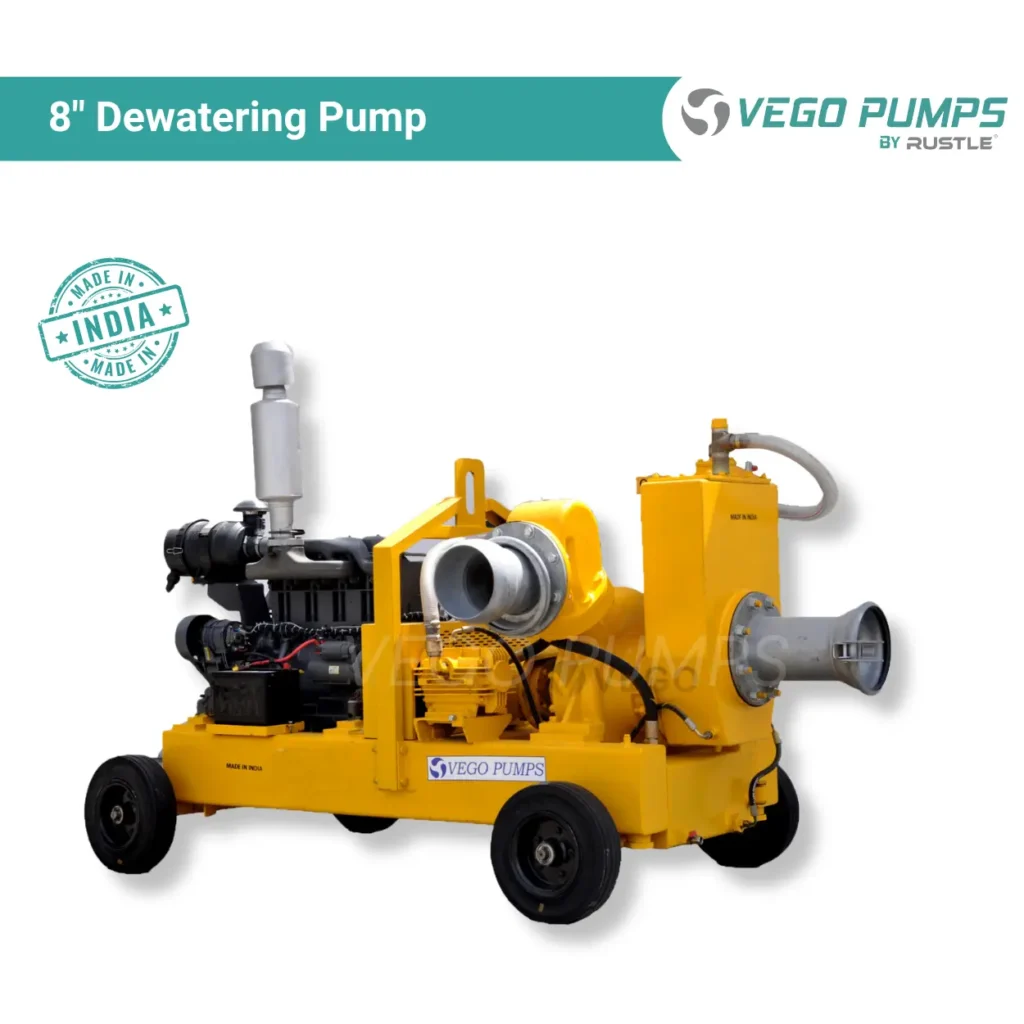
| 8-inch dewatering pump | Larger excavations, infrastructure projects and higher-volume drainage | Check the performance curve and discharge pipeline requirements |
| 12-inch dewatering pump | Large infrastructure works, major drainage operations and high-volume water removal | Requires appropriate pipework, discharge arrangements and site planning |
These are general application examples, not fixed capacity ratings. Actual performance varies by model, impeller design, engine or motor, pump speed and operating head.
If your project has unusually high water inflow or specific discharge requirements, a customised pumping solution may be worth considering.
4. Select the Right Pump for Rainwater, Muddy Water or Floodwater
Not all water is the same. A pump suitable for relatively clean rainwater may not be appropriate for water containing sand, silt, debris or construction sediment.
Before purchasing a pump, identify what the water contains.
Rainwater and relatively clean drainage water: A suitable centrifugal dewatering pump may be appropriate, provided the required flow and head are within its operating range.
Muddy water and suspended solids: Check the maximum solids passage, impeller design, casing construction and wear resistance.
Water containing larger debris: Select equipment specifically designed for the type and size of solids expected. Remove oversized debris where necessary to protect the pumping system.
Corrosive or contaminated water: Verify the chemical compatibility of wetted materials and ensure the selected pump is suitable for the liquid.
For projects where muddy water is common, such as excavation and mining operations, solids-handling capability should be a key selection criterion rather than an afterthought.
5. Diesel vs Electric Dewatering Pumps
The power source is another important consideration, particularly when a site needs continuous pumping during heavy rainfall.
| Factor | Diesel-powered pump | Electric-powered pump |
|---|---|---|
| Power supply | Uses diesel fuel | Requires a suitable electrical supply or generator |
| Mobility | Useful for remote and temporary sites | Depends on electrical infrastructure and cable arrangements |
| Operating costs | Fuel, engine servicing and maintenance | Electricity, electrical maintenance and supply costs |
| Typical advantage | Independent operation where grid power is unavailable | Can be economical where reliable electricity is available |
| Key consideration | Fuel availability, ventilation and exhaust management | Electrical protection, cable routing and safe installation |
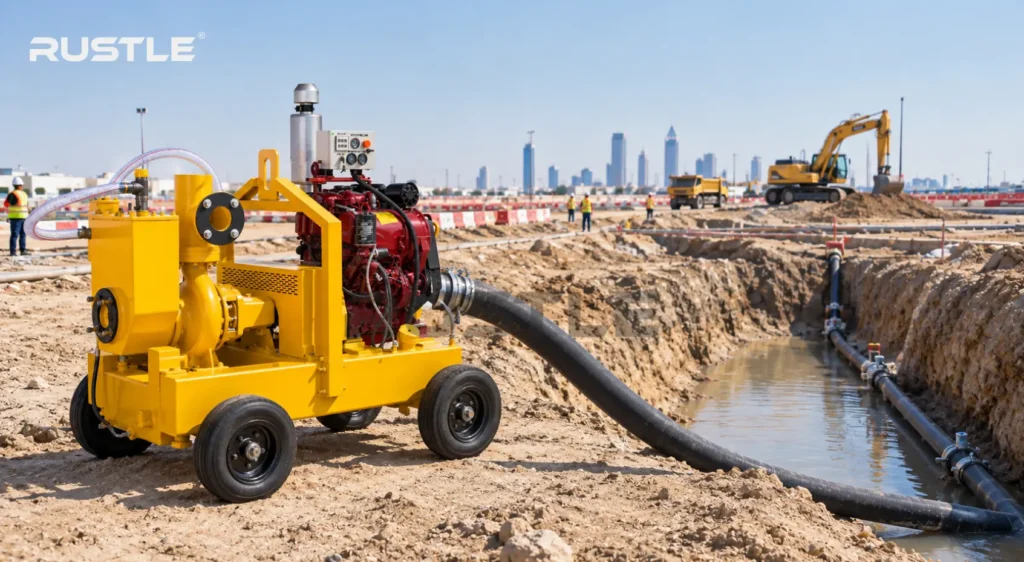
For remote construction sites and emergency flood response, a diesel-powered self-priming dewatering pump can provide operational flexibility when grid electricity is unavailable.
Electric pumps may be attractive for sites with a reliable power supply and suitable electrical infrastructure.
Compare the expected operating hours, energy consumption, maintenance requirements and site conditions before making your decision.
6. Consider Priming, Installation and Continuous Operation
For temporary construction drainage, installation and startup requirements can be just as important as rated pump capacity.
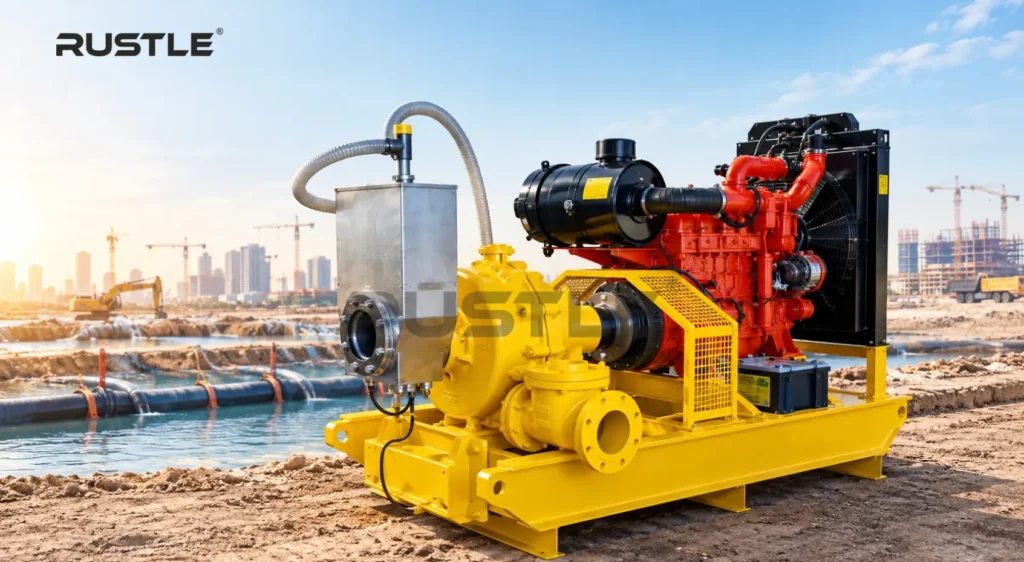
A self-priming pump is designed to evacuate air from its suction arrangement under specified conditions, allowing it to establish suction without manual filling of the entire suction line each time, provided the pump and system are configured correctly.
However, self-priming does not mean unlimited suction lift or dry running. Follow the manufacturer’s priming instructions and operating limits.
Before starting the pump, check:
- The suction hose is suitable, airtight and correctly installed.
- The suction strainer is appropriate for the water conditions.
- The discharge hose and connections can withstand the expected pressure.
- The pump is positioned on a stable surface.
- The discharge route will not cause water to return to the excavation.
- Routine inspection and maintenance can be carried out safely.
For prolonged operation, confirm the pump’s rated duty, cooling requirements, fuel or power arrangements and maintenance intervals. Floodwater removal should never be treated as a substitute for assessing excavation stability or other site hazards.
7. What Should Buyers in Saudi Arabia and the UAE Consider?
For construction and infrastructure projects across Saudi Arabia and the UAE, equipment selection should reflect local project requirements rather than relying on a single standard configuration.
Construction projects in Saudi Arabia
Contractors working in Riyadh, Jeddah and Dammam may need dewatering solutions for excavations, roadworks, infrastructure developments and temporary drainage.
When evaluating a dewatering pump supplier in Saudi Arabia, consider equipment availability, technical support, spare parts, delivery arrangements and the ability to meet your required flow and head.
Construction projects in the UAE
Projects in Dubai, Abu Dhabi and other UAE locations may require temporary drainage for building foundations, road construction, utility trenches and infrastructure works.
Assess expected water inflow, discharge arrangements, site access and power availability. Where pumping is required during intense rainfall, ensure the system is designed for the anticipated inflow and the receiving drainage network can safely accept the discharged water.
For both markets, buyers should confirm applicable project specifications, safety requirements and environmental rules governing discharge water.
8. How to Compare Dewatering Pump Suppliers
Choosing a reliable supplier involves more than comparing quotations.
Before placing an order, ask for the following information:
- Pump performance curve: Confirms expected flow at the required head.
- Technical datasheet: Includes pump type, speed, materials and operating limits.
- Solids-handling details: States the permitted solids size and relevant liquid conditions.
- Power and fuel information: Helps estimate running costs.
- Maintenance and spare parts support: Important for projects where downtime is expensive.
- Customisation options: Useful where standard pump configurations do not match site requirements.
- Documentation and warranty: Check the terms and documents supplied with the equipment.
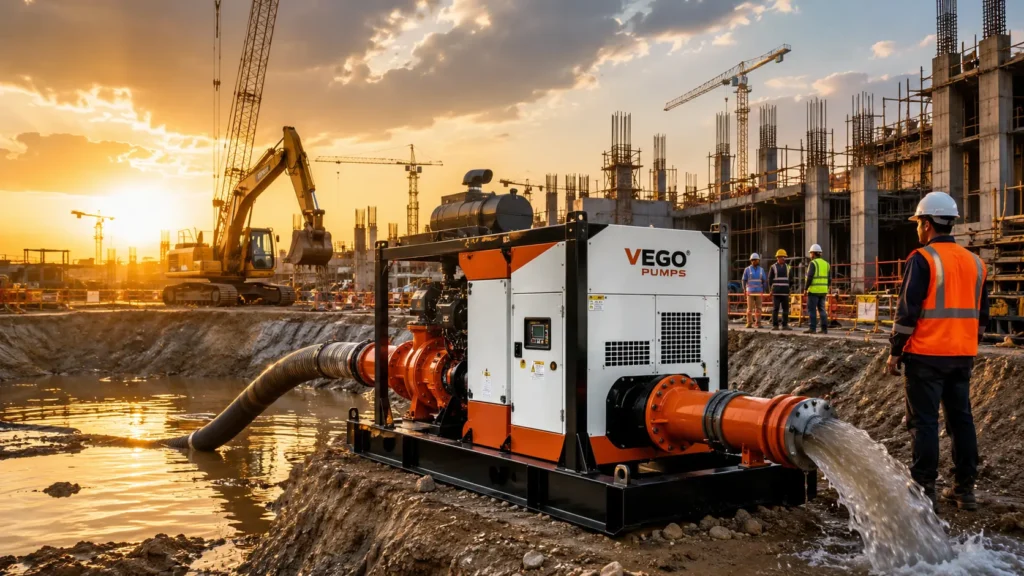
RUSTLE Dynamics offers VEGO industrial dewatering pump solutions for construction, drainage and other demanding water-management applications. Available configurations should be assessed against the project’s actual technical requirements.
Frequently Asked Questions
Which dewatering pump is best for heavy rainfall?
The best pump depends on the volume of incoming water, required drainage time, total dynamic head, solids content and available power. Calculate the expected inflow and confirm the pump’s performance at the required operating point.
What size dewatering pump is suitable for a construction site?
A 6-inch, 8-inch or 12-inch pump may be suitable depending on the site’s water volume, flow requirements, head and pipeline arrangement. Select the size based on the manufacturer’s performance data rather than connection diameter alone.
Is a self-priming dewatering pump suitable for flood control?
A suitably rated self-priming pump can be useful for floodwater removal where the suction arrangement, solids content, flow rate and head are within its operating limits. Heavy debris may require a different pump type or suitable debris management.
Are diesel dewatering pumps suitable for remote sites in Saudi Arabia?
Diesel-powered pumps can be suitable where grid electricity is unavailable and fuel can be supplied safely. Consider fuel consumption, maintenance, ventilation, noise and the pump’s required duty cycle.
How do I calculate dewatering pump capacity?
Divide the volume of water to be removed by the available pumping time to estimate the average flow rate. Then account for ongoing inflow, total dynamic head, friction losses and the pump’s actual performance curve.
Where can I find dewatering pumps for projects in the UAE?
Industrial buyers should compare suppliers based on verified pump performance, technical documentation, service support, spare parts availability and delivery arrangements. Confirm that the selected model matches the application’s operating conditions.
Conclusion: Choose a Dewatering Pump That Matches Your Site
Choosing the right dewatering pump for flood control starts with understanding the water you need to remove, how quickly it must be removed and where it will be discharged.
Calculate the required flow rate, determine the total dynamic head, check solids-handling capability and select a suitable power source. Then verify the complete system against the manufacturer’s performance data.
For contractors in Saudi Arabia and the UAE, the right pump configuration can support more effective site drainage during heavy rainfall, construction activities and flood-control operations.
Looking for a dewatering pump for your next project?
RUSTLE Dynamics offers VEGO dewatering pump solutions, including 6-inch to 12-inch options and customised configurations, subject to application requirements.
Contact our team to discuss your project requirements and identify a suitable pumping solution.
Website: https://rustledynamics.com/
Email: sales@rustledynamics.com
Phone: +91 99942 04834