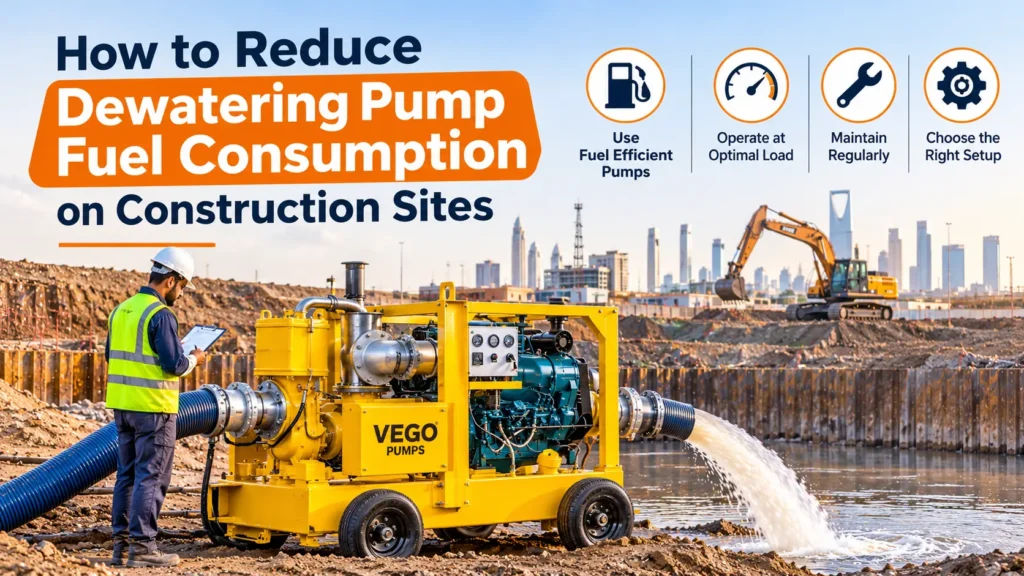
Fuel consumption is an important operating cost for construction and mining projects, especially when dewatering pumps need to operate for extended hours. On large construction sites, pumps may run throughout the day and night to remove groundwater, rainwater, and accumulated water from excavations, foundations, and trenches.
For contractors using diesel-powered equipment, even a small improvement in fuel efficiency can make a difference to overall project operating costs.
However, reducing fuel consumption does not simply mean running a pump at a lower speed or switching it off whenever possible. The real objective is to achieve the required water discharge using the right pump capacity, suitable engine power, and an efficient pumping arrangement.
In countries such as Saudi Arabia and the UAE, construction projects often operate under demanding conditions, including high temperatures, dusty environments, large excavation areas, and extended working schedules. These factors make proper pump selection and maintenance particularly important.
In this guide, we explain practical ways to reduce dewatering pump fuel consumption while maintaining the pumping performance required for construction, mining, and infrastructure projects.
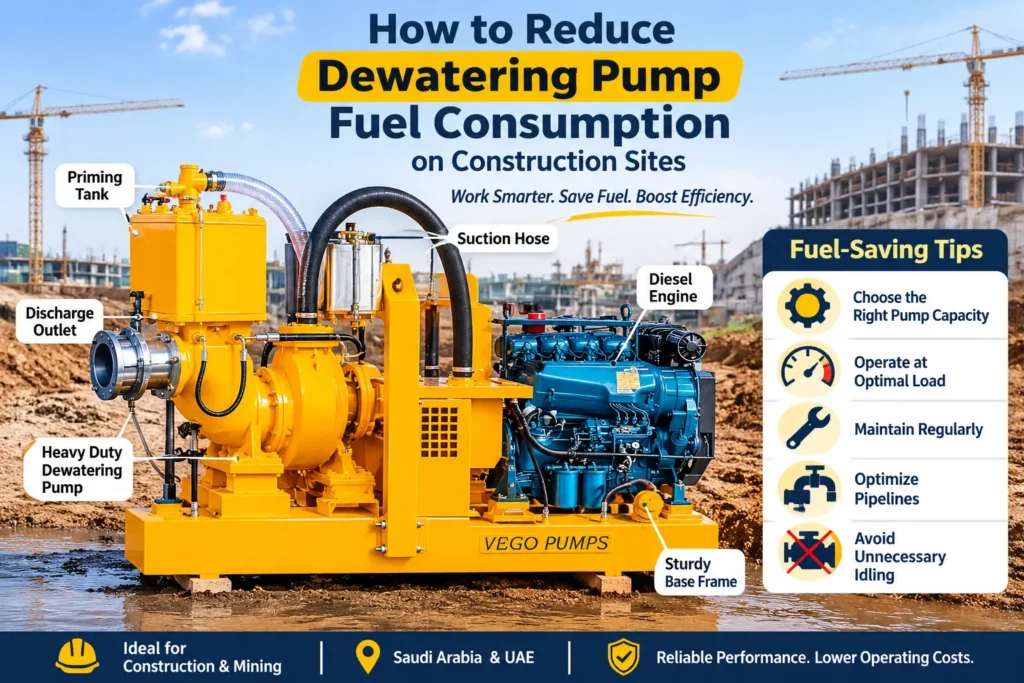
1. Select the Right Dewatering Pump Capacity
One of the most common reasons for unnecessary fuel consumption is using a pump that does not match the actual site requirement.
A pump with insufficient capacity may take longer to remove accumulated water, resulting in extended engine operating hours. On the other hand, selecting an unnecessarily large pump can increase fuel consumption and operating costs.
Before purchasing industrial dewatering pumps, consider:
- Required water discharge in m³/hr.
- Total pumping head.
- Suction lift requirements.
- Discharge pipeline length and diameter.
- Type of water being pumped.
- Expected operating hours.
For example, a small foundation excavation and a large infrastructure drainage project will have different pumping requirements.
A properly selected high-capacity dewatering pump should match the actual water inflow and discharge conditions rather than simply offering the highest possible flow rate.
Working with an experienced dewatering pump manufacturer can help contractors identify a suitable pump configuration for their application.
2. Operate Diesel Dewatering Pumps at the Recommended Engine Speed
Engine speed plays an important role in fuel consumption.
Running diesel dewatering pumps at an unnecessarily high RPM may increase fuel consumption without providing a useful improvement in water discharge.
The engine and pump should operate within the manufacturer’s recommended operating range.
For better operating efficiency:
- Follow the recommended engine RPM.
- Avoid unnecessary acceleration.
- Monitor engine temperature and operating conditions.
- Check the pump’s discharge performance.
- Avoid operating outside the recommended load range.
Do not reduce engine speed blindly. Pump speed affects both flow rate and discharge head. Always confirm that the required pumping performance is maintained.
For construction contractors using diesel water pumps for extended periods, monitoring engine speed and operating conditions can help identify inefficient operation.
3. Maintain Suction and Discharge Pipelines Properly
The pumping system is not just the pump and engine. Suction and discharge pipelines also affect overall performance.
Incorrect pipe sizing, unnecessary bends, damaged hoses, and leakage can increase friction losses and reduce the water delivered at the discharge point.
When the system experiences excessive resistance, the pump may not deliver the expected flow rate under its intended operating conditions.
To improve pumping efficiency:
- Use suitable suction and discharge pipe diameters.
- Avoid unnecessary bends and sharp turns.
- Check suction hoses for damage and air leakage.
- Inspect connections, clamps, and fittings.
- Keep suction strainers clean.
- Avoid unnecessarily long discharge routes.
- Check discharge lines for blockages.
For large construction sites in Riyadh, Dubai, and Abu Dhabi, where pumps may be installed some distance from the discharge location, proper pipeline planning is especially important.
A well-designed pumping arrangement can help reduce avoidable system losses and improve overall operating efficiency.
4. Perform Regular Pump and Engine Maintenance
Regular maintenance is essential for controlling fuel consumption and maintaining reliable performance.
A poorly maintained diesel engine may consume more fuel, produce excessive smoke, or struggle to deliver its expected power.
Similarly, worn pump components and blocked passages can affect pumping performance.
Construction contractors should follow the manufacturer’s maintenance schedule and inspect important components regularly.
Important maintenance checks include:
- Clean or replace air filters as recommended.
- Check fuel filters and fuel lines.
- Inspect engine oil and coolant levels.
- Check belts, hoses, and connections.
- Inspect pump impellers for wear or damage.
- Check mechanical seals for leakage.
- Clean suction strainers.
- Monitor unusual vibration, noise, and overheating.
In Saudi Arabia and the UAE, dust accumulation can be a particular concern for diesel-powered equipment. Air filters may require more frequent inspection depending on site conditions.
For heavy-duty dewatering pumps operating in dusty environments, preventive maintenance helps protect the engine and maintain consistent performance.
5. Avoid Unnecessary Engine Idling
Leaving a diesel pump engine running when pumping is not required can waste fuel.
On some construction sites, pumps remain switched on even when water levels are low or the excavation does not currently require continuous pumping.
This may result in unnecessary fuel consumption and additional engine operating hours.
A better approach is to monitor water levels and adjust pump operation according to the actual site requirement.
For applications with changing water levels, suitable automatic dewatering pump arrangements with level sensors or control systems may help manage operation.
However, automatic controls must be selected according to the application and installed correctly.
For critical groundwater management or continuous dewatering operations, contractors should maintain the required pumping capacity and standby arrangements. Do not interrupt essential pumping just to save fuel.
6. Choose the Right Pump for the Type of Application
Different construction and mining applications require different pumping arrangements.
Using an unsuitable pump for the liquid or site conditions can reduce efficiency and increase maintenance requirements.
Diesel Dewatering Pumps
Diesel dewatering pumps are useful for remote construction sites where a fixed electricity supply is unavailable.
They are commonly used for excavation drainage, mining operations, floodwater removal, and infrastructure projects.
Engine capacity and pump performance should be matched to the required operating conditions.
Self-Priming Dewatering Pumps
Self priming dewatering pumps are useful for applications where suction conditions require the pump to remove air from the suction line and establish pumping.
They are commonly used in temporary drainage and construction water removal.
Correct initial priming, suitable suction arrangements, and proper maintenance are important for reliable operation.
Portable Dewatering Pumps
Portable dewatering pumps are useful when contractors need to move pumping equipment between different excavation areas or project locations.
Their mobility can simplify equipment deployment and reduce unnecessary changes to the pumping arrangement.
Heavy-Duty Dewatering Pumps
Heavy-duty dewatering pumps are suitable for demanding construction and mining applications involving large water volumes or challenging operating conditions.
The correct selection depends on liquid characteristics, solids content, required capacity, and total head.
Choosing the right pump for the actual application is more useful than selecting equipment based only on its size or engine power.
7. Consider Saudi Arabia and UAE Operating Conditions
Construction equipment operating in the Middle East must be selected and maintained according to local environmental conditions.
Projects in Riyadh, Jeddah, Dammam, Dubai, and Abu Dhabi may experience high ambient temperatures, dust exposure, and extended operating schedules.
These conditions can influence diesel engine performance and maintenance requirements.
Contractors should pay particular attention to:
Cooling systems: Check coolant levels, radiator cleanliness, and cooling system condition according to the engine manufacturer’s recommendations.
Air filtration: Dusty construction and mining sites can cause air filters to become dirty more quickly.
Fuel quality: Use the correct diesel fuel grade and follow the manufacturer’s fuel storage and filtration recommendations.
Operating hours: Monitor daily running hours and follow scheduled maintenance intervals.
Pump installation: Ensure the pump has adequate ventilation and is installed in a suitable location.
For projects associated with major infrastructure development and construction activities across Saudi Arabia and the UAE, proper equipment planning helps maintain reliable pumping operations.
8. Monitor Fuel Consumption and Pump Performance
One practical way to identify fuel wastage is to monitor fuel consumption alongside actual water discharge.
Simply checking how much diesel is used is not enough. Contractors should also understand how much water the pump removes during the same operating period.
Useful information to record includes:
- Daily diesel consumption in litres.
- Total engine operating hours.
- Actual water discharge.
- Pump operating speed.
- Suction and discharge conditions.
- Maintenance activities.
For example, if a pump consumes more fuel but delivers less water than expected, the issue may be related to pipeline restrictions, suction leakage, worn components, or unsuitable operating conditions.
A simple daily operating log can help site supervisors identify changes in performance before they become major problems.
Comparing fuel consumption per operating hour and, where reliable flow measurements are available, fuel consumption per cubic metre of water pumped can provide a more meaningful efficiency assessment.
9. Work With an Experienced Dewatering Pump Manufacturer
Reducing fuel consumption starts before the pump reaches the construction site.
Selecting equipment with the correct pump capacity, engine configuration, and pumping arrangement can help contractors avoid unnecessary operating costs.
An experienced dewatering pump manufacturer should be able to understand the project requirements and recommend a suitable solution.
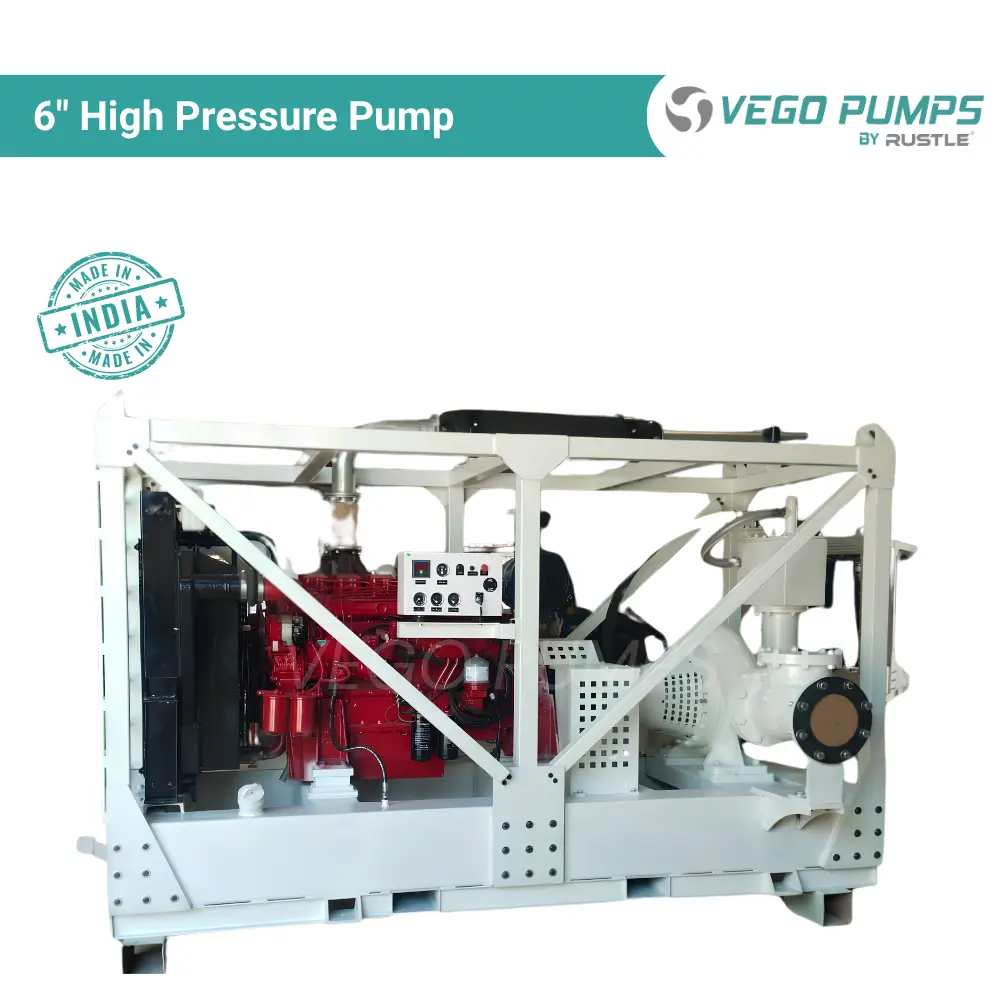
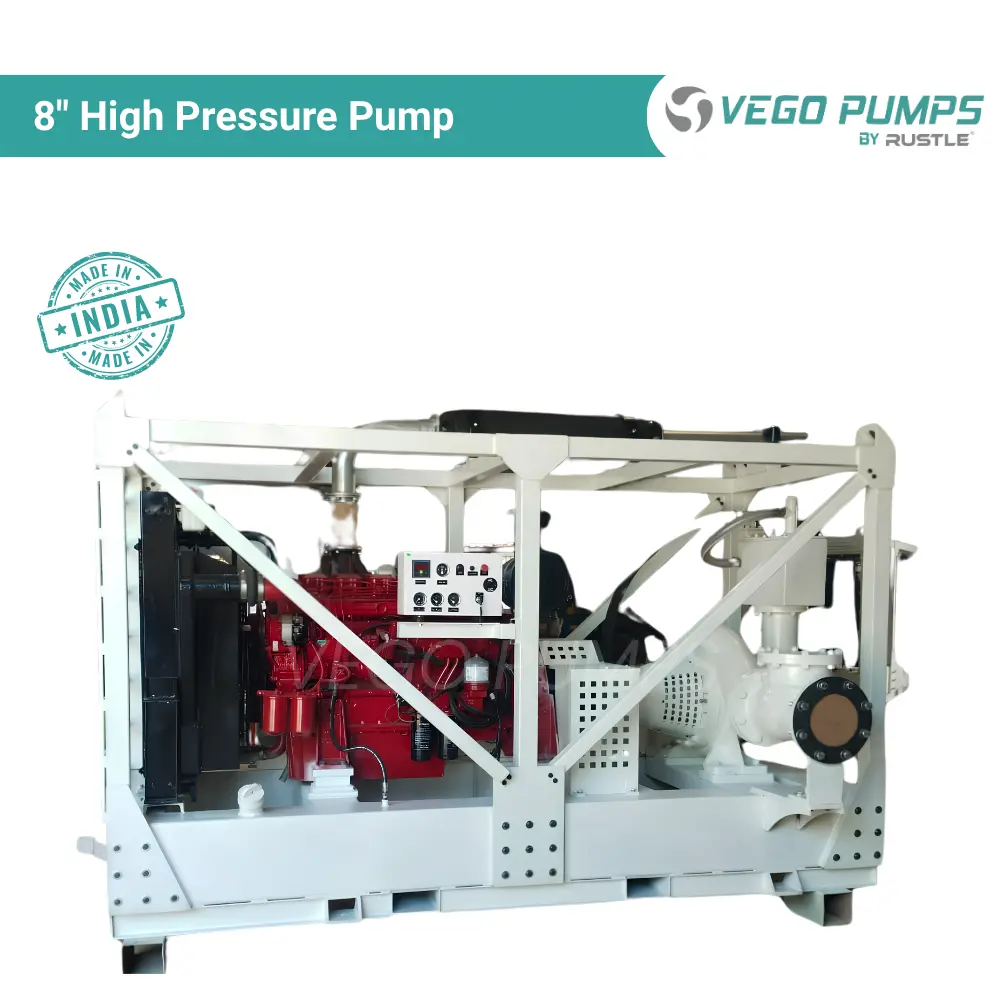
At RUSTLE Dynamics, we manufacture and supply VEGO industrial dewatering pumps for construction, mining, infrastructure, and water-removal applications.
Our range includes:
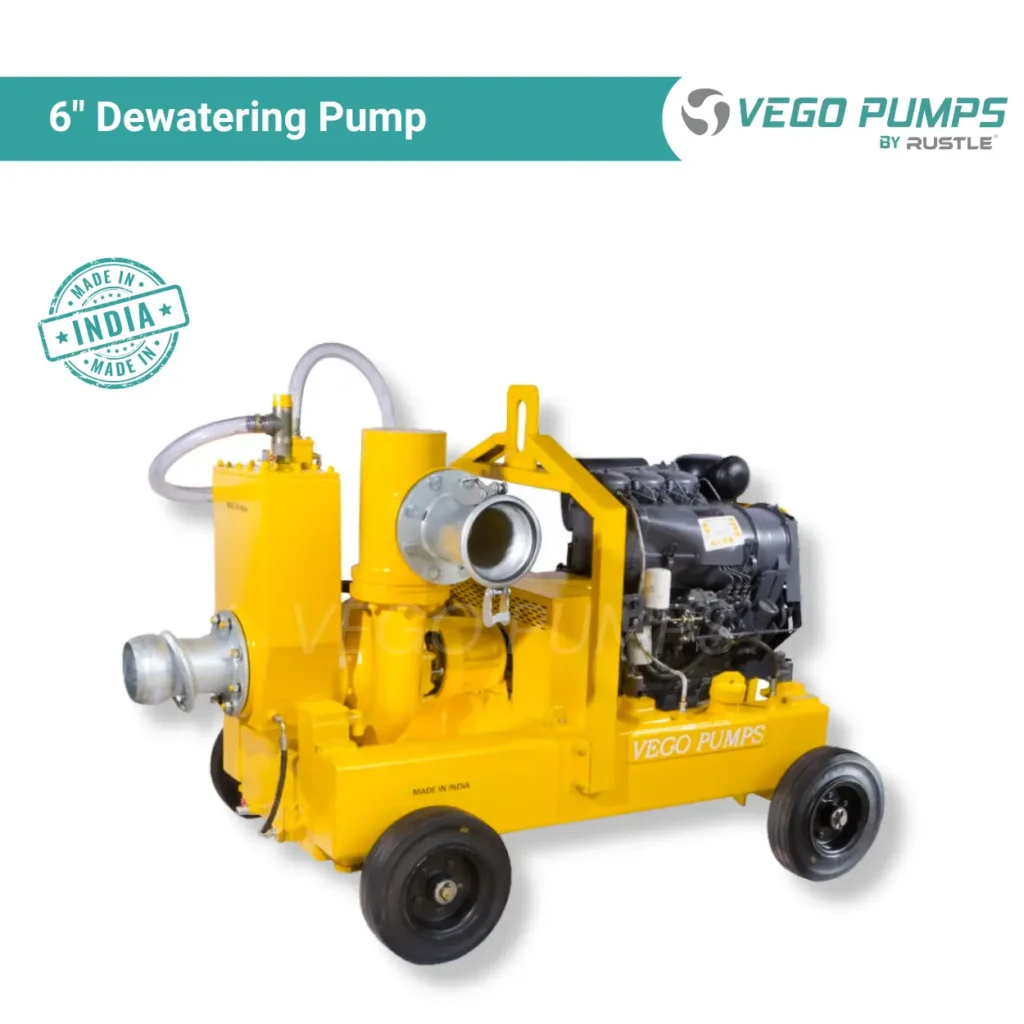
- 6-inch dewatering pumps.
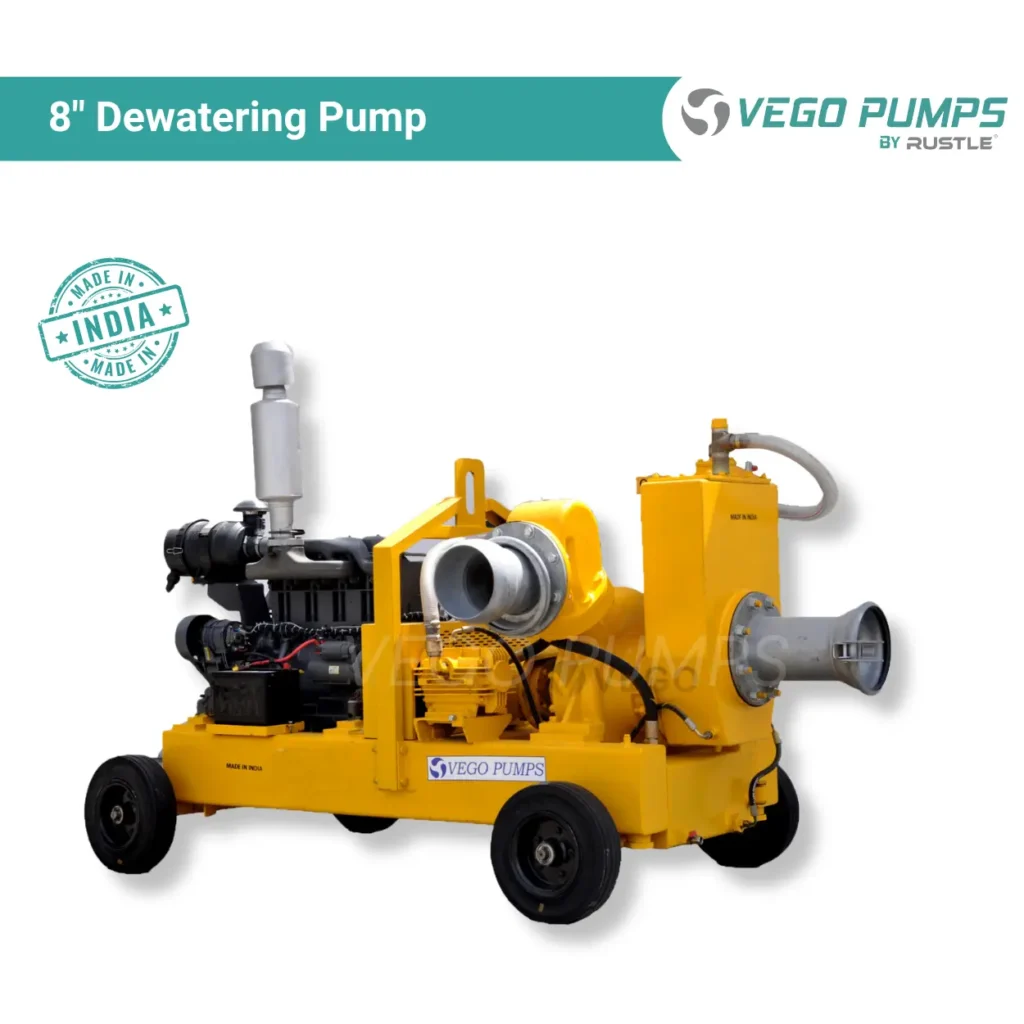
- 8-inch dewatering pumps.
- 12-inch dewatering pumps.
- Diesel-driven pumping solutions.
- Customised pump configurations based on project requirements.
Our team can discuss the required flow rate, discharge head, engine selection, and application requirements to help buyers identify a suitable pumping solution.
Whether you are managing a construction project in Riyadh, a mining operation in Saudi Arabia, or an infrastructure development in Dubai or Abu Dhabi, selecting the right pumping equipment is an important part of managing long-term operating costs.
Contact RUSTLE Dynamics to discuss your application and request technical specifications and a commercial quotation.
Frequently Asked Questions
1. How can I reduce diesel consumption in dewatering pumps?
Select the correct pump capacity, operate the engine within its recommended range, maintain suction and discharge pipelines, service the engine regularly, and avoid unnecessary idling.
2. Do larger dewatering pumps consume more fuel?
Not necessarily in every application. Fuel consumption depends on engine power, pump speed, operating load, hydraulic performance, and site conditions. An oversized pump may consume more fuel than necessary for a particular application.
3. Does pump maintenance help reduce fuel consumption?
Yes. Clean air filters, suitable fuel filtration, proper engine lubrication, and well-maintained pump components help maintain efficient operation and prevent avoidable performance losses.
4. Are diesel dewatering pumps suitable for 24/7 construction sites?
Diesel dewatering pumps can be suitable for extended construction operations when correctly selected, installed, monitored, and maintained according to the manufacturer’s operating instructions.
5. Which dewatering pump is suitable for construction projects in Saudi Arabia and the UAE?
The suitable pump depends on the required flow rate, total head, water characteristics, engine requirements, and operating conditions. Pump size should be selected based on the actual project application.
6. Can automatic dewatering pumps help reduce fuel consumption?
Automatic level-control arrangements can reduce unnecessary operation when water levels are low. However, control settings must maintain the required water removal and should not interrupt essential dewatering.
7. What information should I provide when requesting a dewatering pump quotation?
Provide the required flow rate, discharge head, suction lift, water type, solids content, pipe diameter, operating hours, and preferred power source. This information helps the manufacturer recommend a suitable pump.
Conclusion
Fuel consumption is an important consideration when operating dewatering pumps on construction and mining sites. However, reducing diesel usage should never come at the expense of the required pumping performance.
The best approach is to select the correct pump capacity, maintain the engine and pumping system, optimise pipeline arrangements, avoid unnecessary idling, and monitor actual fuel consumption.
For construction contractors and industrial buyers in Saudi Arabia and the UAE, these practices can help improve equipment utilisation and manage long-term operating costs.
RUSTLE Dynamics – VEGO Industrial Dewatering Pumps
Looking for reliable diesel dewatering pumps for your next construction, mining, or infrastructure project?
Contact our team to discuss your pumping requirements, explore our 6-inch to 12-inch pump range, and request a commercial quotation.
Website: https://rustledynamics.com/
Phone: +91 99942 04834