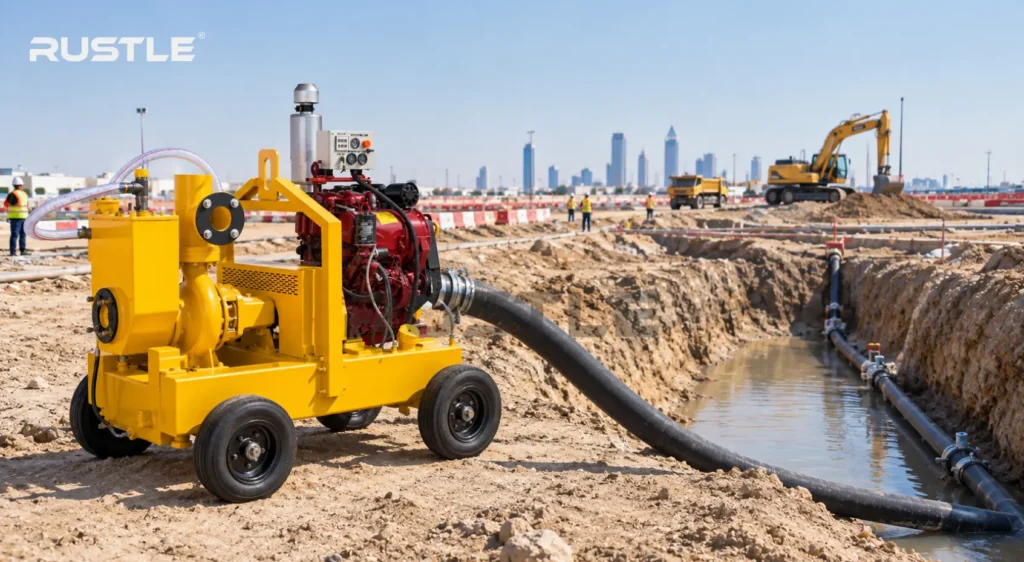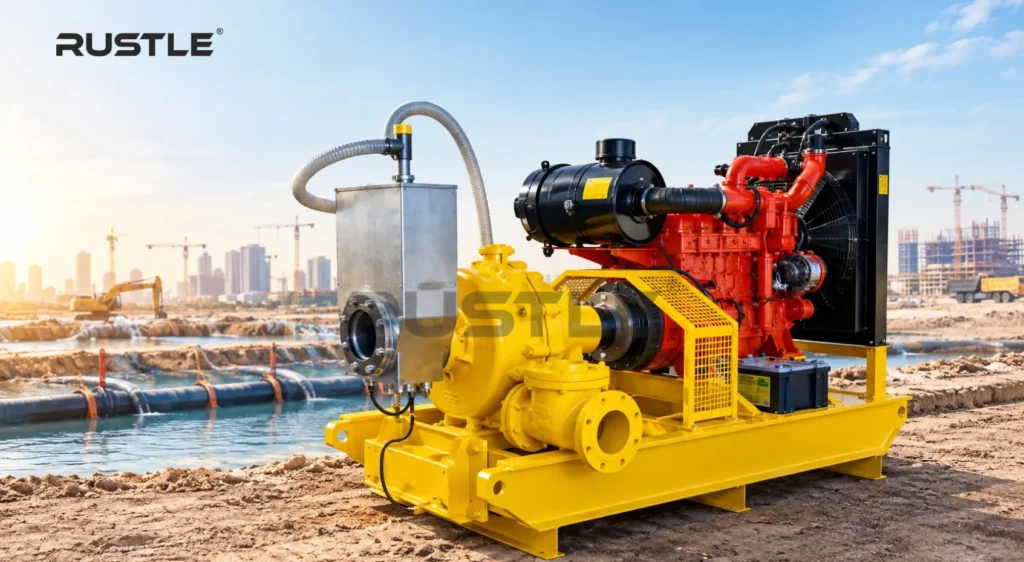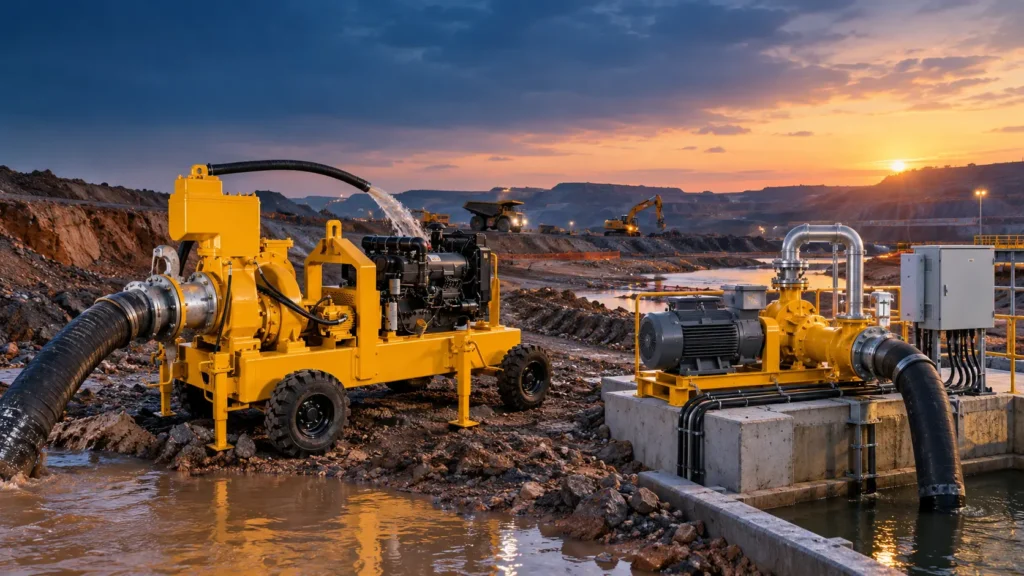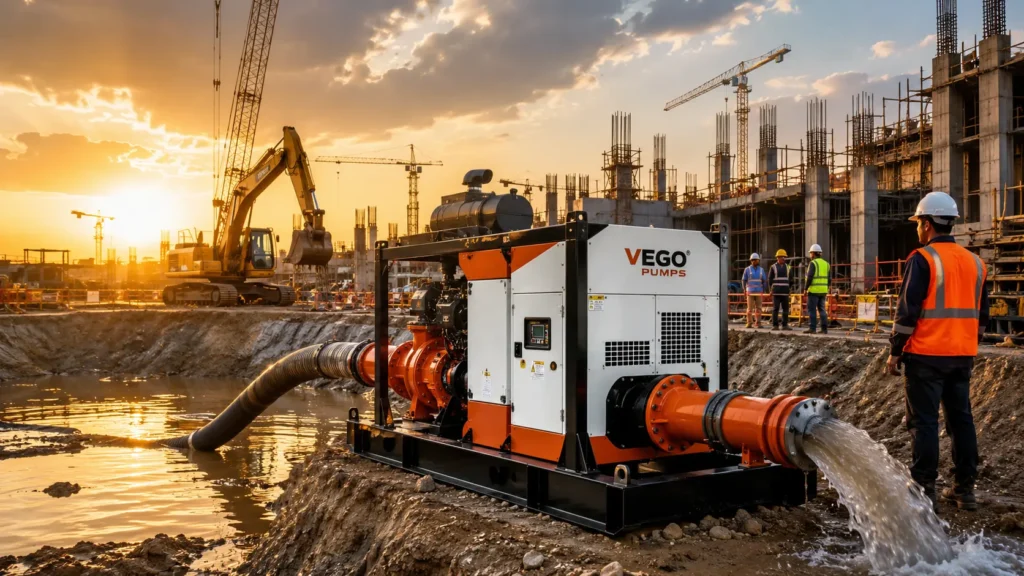
Water is one of the biggest challenges on construction sites, mining operations, infrastructure projects, and industrial facilities. Excess groundwater, stormwater, or process water can delay schedules, damage equipment, increase operating costs, and create serious safety risks.
Industrial dewatering pumps have become an essential part of modern water management. Whether you are building a metro tunnel in Saudi Arabia, operating a quarry in Africa, or managing floodwater in India, choosing the right pump directly affects project productivity and reliability.
At VEGO Pumps by Rustle, we manufacture high-performance industrial dewatering pumps engineered for demanding applications across the Middle East, Africa, and Asia. Our pumps are designed to deliver dependable performance, high flow rates, and long service life in challenging environments.
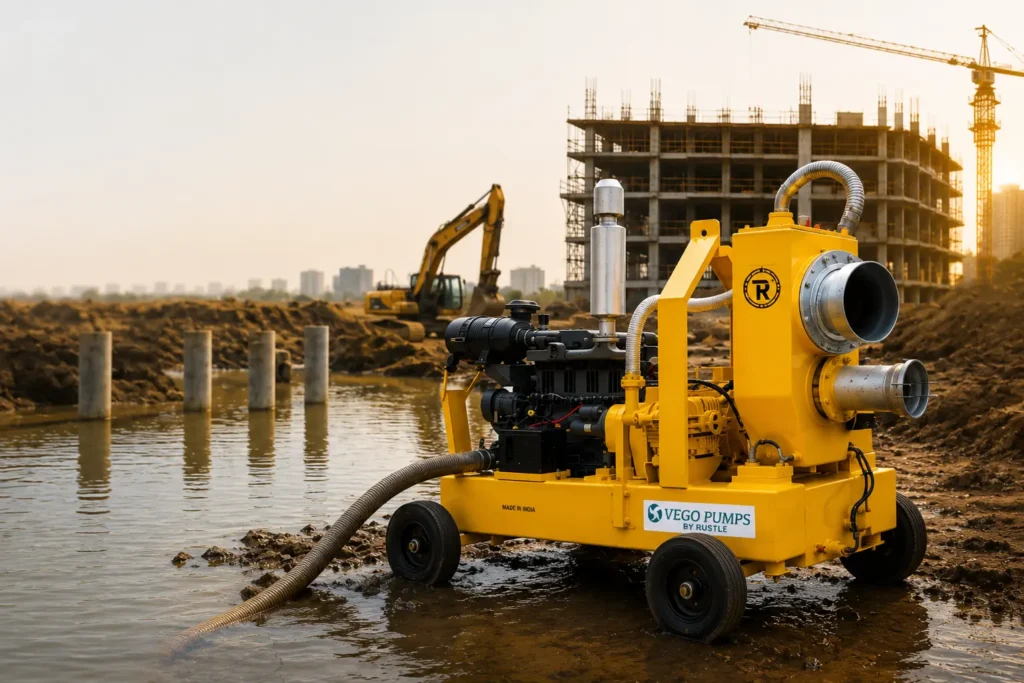
What Are Industrial Dewatering Pumps?
Industrial dewatering pumps are heavy-duty pumping systems designed to remove unwanted water quickly and efficiently from worksites and industrial facilities.
Unlike domestic water pumps, industrial models are built to handle:
- Continuous-duty operation
- Large flow rates
- Abrasive water
- Sand
- Mud
- Light solids
- Harsh environmental conditions
They are commonly powered by:
- Diesel engines
- Electric motors
- Hydraulic drives
Depending on the application, pumps may be installed on trailers, skids, or as stationary systems.
Why Dewatering Pumps Matter in 2026
Today’s projects demand more than simply moving water.
Modern contractors expect pumps that provide:
- Higher efficiency
- Lower fuel consumption
- Reduced downtime
- Remote monitoring
- Fast deployment
- Easy maintenance
- Lower total ownership cost
Industry trends show growing demand for smart pumping systems with IoT connectivity, predictive maintenance, and fleet-wide monitoring to improve uptime and reduce operating costs.
Major Applications of Industrial Dewatering Pumps
| Industry | Typical Application |
|---|---|
| Construction | Foundation excavation |
| Mining | Pit dewatering |
| Oil & Gas | Site drainage |
| Infrastructure | Tunnel projects |
| Municipality | Stormwater removal |
| Flood Control | Emergency drainage |
| Marine | Dock drainage |
| Power Plants | Water transfer |
Choosing the Right Dewatering Pump
Selecting a pump involves more than matching pipe size.
Engineers typically evaluate:
Flow Rate
Measured in m³/hr or LPM.
Higher flow rates reduce project downtime.
Total Head
The vertical and horizontal distance the water must travel.
Solids Handling
Construction and mining water often contains:
- Sand
- Gravel
- Sludge
- Debris
Choose pumps with suitable impeller and solids-handling capability.
Power Source
Diesel Pumps
Ideal for:
- Remote locations
- Construction projects
- Emergency flooding
Electric Pumps
Ideal for:
- Industrial plants
- Municipal facilities
- Continuous indoor operation
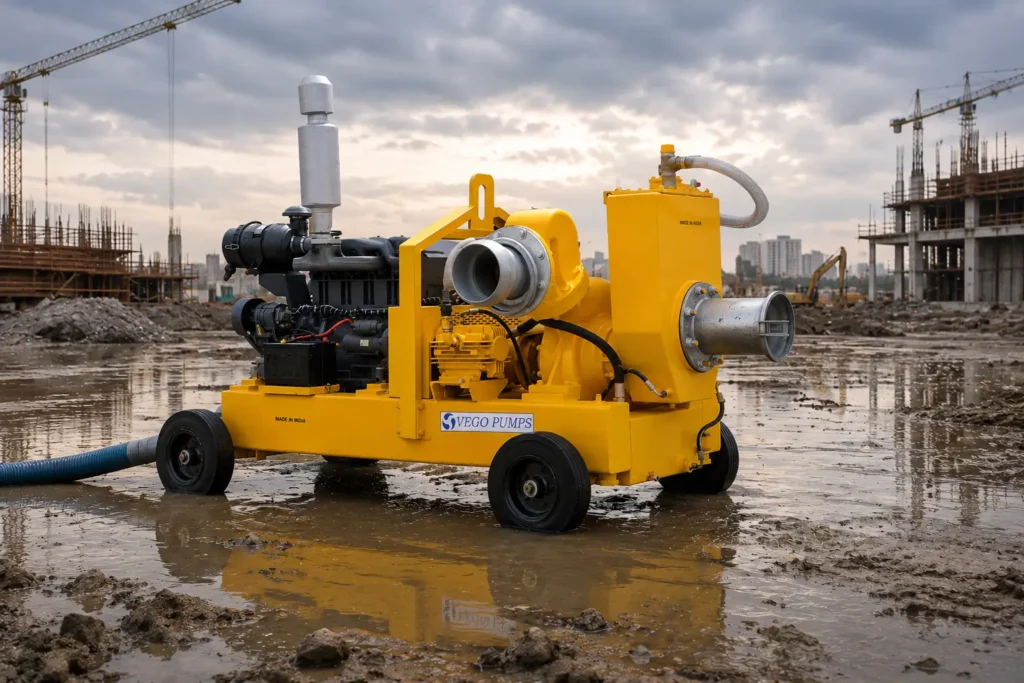
Why Contractors Choose Self-Priming Dewatering Pumps
Self-priming pumps eliminate the need for manual priming before every start.
Benefits include:
- Faster startup
- Reduced labor
- Lower downtime
- Easier maintenance
- Continuous operation
- Reliable performance during intermittent pumping
These advantages make them a preferred choice for contractors working on large-scale infrastructure and emergency drainage projects.
Frequently Asked Questions (FAQs)
1. What is an industrial dewatering pump?
An industrial dewatering pump is a high-capacity pump designed to remove groundwater, floodwater, slurry, or wastewater from construction sites, mines, tunnels, industrial plants, and municipal projects. These pumps help keep work areas dry, improve safety, and prevent costly project delays.
2. Where are industrial dewatering pumps commonly used?
Industrial dewatering pumps are widely used in:
- Construction sites
- Mining and quarry operations
- Oil & gas facilities
- Flood control and emergency response
- Municipal wastewater systems
- Marine and port infrastructure
- Industrial manufacturing plants
- Power generation facilities
3. What is the difference between diesel and electric dewatering pumps?
Diesel dewatering pumps are ideal for remote locations and emergency applications where electricity is unavailable. Electric dewatering pumps are better suited for fixed installations with continuous power, offering lower operating costs and reduced emissions.
4. How do I choose the right dewatering pump?
Consider the following factors:
- Required flow rate
- Total dynamic head (TDH)
- Solids handling capability
- Water type (clean, dirty, slurry)
- Pump size
- Fuel or power source
- Operating hours
- Site conditions
Consulting an experienced pump manufacturer can help ensure the right selection for your project.
5. What are self-priming dewatering pumps?
Self-priming pumps automatically remove air from the suction line, allowing the pump to restart without manual priming. They are ideal for construction, mining, and flood control applications where quick and reliable operation is essential.
6. Can dewatering pumps handle muddy or sandy water?
Yes. Many industrial dewatering pumps are designed to handle water containing sand, silt, mud, and small solids. Selecting the appropriate impeller and materials is important for long-term performance.
7. How often should industrial dewatering pumps be maintained?
Routine inspections should be performed daily during operation, while preventive maintenance—including oil changes, seal inspection, impeller checks, and filter replacement—should follow the manufacturer’s maintenance schedule to maximize pump life.
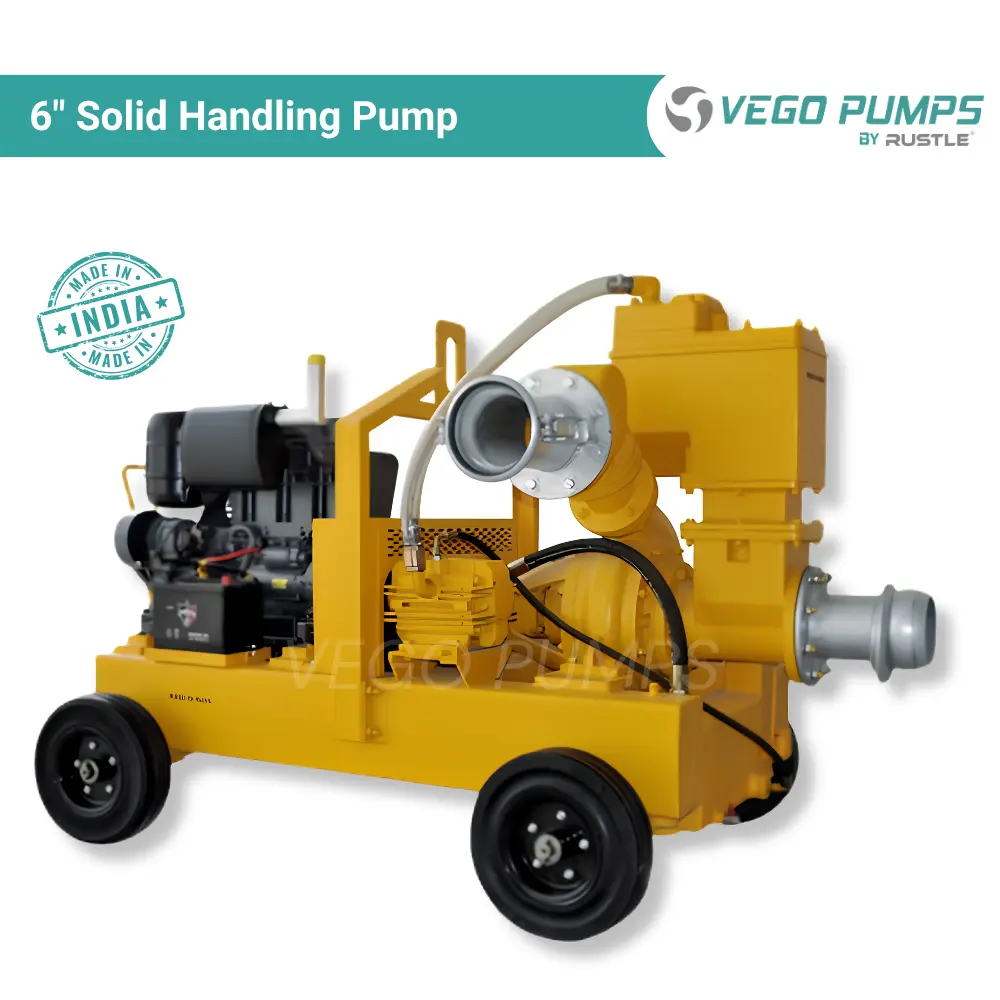
6 Inch Solid Handling Pump
The VEGO 6″ Solid Handling Pump is built for it — large-passage impeller and volute design, wrapped in the same reliable auto priming platform as the rest of our DP range.
| Specification | Detail |
|---|---|
| Pump Size | 150 x 150 mm (6 inch) |
| Pump Range | DP-S Solid Handling |
| Priming | Fully automatic, oil-lubricated vacuum pump |
| Seal | Double mechanical seal in oil chamber |
| Engine Options | Deutz, Kirloskar, Volvo, or Cummins diesel |
| Maximum Suction Lift | 9m |
| Max Capacity / Max Head / Solid Passage | To be confirmed against your model specification sheet |