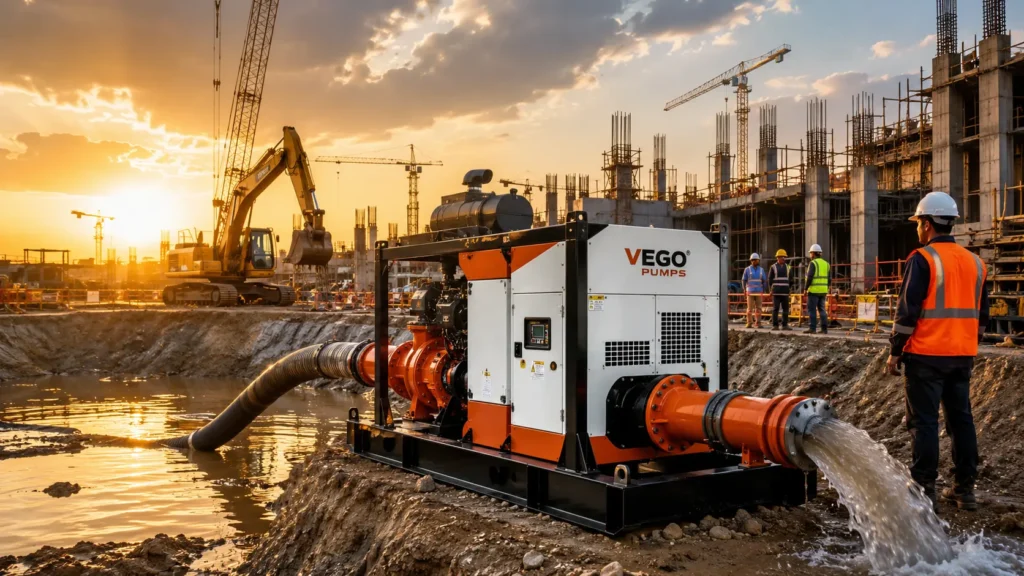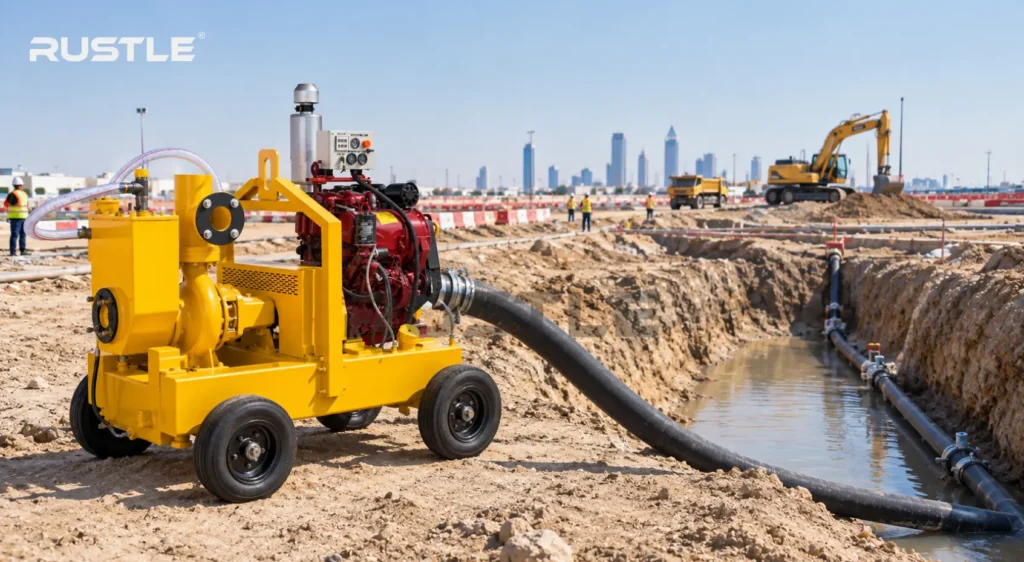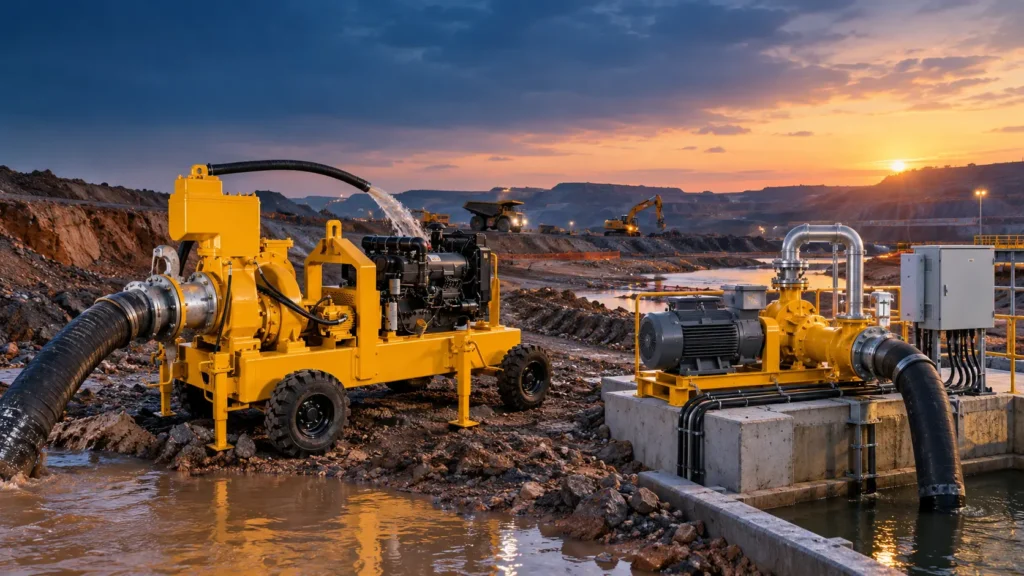
Water accumulation is one of the most common—and potentially expensive—problems faced by construction contractors, mining companies, infrastructure developers, and industrial operators.
Whether water collects inside a deep excavation, enters an open-pit mine, floods a trench, or accumulates in an industrial sump, effective dewatering is essential for maintaining safe working conditions and protecting project schedules.
But selecting the right dewatering pump involves more than choosing the highest flow rate or the lowest purchase price. One of the most important decisions is the power source: should you choose a diesel-driven dewatering pump or an electric dewatering pump?
Both technologies can provide reliable water removal when correctly specified. However, they differ significantly in power requirements, mobility, operating costs, maintenance, emissions, installation, and suitability for particular working environments.
For a contractor working in Saudi Arabia, a mine operator in Africa, an infrastructure developer in India, or an industrial facility in the UAE, the best pump is the one that matches the actual duty and site conditions—not necessarily the one with the most attractive brochure.
This guide explains the practical differences between diesel and electric dewatering pumps, how to compare their total ownership costs, what to consider before purchasing, and how to select the right solution for your project.
Quick answer: Diesel or electric dewatering pump?
Choose a diesel dewatering pump when you need mobility, independent operation, rapid deployment, or reliable pumping at a site without suitable electrical infrastructure. Choose an electric dewatering pump when dependable electrical power is available and low operating noise, reduced local emissions, and energy-efficient continuous operation are priorities.
Neither type is universally superior. The correct choice depends on:
- Required flow rate and total head.
- Availability and reliability of electrical power.
- Whether the pump must move between locations.
- Water quality and solids concentration.
- Daily operating hours and project duration.
- Fuel, electricity, and installation costs.
- Maintenance facilities and spare-parts availability.
- Environmental, safety, and noise requirements.
What is a dewatering pump?
A dewatering pump is designed to remove unwanted water from an area so that work can continue safely and efficiently.
Unlike a general water-transfer pump used for routine fluid movement, a dewatering system often operates under changing conditions. Water levels may rise suddenly, the suction level may fluctuate, and the water may contain sand, silt, gravel, or other abrasive particles.
Dewatering pumps are used in:
- Building foundations and basements.
- Road, bridge, and metro construction.
- Tunnels and underground structures.
- Open-pit mines and quarry operations.
- Industrial sumps and drainage systems.
- Pipeline and utility trenching.
- Floodwater removal and emergency drainage.
- Irrigation and selected agricultural applications.
- Oil and gas infrastructure projects.
A typical system may include the pump, prime mover, suction hose or intake arrangement, discharge pipeline, valves, strainers, control equipment, and monitoring devices.
The pump must be selected according to the duty point—the required flow at the total dynamic head—not simply according to the engine horsepower or motor rating.
Diesel vs electric dewatering pumps: Understanding the basic difference
The main difference is the equipment used to drive the pump.
Diesel-driven dewatering pump
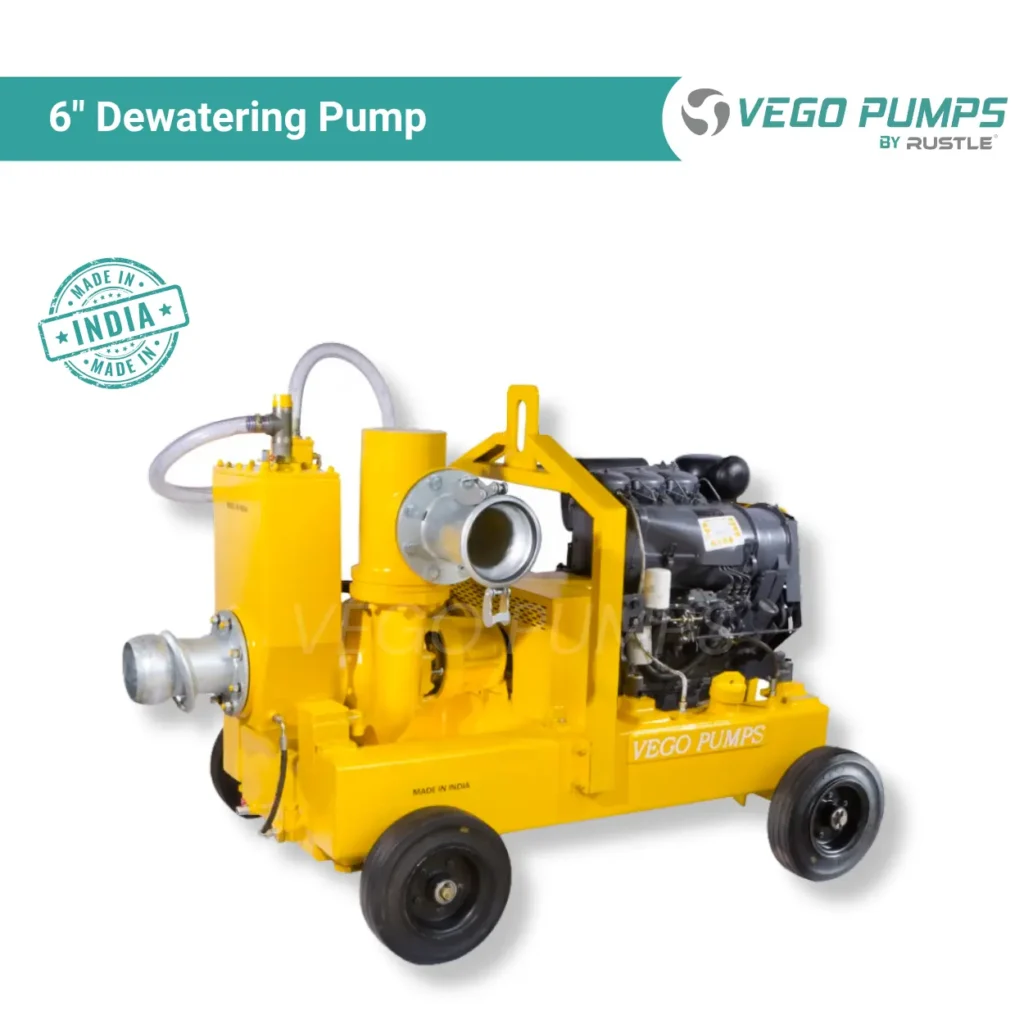
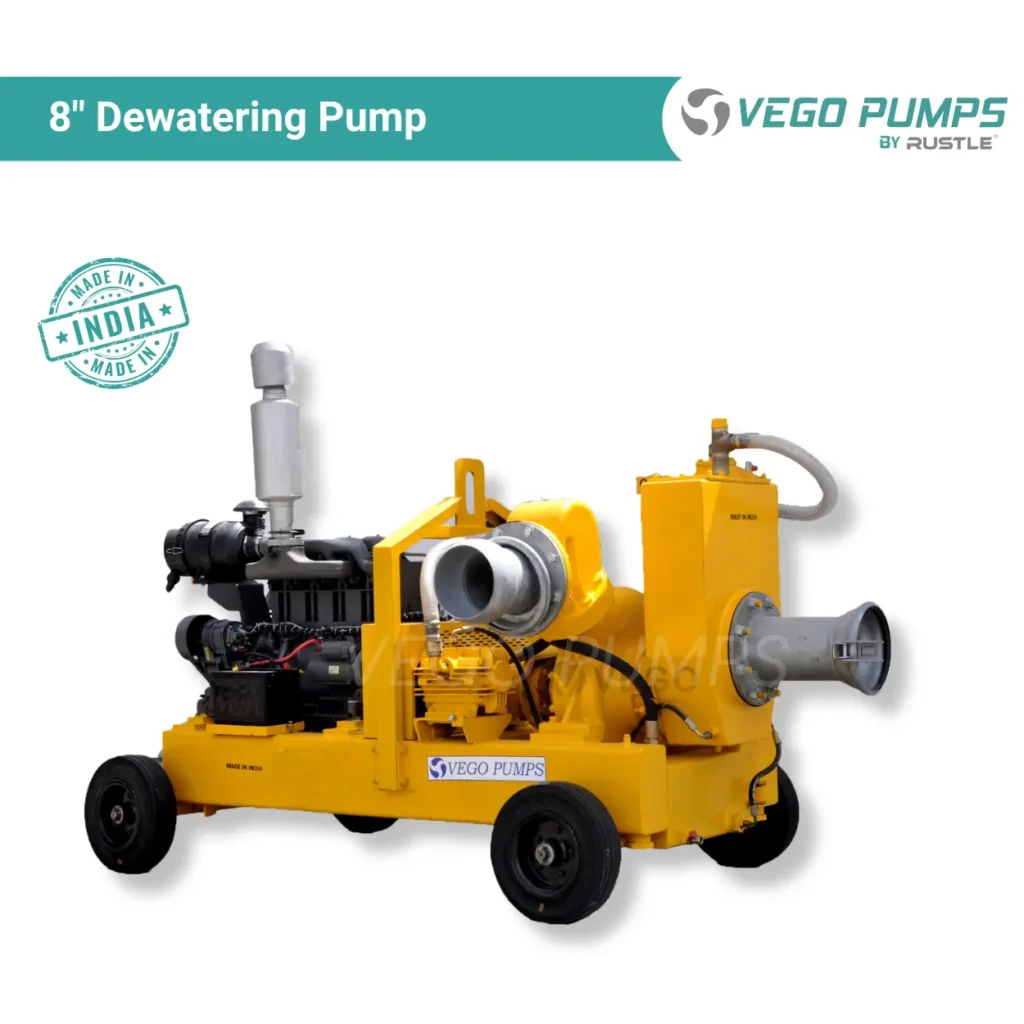
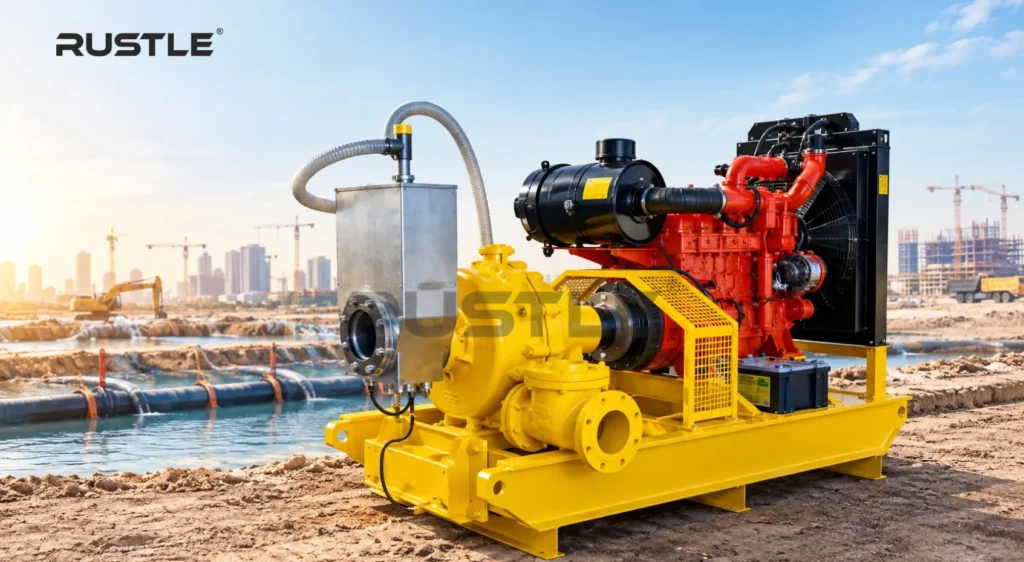
A diesel dewatering pump uses a diesel engine to drive a centrifugal pump or another suitable pumping mechanism. The engine supplies mechanical power directly to the pump shaft, usually through a coupling or a compatible drive arrangement.
Many portable diesel units are mounted on a skid, trailer, or transportable frame. Depending on the design, the pump may be self-priming and installed above the water level, with a suction hose extending into the sump.
Key characteristics:
- Independent of mains electricity.
- Suitable for mobile and temporary works.
- Can be deployed in remote locations.
- Requires diesel fuel storage and replenishment.
- Produces exhaust emissions and engine noise.
- Needs regular engine and pump maintenance.
Electric dewatering pump
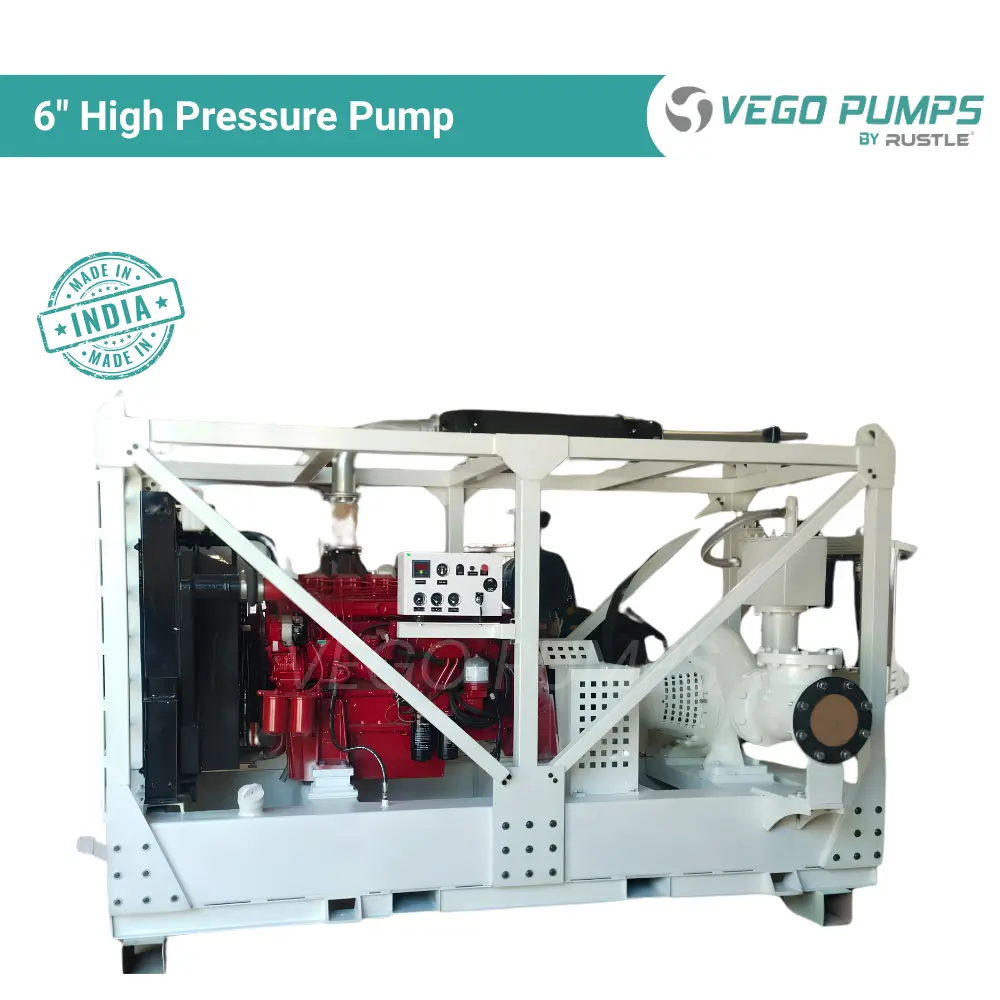
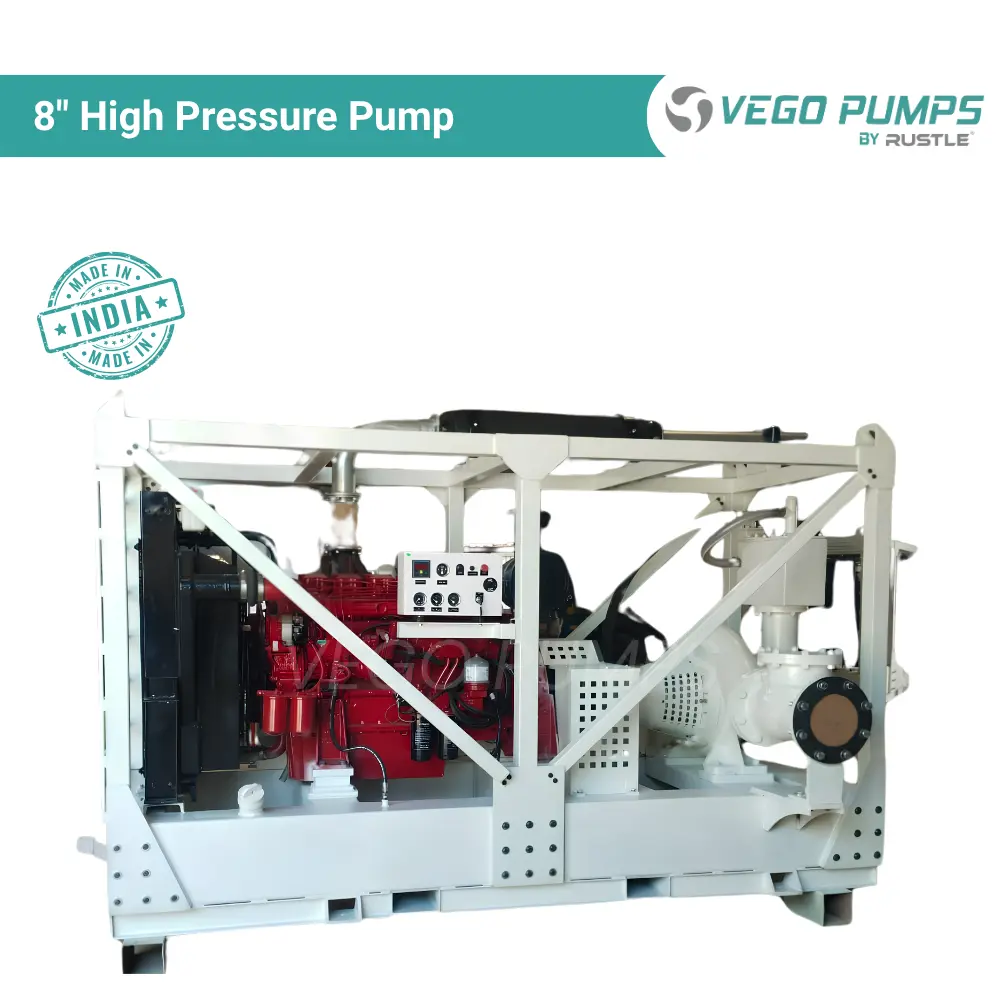
An electric dewatering pump uses an electric motor to drive the pump. The power source may be the site electrical supply, a temporary distribution system, or a suitably sized generator.
Electric dewatering equipment may be a dry-installed centrifugal pump or a submersible pump, depending on the application. A submersible pump is designed to operate while immersed in the pumped liquid, subject to its specified operating conditions.
Key characteristics:
- Requires a suitable electrical supply.
- Usually quieter at the point of operation.
- No direct tailpipe emissions at the pump.
- Can be economical for long operating periods with suitable electricity.
- Requires electrical protection and properly rated cables.
- Can be sensitive to voltage problems, moisture ingress, and unsuitable installation.
The power source is only one part of the decision. Two pumps with different drives may have similar hydraulic performance, while two pumps with the same drive may be completely unsuitable for different duties.
Diesel vs electric dewatering pumps: Detailed comparison
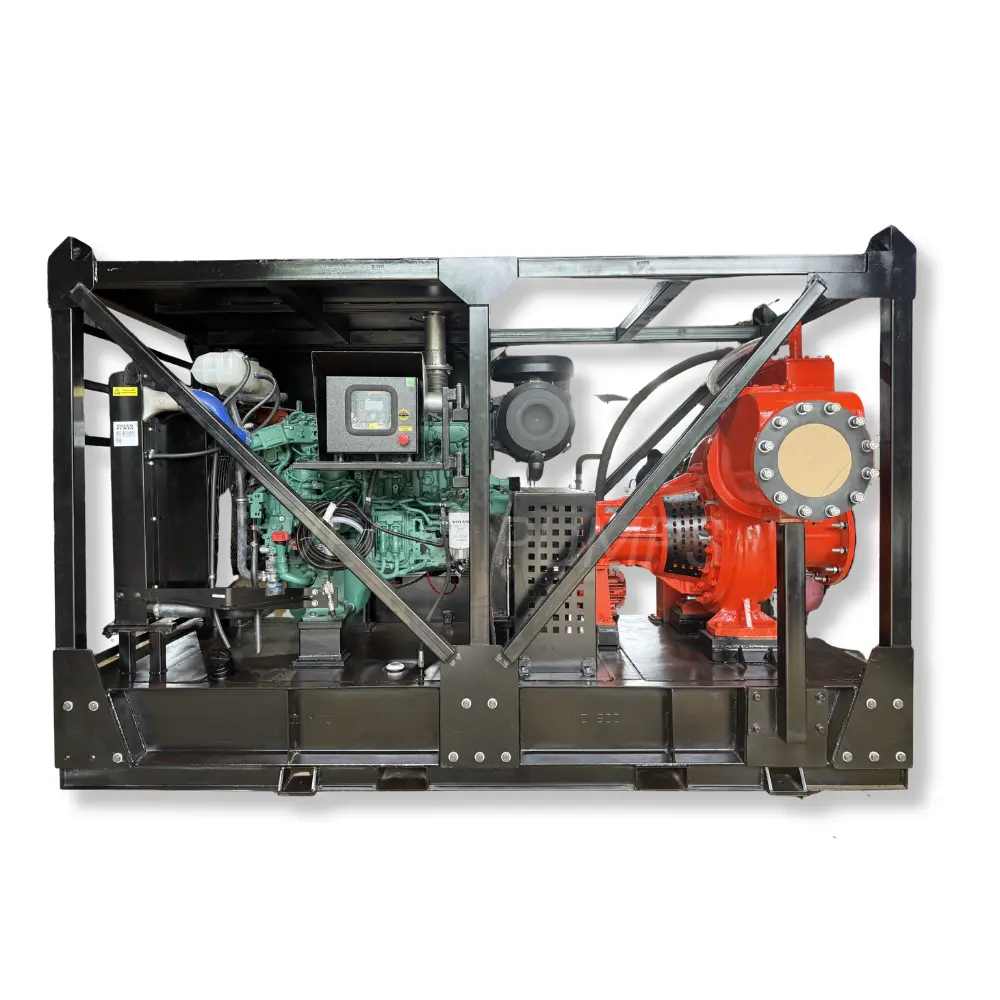
The following table provides a practical comparison for industrial buyers and project engineers.
| Selection factor | Diesel dewatering pump | Electric dewatering pump |
|---|---|---|
| External power | Not required for the pump drive | Suitable electrical supply required |
| Mobility | Excellent for skid- or trailer-mounted systems | Possible, but power must move with the pump |
| Remote operation | Well suited to remote sites | Requires a reliable generator or electrical network |
| Operating noise | Engine noise can be significant | Generally quieter at the pump |
| Local exhaust emissions | Yes, from the diesel engine | None at the electric motor |
| Refuelling | Fuel delivery and storage required | No pump refuelling when supplied by the grid |
| Installation | Often quick for portable packages | Requires electrical distribution and protection |
| Long-duration operation | Dependent on fuel capacity and supply | Suitable for continuous operation with reliable power |
| Maintenance | Engine, fuel system, cooling, and pump maintenance | Motor, cable, electrical protection, and pump maintenance |
| Variable speed | Depends on engine and drive configuration | Can be practical with a suitable variable frequency drive |
| Voltage sensitivity | Not dependent on electric motor supply | Requires correct voltage, phase, and frequency |
| Best fit | Remote, mobile, temporary, and emergency duties | Fixed, powered, low-noise, and long-duration duties |
Engineering conclusion: If there is no dependable power at the water collection point, diesel often has a practical advantage. If reliable electrical infrastructure is already available, electric equipment can offer lower routine operating costs and simpler energy management.
1. Site power availability: The first question to ask
Before comparing fuel consumption, motor efficiency, or purchase price, determine whether the pump location has an adequate electrical supply.
Dewatering often takes place away from established infrastructure. A new excavation may be started before permanent utilities are commissioned. A mining operation may extend beyond the existing power network. A pipeline project may move along a long right of way.
In such conditions, the cost of supplying electricity can include:
- Temporary cables and cable protection.
- Distribution boards and electrical panels.
- Transformers or voltage-conversion equipment.
- Generator rental or purchase.
- Fuel for a separate generator.
- Cable routing and traffic protection.
- Electrical installation, testing, and inspection.
- Relocation costs as the work front moves.
A diesel pump may avoid much of this additional infrastructure because the engine is part of the pumping package.
When electric is the better choice
Electric dewatering is often attractive when:
- Grid power is already available near the sump.
- The supply has sufficient capacity for motor starting and continuous operation.
- The pump location is stable.
- The site has suitable electrical protection.
- The project requires low noise.
- There are restrictions on engine exhaust emissions.
- Long cable runs can be avoided or safely managed.
Expert tip: Never assume that a nearby electrical connection is adequate. Check the available voltage, phase, frequency, supply capacity, starting current, voltage drop, cable rating, and protection arrangements with a qualified electrical professional.
2. Mobility and deployment speed
Construction and mining sites are rarely static.
An excavation becomes deeper. A mine working face advances. A trench moves along a corridor. A flood response team must transport equipment to a new location quickly.
For these applications, the ability to reposition the pump can be more valuable than a small difference in energy efficiency.
Advantages of diesel for mobile work
A diesel-driven dewatering pump mounted on a suitable skid or trailer can be transported to a new location without installing a new electrical supply. Once correctly positioned, connected, fuelled, and commissioned, it can operate independently of mains power.
This is useful for:
- Remote excavation.
- Temporary mine drainage.
- Emergency floodwater removal.
- Pipeline construction.
- Road and bridge projects.
- Agricultural drainage in locations without grid access.
Advantages of electric for fixed installations
Electric pumps can be very effective where the pumping point is permanent or changes infrequently. Once the electrical system and controls are properly installed, the pump can operate as part of a fixed drainage arrangement.
For example, a permanent industrial sump may be served by an electric pump with automatic level controls and a backup unit.
Important: An electric pump is not automatically immobile. Portable electric pumps and generator-powered systems can be useful. The real question is whether the total power arrangement can be moved economically and safely.
3. Flow rate and total head: The hydraulic decision
A common purchasing mistake is to select a pump based only on the outlet diameter, horsepower, or advertised maximum flow.
A 6-inch pump, for example, does not guarantee a particular flow at every operating condition. Actual performance depends on the pump design, impeller, speed, system resistance, and total head.
Flow rate
Flow rate is the volume of water that must be removed over a given time. It may be expressed in:
- Litres per second (L/s).
- Cubic metres per hour (m³/h).
- Litres per minute (L/min).
- Gallons per minute (GPM).
The required flow depends on inflow, storage volume, acceptable water-level rise, and the time available for drainage.
Total dynamic head
Total dynamic head includes the vertical lift and the losses in the suction and discharge systems.
It may include:
- Static elevation difference.
- Friction loss in hoses and pipelines.
- Losses through valves, bends, strainers, and fittings.
- Pressure requirements at the discharge point.
- Other system-specific losses.
A pump must deliver the required flow at the calculated total head.
Does diesel provide more head than electric?
Not inherently.
Diesel and electric pumps can both be designed for high-head or high-flow service. The actual result depends on the pump’s hydraulic design and the drive’s ability to deliver the required shaft power.
A diesel engine may be useful where load conditions vary and electrical supply is unstable. However, an appropriately sized electric motor can provide reliable performance at the same duty point when supplied correctly.
Engineering rule: Compare pump curves, not just engine horsepower or motor kW. Confirm the duty point, efficiency, speed, allowable operating range, and solids-handling capability.
4. Operating costs: Fuel versus electricity
The cost of running a dewatering pump is often more important than the initial purchase price.
A diesel pump consumes fuel. An electric pump consumes electrical energy. But the real comparison must include the complete operating system.
Diesel operating cost
Diesel operating expenses may include:
- Fuel consumption.
- Engine oil and filters.
- Fuel filters and fuel-system maintenance.
- Lubricants and coolant.
- Routine engine servicing.
- Operator time for refuelling.
- Fuel transport and storage.
- Exhaust and noise-control arrangements.
- Engine-related repairs.
Fuel consumption depends on the engine, pump duty, operating speed, load, and condition. A published litres-per-hour figure should never be treated as universal for every flow and head combination.
Electric operating cost
Electric pump expenses may include:
- Electricity consumption.
- Generator fuel, if off-grid.
- Generator rental or maintenance.
- Motor and pump maintenance.
- Cable and electrical equipment costs.
- Electrical inspections and protection.
- Demand charges or other applicable electricity tariffs.
An electric pump supplied by reliable grid power may be economical for long operating periods. However, if it requires a separate diesel generator, the comparison becomes more complicated.
A simple lifecycle-cost calculation
For a preliminary comparison, estimate the energy cost over the planned operating period.
Diesel energy cost:
Cd=Fh×Pf×H
Where:
- Cd = estimated diesel fuel cost.
- Fh = fuel consumption in litres per hour.
- Pf = diesel price per litre.
- H = operating hours.
Electric energy cost:
Ce=Pe×T×Pk
Where:
- Ce = estimated electricity cost.
- Pe = electrical input power in kW.
- T = operating hours.
- Pk = electricity cost per kWh.
These are preliminary energy calculations, not complete lifecycle-cost models. A full comparison should add installation, maintenance, standby equipment, downtime, fuel logistics, and eventual replacement costs.
Illustrative cost comparison
Assume a project operates a pump for 2,000 hours. The following values are illustrative only, not published VEGO performance figures or market prices.
| Item | Diesel example | Electric example |
|---|---|---|
| Operating hours | 2,000 h | 2,000 h |
| Fuel or electrical input | 6 L/h | 22 kW |
| Energy price assumption | ₹95/L | ₹9/kWh |
| Estimated energy cost | ₹11,40,000 | ₹3,96,000 |
| Other costs | Maintenance, logistics, fuel handling | Installation, cables, protection, maintenance |
Under these assumptions, the electric option has a lower direct energy cost. But if the electric system requires an expensive temporary generator, long cable runs, or major electrical infrastructure, the overall cost advantage may reduce or disappear.
Procurement advice: Ask suppliers for fuel consumption or electrical input at the actual duty point—not only at maximum flow or rated output.
5. Reliability and uninterrupted dewatering
Dewatering reliability is a project-risk issue.
Unexpected water accumulation can delay excavation, affect concrete work, destabilize access routes, damage materials, and create safety hazards. In mining, uncontrolled water can interfere with haul roads, working areas, and production activities.
The right question is not simply, “Which pump is more reliable?”
It is:
Which pumping system is most likely to continue removing water under the actual operating conditions, and what happens if it stops?
Diesel reliability considerations
Diesel equipment can be advantageous where electrical supply is unreliable or unavailable. Its independence from the grid makes it useful for emergency and remote operations.
However, reliability depends on:
- Fuel quality.
- Fuel availability.
- Battery condition.
- Engine cooling.
- Lubrication.
- Correct priming.
- Suction-line integrity.
- Routine servicing.
- Availability of replacement parts.
Electric reliability considerations
Electric pumps can operate for long periods with relatively low routine motor maintenance when correctly installed and protected.
Their reliability depends on:
- Stable voltage and frequency.
- Correct motor sizing.
- Electrical protection.
- Cable condition.
- Moisture protection.
- Proper grounding or earthing.
- Suitable starting arrangements.
- Motor cooling and installation conditions.
An electric pump may stop during a power failure unless backup generation, dual power supply, or another contingency arrangement is available.
A stronger solution: Pumping-system redundancy
For critical dewatering, consider:
- Duty and standby pumps.
- Automatic level controls.
- High-water alarms.
- Emergency backup power.
- Spare hoses and critical parts.
- Fuel reserves or generator backup.
- Remote monitoring.
- A written emergency response plan.
A well-designed backup arrangement can be more valuable than choosing one drive type over another.
6. Maintenance requirements
Maintenance affects both operating cost and pump availability. A pump that is inexpensive to buy but difficult to service can become expensive over a long project.
Diesel pump maintenance checklist
A diesel-driven pump typically requires attention to both the engine and the pump.
Engine maintenance:
- Check engine oil level and condition.
- Replace oil and filters according to the manufacturer’s schedule.
- Inspect fuel filters and fuel lines.
- Check the cooling system.
- Inspect belts, hoses, and battery connections.
- Monitor exhaust condition and unusual vibration.
- Maintain clean fuel storage.
- Check the starting system.
- Record operating hours and service history.
Pump maintenance:
- Inspect impeller and wear components.
- Check the mechanical seal or other shaft-sealing arrangement.
- Inspect suction hoses and clamps.
- Check priming equipment.
- Remove debris from strainers.
- Inspect discharge fittings.
- Monitor vibration, noise, and flow performance.
Electric pump maintenance checklist
Electric pumps have fewer engine-related service requirements, but they are not maintenance-free.
- Inspect cables for damage.
- Check connectors and cable glands.
- Test electrical protection according to the applicable procedure.
- Check motor insulation where required.
- Inspect bearings and seals as specified.
- Monitor current draw and operating temperature.
- Clean the pump intake and strainer.
- Inspect impeller and wear components.
- Check for abnormal vibration or noise.
- Confirm correct rotation where applicable.
- Keep electrical equipment protected from water ingress.
Safety note: Electrical inspection and repairs must be carried out by suitably qualified personnel. Do not handle electrical equipment in wet conditions without the required isolation, protection, and site procedures.
7. Water quality and solids handling
The water being pumped is just as important as the power source.
Construction and mining water may contain:
- Sand.
- Silt.
- Clay.
- Gravel.
- Mud.
- Slurry.
- Abrasive mineral particles.
- Organic debris.
A pump intended for relatively clean water may not be suitable for abrasive or solids-laden water.
Questions to ask before selecting a pump
- Is the water clean, muddy, or abrasive?
- What is the approximate solids concentration?
- What is the largest expected particle size?
- Is the water corrosive or chemically aggressive?
- Will the solids settle in the suction line?
- Is a solids-handling impeller required?
- What suction arrangement is appropriate?
- Does the pump need to tolerate intermittent dry conditions?
- Is the discharge water subject to environmental requirements?
A pump’s solids-handling rating should be verified from the manufacturer’s technical documentation. Do not assume that a larger discharge diameter means the pump can handle any size of debris.
For abrasive mining water, impeller material, casing design, wear components, operating speed, and maintenance access may be decisive.
8. Diesel and electric pumps in different industries
Construction and excavation
Construction sites often face changing water levels, temporary drainage requirements, and shifting work areas.
Diesel may be preferred when:
- Excavation begins before electrical infrastructure is ready.
- The work front changes frequently.
- The site is remote.
- Emergency drainage is required.
- Temporary cable installation is impractical.
Electric may be preferred when:
- Reliable power is available.
- The excavation is relatively fixed.
- Low noise is important.
- Long-duration pumping is expected.
- Electrical controls can be installed safely.
A contractor may also use a combination: electric pumps for routine drainage and a diesel unit for emergency backup.
Mining and quarrying
Mining applications can involve high inflow, deep sumps, abrasive water, changing elevations, and difficult access.
Diesel-driven mobile pumps can be useful for temporary drainage and moving work areas. Electric pumps can be attractive for established pumping stations with dependable power and suitable electrical infrastructure.
For mine dewatering, engineers should assess:
- Pit geometry and expected inflow.
- Total head and pipeline length.
- Water chemistry.
- Solids content.
- Pump access and lifting arrangements.
- Electrical classification and mine safety requirements.
- Backup pumping capacity.
- Maintenance and spare-parts logistics.
Oil and gas and industrial infrastructure
Industrial sites may have strict requirements for noise, emissions, electrical protection, and operational continuity.
Electric pumping can be suitable for fixed drainage systems where power is available. Diesel packages can provide temporary or emergency capacity where the pumping location is remote or power availability is limited.
The final choice should be reviewed against the project’s site rules, hazardous-area requirements, environmental permits, and equipment certification requirements.
Flood response and emergency drainage
Emergency dewatering places a premium on fast deployment.
Diesel-driven mobile units can be practical because they do not depend on an electrical connection at the affected location. Electric pumps can also be valuable where safe power is available or where generator-supported systems are already prepared.
In either case, the pump should be tested before deployment. A pump that is theoretically suitable but cannot prime, start, or discharge effectively during an emergency is not a dependable emergency solution.
9. Environmental and safety considerations
Environmental performance is becoming a more important part of equipment procurement.
The correct choice depends on local regulations and project requirements, not just on whether a pump is diesel or electric.
Diesel considerations
- Engine exhaust emissions.
- Fuel storage and spill prevention.
- Noise and vibration.
- Refuelling safety.
- Engine exhaust routing.
- Applicable emissions requirements.
- Fire prevention and emergency response.
Electric considerations
- Electrical shock risk.
- Cable damage and water ingress.
- Correct grounding or earthing.
- Electrical protection.
- Safe isolation procedures.
- Generator emissions if power is not from the grid.
- Safe operation in wet environments.
Electric equipment has no direct exhaust emissions at the motor, but that does not automatically mean its total environmental impact is zero. The source of electricity and the generator arrangement matter.
For projects in the GCC, Africa, and India, confirm local requirements and client specifications before purchasing or mobilising equipment. Conditions can differ significantly between a construction site, mine, industrial plant, and public infrastructure project.
10. Future developments in dewatering pumps: 2026–2028
The dewatering industry is moving toward more efficient, connected, and application-specific pumping systems. These developments do not eliminate the need for sound hydraulic engineering, but they can improve decision-making and reduce avoidable downtime.
10.1 Greater focus on lifecycle cost
In 2026, industrial buyers increasingly need to justify equipment purchases based on operating cost, maintenance, uptime, and project risk rather than purchase price alone.
This is especially relevant when fuel prices, electricity tariffs, rental rates, and infrastructure costs vary between countries.
From 2027 to 2028, procurement teams are likely to place greater emphasis on:
- Duty-point energy consumption.
- Maintenance intervals.
- Availability of service parts.
- Pump monitoring.
- Fuel and electricity reporting.
- Total cost per cubic metre pumped.
- Equipment reuse across projects.
These are procurement trends and practical expectations, not a guarantee that every manufacturer will offer every feature.
10.2 Remote monitoring and condition-based maintenance
Connected pumps can provide operating data such as:
- Run hours.
- Flow or estimated flow.
- Discharge pressure.
- Engine parameters.
- Motor current.
- Temperature.
- Vibration.
- Fuel level.
- Alarm status.
Remote monitoring can help site managers identify unusual conditions before they become major failures. Condition-based maintenance may reduce unnecessary servicing while allowing earlier intervention when a component shows abnormal behaviour.
For remote mining and infrastructure projects, this capability may be particularly valuable because sending technicians to a distant pump can be costly.
10.3 Smarter electric motor control
Electric pump systems may increasingly use:
- Variable frequency drives.
- Soft starters.
- Improved motor efficiency.
- Automatic level control.
- Remote start and stop.
- Energy monitoring.
- Integrated protection systems.
Variable speed can be useful when the required flow changes. However, the pump, motor, drive, and system must be selected as a compatible package. Reducing speed does not always reduce energy use in a simple or unlimited way, and minimum-flow requirements must be respected.
10.4 Hybrid and backup pumping arrangements
A hybrid system may combine electric pumping for normal operation with diesel backup for emergencies or power interruptions.
Potential benefits include:
- Lower routine energy costs.
- Backup capability.
- Improved operational flexibility.
- Reduced dependence on a single energy source.
- Better resilience during temporary power failures.
The business case depends on the site, duty profile, installation cost, and importance of uninterrupted drainage.
10.5 More emphasis on efficient water management
Dewatering is increasingly viewed as part of a broader water-management strategy.
Projects may need to consider:
- Reuse of suitable pumped water.
- Sediment control.
- Discharge quality.
- Water storage.
- Groundwater management.
- Energy consumption.
- Environmental monitoring.
A pump should therefore be selected as part of the complete water-removal and discharge system—not as an isolated piece of machinery.
11. A practical buying guide for diesel or electric dewatering pumps
Before requesting a quotation from VEGO Pumps or another industrial pump supplier, prepare the following information.
Step 1: Define the required flow
Estimate how much water must be removed per hour or per second.
Include normal inflow, expected peak inflow, rainfall contribution where relevant, and the acceptable time to reduce the water level.
Step 2: Calculate total dynamic head
Measure or estimate:
- Water source level.
- Discharge level.
- Vertical lift.
- Suction length.
- Discharge pipe length.
- Pipe diameter.
- Valves, bends, and fittings.
- Required discharge pressure.
Ask the supplier to verify the calculation.
Step 3: Describe the water
Provide information about:
- Solids concentration.
- Particle size.
- Abrasiveness.
- Temperature.
- pH or chemical composition.
- Presence of oil or contaminants.
- Risk of debris entering the suction line.
Step 4: Decide whether the pump must move
If the pump will move frequently, explain how it will be transported and repositioned.
Ask about:
- Skid or trailer mounting.
- Lifting points.
- Transport dimensions.
- Fuel tank capacity.
- Hose connections.
- Site access.
- Setup time.
Step 5: Confirm the power arrangement
For diesel:
- Fuel availability.
- Fuel storage.
- Refuelling access.
- Engine service support.
- Noise and emissions requirements.
For electric:
- Voltage.
- Phase.
- Frequency.
- Available kVA or kW.
- Starting method.
- Cable length and size.
- Electrical protection.
- Generator requirements, if applicable.
Step 6: Compare complete ownership costs
Request:
- Purchase price.
- Fuel or electrical consumption at duty point.
- Routine maintenance schedule.
- Spare-parts costs.
- Warranty terms.
- Installation costs.
- Delivery time.
- Service support.
- Recommended standby arrangement.
Step 7: Check the supplier’s technical support
A dependable supplier should be able to discuss more than pump size.
Ask whether the supplier can support:
- Pump selection.
- Hydraulic calculations.
- Installation guidance.
- Commissioning.
- Maintenance training.
- Spare parts.
- Troubleshooting.
- Site-specific requirements.
- After-sales support in your region.
12. Common mistakes when choosing a dewatering pump
Mistake 1: Selecting by horsepower alone
A higher horsepower rating does not automatically mean better water removal. The pump must deliver the required flow at the actual total head.
Mistake 2: Ignoring friction loss
Long hoses, undersized pipes, bends, valves, and strainers can substantially affect system performance.
Mistake 3: Choosing a clean-water pump for abrasive water
Sand and mineral particles can cause rapid wear if the pump is not designed for the application.
Mistake 4: Comparing fuel cost with electricity cost only
A fair comparison includes generators, cables, installation, maintenance, logistics, and downtime.
Mistake 5: Forgetting the priming arrangement
An above-ground centrifugal pump may need a suitable priming system. Incorrect installation can lead to air leakage, loss of prime, or poor performance.
Mistake 6: Ignoring suction conditions
Excessive suction lift, a long suction hose, poor hose routing, or an unsuitable strainer can restrict performance and increase operational problems.
Mistake 7: Treating a maximum-flow number as the working flow
Maximum flow may be stated at low or zero head. Always check the manufacturer’s pump curve at the actual duty point.
Mistake 8: No contingency plan
If flooding could stop production or threaten safety, consider standby capacity, alarms, backup power, and spare parts.
Mistake 9: Buying without service support
A pump is a long-term operating asset. Parts availability and technical support can be more important than a small initial price difference.
13. Expert recommendations: Which pump should you choose?
The following decision guide is a useful starting point.
| Your project condition | Initial recommendation |
|---|---|
| Remote construction site with no reliable power | Diesel-driven dewatering pump |
| Mine working area that changes frequently | Mobile diesel solution or a suitable hybrid arrangement |
| Permanent industrial sump with stable electrical power | Electric dewatering pump |
| Long-duration pumping with dependable grid power | Electric may offer lower energy cost |
| Emergency flood response | Mobile diesel, electric, or generator-supported system based on readiness |
| Site with strict local exhaust restrictions | Electric, subject to power availability and regulations |
| Temporary work where cables are difficult to route | Diesel often offers greater deployment flexibility |
| Critical drainage with power interruptions | Duty/standby system with suitable backup power |
| Abrasive water containing sand or mineral solids | Pump selected specifically for solids handling and wear resistance |
This table is a preliminary guide. The final selection should be based on the complete hydraulic duty, site conditions, safety requirements, and supplier engineering review.
14. Why work with VEGO Pumps by Rustle?
Selecting a dewatering pump is not only about choosing between diesel and electric power. It is about finding a suitable pumping solution for the conditions in which the equipment must operate.
For contractors, engineers, procurement teams, and industrial buyers, the right supplier should help assess the application before recommending a model.
VEGO Pumps by Rustle can be approached for discussions around industrial pumping requirements, including dewatering and heavy-duty water-transfer applications.
When contacting the VEGO Pumps team, provide the project information discussed in this guide so the technical team can evaluate the appropriate pump configuration.
Potential discussion points include:
- Required flow and total head.
- Construction or mining application.
- Diesel or electric power preference.
- Solids-handling requirements.
- Pump mobility.
- Operating hours.
- Site location and conditions.
- Delivery and after-sales support.
- Spare-parts requirements.
Important: Product selection, flow performance, engine or motor options, and availability should be confirmed against the current VEGO Pumps technical documentation and quotation. This article does not assign unverified performance figures to a particular VEGO model.
Frequently Asked Questions
Which is better, a diesel or electric dewatering pump?
Diesel pumps are ideal for remote and mobile projects where electricity is unavailable. Electric pumps are often better for fixed installations with reliable power, lower noise requirements, and long operating hours. The best choice depends on flow rate, total head, site conditions, and operating costs.
Are diesel dewatering pumps suitable for mining operations?
Yes. Diesel dewatering pumps are suitable for many mining applications, including remote excavation, open-pit mine drainage, and temporary water removal. The pump must be selected according to the required flow, pumping head, water quality, solids content, and mine safety requirements.
Can electric dewatering pumps operate without grid electricity?
Yes. An electric dewatering pump can operate using a suitably sized generator or another approved power source. The generator must support the motor’s starting and running requirements, and the electrical installation must be properly protected.
Which dewatering pump has lower operating costs?
Electric dewatering pumps may have lower energy costs when reliable grid electricity is available. Diesel pumps may be more economical for remote sites where installing electrical infrastructure is expensive. A proper comparison should include fuel, electricity, maintenance, installation, and downtime costs.
What information is needed to select a dewatering pump?
Important selection details include the required flow rate, total dynamic head, suction and discharge pipeline length, water quality, solids concentration, operating hours, power availability, and whether the pump must be portable or permanently installed.
Can diesel and electric pumps handle muddy or abrasive water?
Yes, provided the pump is specifically designed for the application. Construction and mining water may contain sand, silt, or abrasive particles. Check the pump’s solids-handling capacity, impeller design, materials, and wear resistance before purchasing.
How can I choose the right dewatering pump for my project?
Start by calculating the required flow and total dynamic head. Then assess water characteristics, power availability, mobility, operating costs, maintenance requirements, and backup needs. Contact VEGO Pumps by Rustle at www.vegopumps.com with your project details for suitable pump-selection guidance.
Conclusion: Choose the right dewatering pump for your project
The diesel-versus-electric dewatering pump decision should be based on engineering requirements, not assumptions.
A diesel pump can be the practical choice for remote construction sites, changing mine locations, emergency flood response, and projects without reliable electrical infrastructure. An electric pump can be an excellent solution for fixed industrial installations and long-duration dewatering where dependable power, low noise, and efficient operation are priorities.
The most important factors remain the same:
- Correct flow rate.
- Accurate total dynamic head.
- Suitable solids-handling capability.
- Reliable power supply.
- Appropriate installation.
- Maintenance support.
- Total cost of ownership.
- Backup capacity where necessary.
Need help choosing a suitable dewatering pump? Contact VEGO Pumps by Rustle with your project flow rate, total head, water characteristics, operating hours, and site power details. The right technical information at the beginning can help you avoid incorrect sizing, unnecessary operating costs, and avoidable downtime.