Introduction
Working at night can be challenging when a construction site, mining area, or infrastructure project does not have enough lighting. Poor visibility can slow down work, make equipment movement more difficult, and increase safety risks for workers.
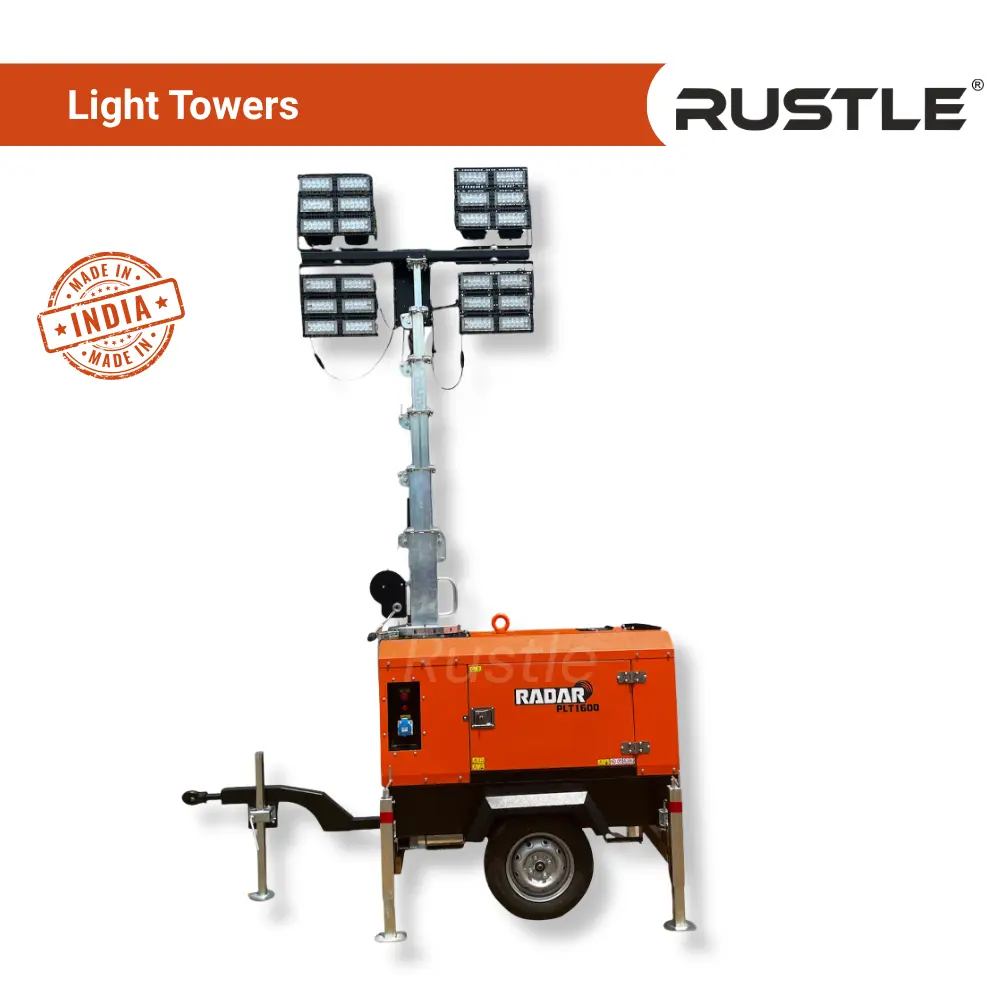
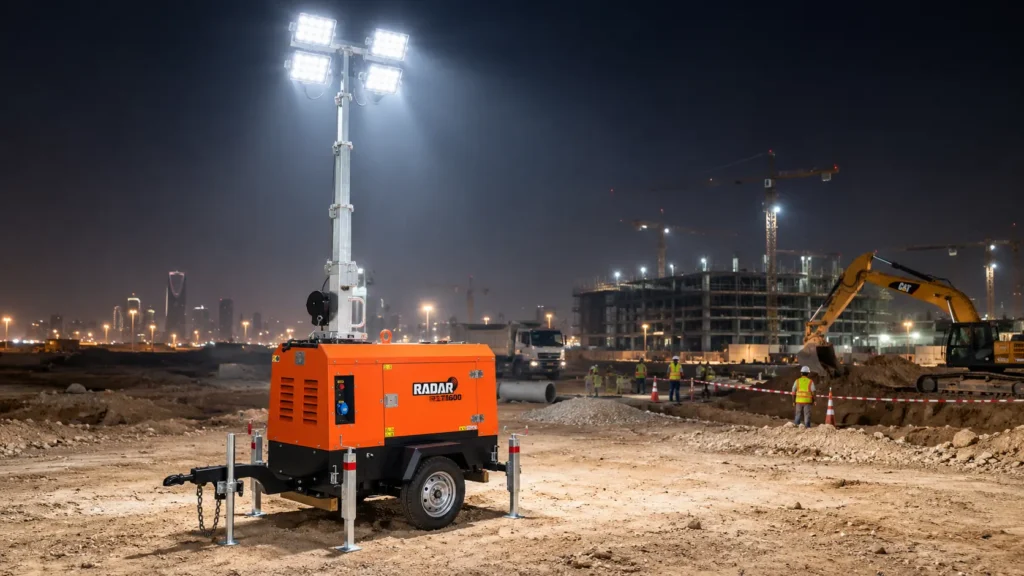
A portable light tower for construction provides powerful illumination for temporary work areas where fixed lighting is unavailable or impractical. It can be moved between locations and used for night shifts, road construction, excavation, mining operations, emergency repairs, and outdoor industrial activities.
However, choosing the right light tower is not simply about selecting the brightest model. You also need to consider the size of the working area, lighting coverage, power source, fuel consumption, operating hours, portability, and site conditions.
For contractors working in Saudi Arabia and the UAE, these factors are particularly important because projects may involve high temperatures, dusty environments, remote locations, and long working hours.
This guide explains how to choose the right portable light tower for your project and what to check before making a purchasing decision.
1. Understand Your Project’s Lighting Requirements
Before comparing light tower models, identify where and how the equipment will be used. A tower suitable for a small construction site may not provide sufficient illumination for a large mining operation.
Consider these common applications:
- Construction sites: Excavation, concrete pouring, foundation work, and night-shift construction.
- Mining and quarrying: Haul roads, loading areas, material handling, and equipment maintenance.
- Road and infrastructure projects: Highway repairs, bridge construction, road widening, and utility installation.
- Oil and gas facilities: Temporary maintenance areas and selected outdoor work zones, subject to site safety requirements.
- Emergency operations: Flood response, temporary repairs, and disaster-relief activities.
For example, a contractor working on a road project in Riyadh may need lighting that can be moved along an extended work zone. A mining contractor near Dammam may require durable equipment capable of operating for extended periods in dusty outdoor conditions.
Practical tip: Estimate the area that needs lighting, the required brightness, the number of working hours, and the distance between work zones before choosing a model.
2. Choose the Right Lighting Output: Lumens, Lux and Coverage
One of the most important factors when selecting a portable LED light tower is its lighting performance.
You may see manufacturers advertise lumens, but a high lumen rating alone does not guarantee that every part of your work area will be bright enough. Light distribution, mast height, beam angle, and the distance between the tower and the working area also matter.
Here is what the main terms mean:
- Lumens: The total amount of visible light produced by the lamps.
- Lux: The amount of light reaching a particular surface.
- Lighting coverage: The area illuminated at a specified brightness level.
For example, a large mining area may require several towers positioned strategically to minimise dark spots. A smaller maintenance zone may need only one appropriately configured unit.
When comparing a light tower, ask the supplier for the illumination or lux distribution at the required working distance. Confirm that the proposed coverage is suitable for your actual site layout.
3. Select the Right Power Source
Portable light towers are available with different power systems. The best option depends on your site’s electricity access, operating schedule, environmental requirements, and running costs.
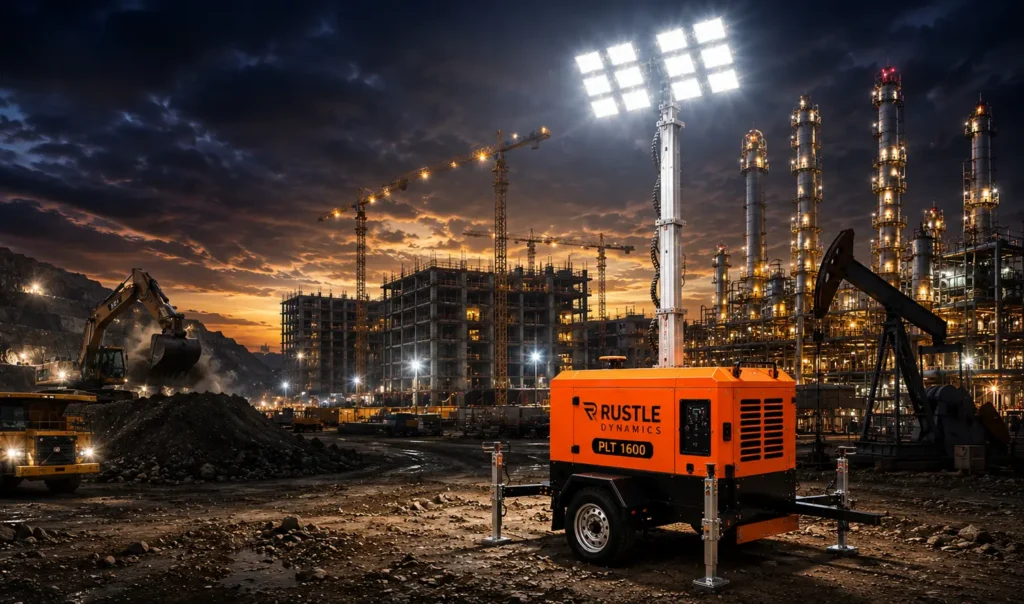
A diesel light tower is useful for remote construction sites, mining operations, roadwork, and projects without a reliable mains electricity supply. It offers independent power, subject to fuel availability and maintenance requirements.

Solar light towers
Solar-powered models can reduce fuel consumption and operating noise. Their suitability depends on sunlight availability, battery capacity, required brightness, and the number of hours the lights must operate overnight.

Hybrid light towers
Hybrid systems combine power sources, commonly solar energy, batteries, and a generator. Depending on the configuration, they can reduce generator operating hours while maintaining lighting when stored energy is insufficient.
For many remote projects in Saudi Arabia, diesel-powered equipment can be a practical choice where independent, extended operation is required. In the UAE, solar or hybrid options may also suit projects seeking to reduce generator use.
Compare the total cost of ownership rather than the initial purchase price alone. Include fuel or electricity, servicing, replacement parts, transportation, and expected operating hours.
4. Check Mast Height and Portability
The mast raises the lamps above ground level, helping distribute light across the work area. However, a taller mast is not automatically the best choice for every application.
Before buying a mobile light tower for mining or construction, check:
- Mast height and adjustment range.
- Manual, electric, or hydraulic lifting mechanism.
- Lamp rotation and tilt adjustment.
- Trailer-mounted or skid-mounted construction.
- Transport dimensions and overall weight.
- Stabilising legs or outriggers.
- Ease of deployment and relocation.
For a road project in Dubai, a trailer-mounted tower may be useful when lighting requirements change along the route. At a fixed industrial work zone, a skid-mounted model may be more appropriate.
Also check the equipment’s transport requirements, ground conditions, setup space, and wind limits. The mast must be operated within the manufacturer’s specified conditions, particularly in exposed outdoor locations.
5. Consider Saudi Arabia and UAE Weather Conditions
Construction and mining projects in the Gulf can expose equipment to heat, dust, sand, and wind. These conditions make environmental suitability an important part of the buying decision.
When selecting a portable light tower in Saudi Arabia or the UAE, check the following:
- High-temperature operation: Confirm the manufacturer’s rated ambient temperature and any required derating.
- Dust protection: Review enclosure protection ratings, air filtration, cooling arrangements, and maintenance access.
- Outdoor protection: Check the specified IP ratings for electrical enclosures and lighting components.
- Wind resistance: Confirm the permitted operating wind speed with the mast raised.
- Corrosion resistance: Consider suitable coatings and materials for coastal or industrial environments.
- Maintenance access: Make sure routine servicing can be performed conveniently at your site.
For example, a project near Jeddah may require particular attention to coastal exposure, while a remote site near Riyadh may prioritise dust management and reliable operation during hot weather.
Do not rely on a general claim such as “heavy-duty” or “weatherproof.” Request the relevant specifications and supporting documentation for the complete equipment configuration.
6. Compare Operating Hours, Fuel Consumption and Maintenance
A light tower may need to run throughout an entire night shift or for several consecutive shifts. Its runtime and maintenance requirements can therefore affect project productivity.
Before choosing a model, ask the supplier:
- How many hours can it operate under the intended load?
- What is its fuel consumption per hour?
- How large is the fuel tank?
- What are the recommended engine and generator service intervals?
- Are spare parts and technical support available?
- Can routine maintenance be completed without lengthy downtime?
Actual fuel consumption and runtime vary with engine load, lighting configuration, ambient conditions, and operating practices. Ask for realistic figures rather than relying only on maximum advertised runtime.
LED lighting can help reduce electrical demand compared with less efficient lighting technologies, but the overall savings depend on the complete system and how it is operated.
For rental companies and contractors managing multiple towers, standardised equipment, accessible spare parts, and straightforward servicing can make day-to-day fleet management easier.
7. Review Safety Features and Site Requirements
Lighting equipment must be suitable for the work environment and operated according to the manufacturer’s instructions.
Look for practical safety features such as:
- Stable support legs and secure mast locking.
- Emergency stop controls where applicable.
- Electrical overload protection.
- Properly protected cables and electrical connections.
- Safe access for inspection and maintenance.
- Clear operating instructions and warning labels.
For oil and gas facilities or other hazardous locations, do not assume that a standard portable light tower is suitable. Confirm the required hazardous-area certification and equipment classification with the project safety team before purchase.
For projects in Abu Dhabi, Dubai, Riyadh, or other major industrial centres, also check applicable site requirements, transport regulations, and client-specific inspection procedures.
8. Use This Checklist Before Buying a Portable Light Tower
Compare shortlisted models using the following checklist.
| Selection factor | What to confirm |
|---|---|
| Lighting output | Lumens, lux and light distribution |
| Mast | Height, lifting system and wind limits |
| Power source | Diesel, solar, hybrid or electric |
| Operating time | Required runtime and fuel consumption |
| Mobility | Trailer, skid and transport requirements |
| Environment | Temperature, dust and weather protection |
| Maintenance | Service intervals and spare parts |
| Compliance | Applicable safety standards and documentation |
| Supplier support | Warranty, technical assistance and delivery |
A clear specification makes it easier to compare suppliers fairly and avoid paying for features your project does not need.
9. How to Choose a Light Tower Supplier in Saudi Arabia and the UAE
Choosing the right equipment is only one part of the purchasing process. You also need a supplier who understands industrial applications and can provide clear technical information.
When evaluating a portable light tower supplier for Saudi Arabia or the UAE, consider:
- Experience supplying construction and industrial equipment.
- Detailed product specifications and operating instructions.
- Availability of spare parts and after-sales support.
- Customisation options for project requirements.
- Export documentation and delivery arrangements.
- Warranty terms and technical assistance.
Ask the supplier to recommend a configuration based on your working area, required illumination, operating hours, and site conditions. If possible, request a lighting layout or supporting illumination data before finalising your order.
For contractors managing projects across the GCC, reliable technical communication and access to maintenance support can be just as important as the equipment’s purchase price.
Frequently Asked Questions
1. What is the best portable light tower for construction sites?
The best model depends on the area to be illuminated, required brightness, operating hours, power availability, and site conditions. Compare lighting performance and running costs before selecting a tower.
2. Are LED light towers suitable for mining operations?
Yes. LED light towers can provide efficient illumination for mining support areas, access roads, loading zones, and maintenance activities. The model must be selected according to lighting requirements and environmental conditions. Hazardous areas require additional suitability checks.
3. How tall should a portable light tower be?
The required mast height depends on the work area, lighting distribution, obstructions, and required illumination. Compare the manufacturer’s lux distribution data rather than choosing a tower based on height alone.
4. Which light tower is suitable for Saudi Arabia’s hot and dusty conditions?
Choose a model with documented operating-temperature limits, suitable dust protection, appropriate cooling and filtration, and a mast rated for the site’s wind conditions. Follow the manufacturer’s maintenance recommendations.
5. Is a diesel or solar light tower better for UAE construction projects?
Diesel models are useful where independent power and extended operation are priorities. Solar models may reduce fuel use and noise, while hybrid systems offer another option. The right choice depends on operating hours, sunlight, battery capacity, and the project’s energy requirements.
6. What should I ask before purchasing a portable light tower?
Ask about lumens, lux, coverage area, mast height, runtime, fuel consumption, protection ratings, wind limits, warranty, spare parts, and delivery requirements. Provide the supplier with your project location and intended application.
Conclusion: Choose the Right Light Tower for Your Project
The right portable light tower helps construction teams, mining contractors, and infrastructure operators maintain visibility during night work. But the best choice is not necessarily the tallest, brightest, or cheapest model.
Focus on lighting coverage, power source, operating hours, portability, environmental protection, safety requirements, and maintenance support. These factors will help you choose equipment that fits your working conditions and budget.
Whether you are managing a highway project in Dubai, a construction site in Riyadh, or a mining operation in Saudi Arabia, defining your requirements before purchasing will help you make a more informed decision.
Looking for portable lighting solutions for your project? Contact RUSTLE Dynamics to discuss your requirements for industrial equipment and project lighting.
Visit RUSTLE Dynamics to explore our product range and contact our team for further information.