Water management is an important part of construction, mining, infrastructure and industrial operations. Whether you are removing groundwater from an excavation, draining a flooded work area or transferring a mixture of water, sand and mud, selecting the right pump can make a significant difference to your project.
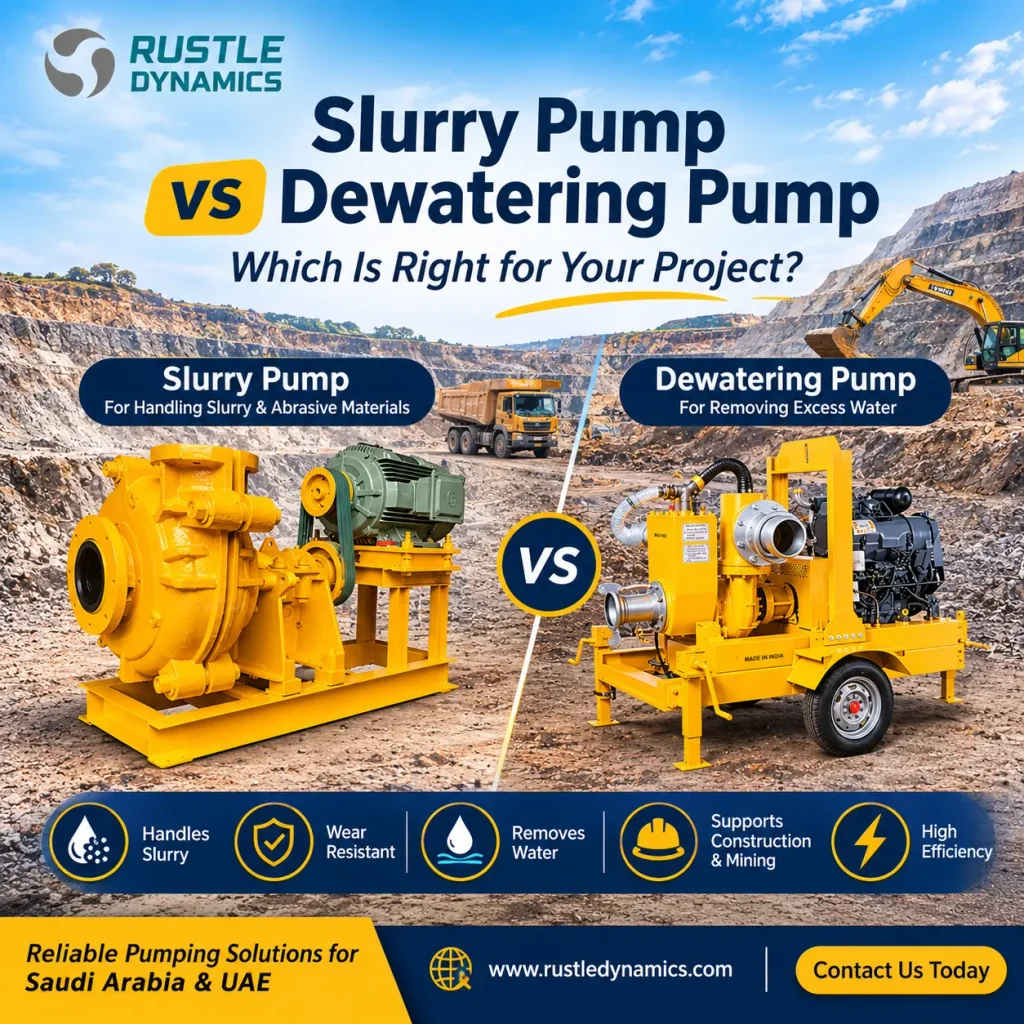
Two commonly used industrial pumping solutions are slurry pumps and dewatering pumps. Although both are designed to move liquids containing different levels of solids, they serve different purposes.
A common question among contractors and project engineers is: Should I choose a slurry pump or a dewatering pump?
The answer depends on the type of liquid, the amount and size of solid particles, the required flow rate and the operating conditions.
In this guide, we explain the differences between slurry pumps and dewatering pumps, their applications and the important factors to consider before purchasing. We also cover requirements for construction and mining projects in Saudi Arabia and the UAE.
1. What Is a Dewatering Pump?
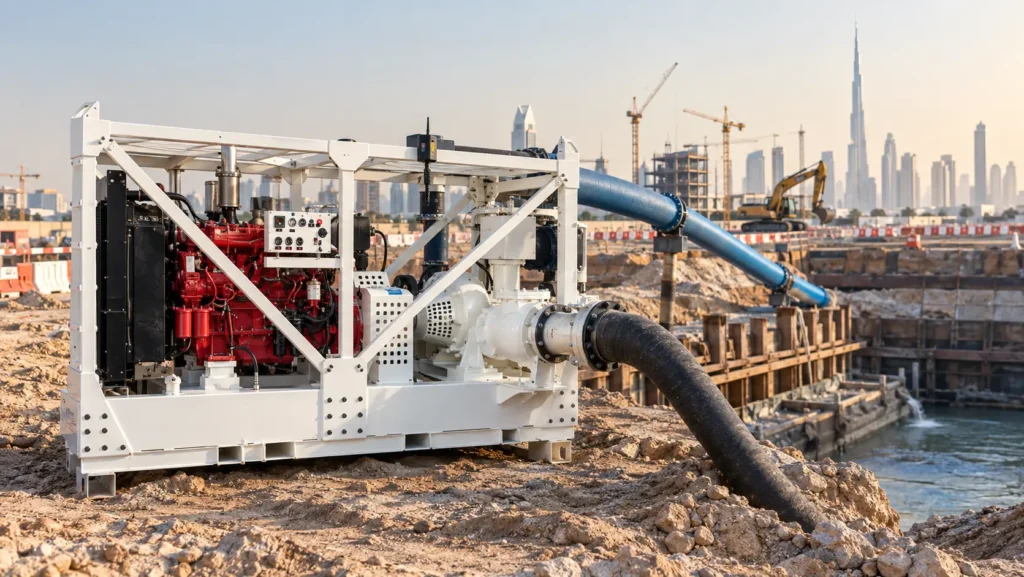
A dewatering pump is an industrial pumping solution designed to remove unwanted water from construction sites, mining areas, excavations, flooded locations and industrial facilities.
These pumps are commonly used when groundwater, rainwater or accumulated surface water needs to be removed quickly to maintain safe and workable conditions.
Depending on the pump design, a dewatering pump can handle clean water, muddy water and water containing a certain amount of suspended solids.
For demanding applications, industrial dewatering pumps are available in diesel-driven, electric and other configurations.
Common applications include:
- Removing groundwater from construction excavations.
- Draining accumulated rainwater from infrastructure projects.
- Removing water from mining pits and quarries.
- Floodwater removal and emergency drainage.
- Managing water in tunnels and underground construction.
- Supporting industrial wastewater and drainage operations.
For example, a contractor working on a basement excavation in Riyadh may need a high-capacity dewatering pump to continuously remove groundwater. Similarly, infrastructure projects in Dubai or Abu Dhabi may require portable dewatering pumps to manage water accumulation during construction.
Types of Dewatering Pumps
Different projects require different pumping arrangements.
| Pump type | Common application |
|---|---|
| Diesel dewatering pumps | Remote construction and mining sites |
| Electric dewatering pumps | Industrial facilities with reliable power |
| Self-priming dewatering pumps | Applications requiring air evacuation and suction-line priming |
| Portable dewatering pumps | Temporary drainage and site operations |
| High-capacity dewatering pumps | Large excavations and high-volume water removal |
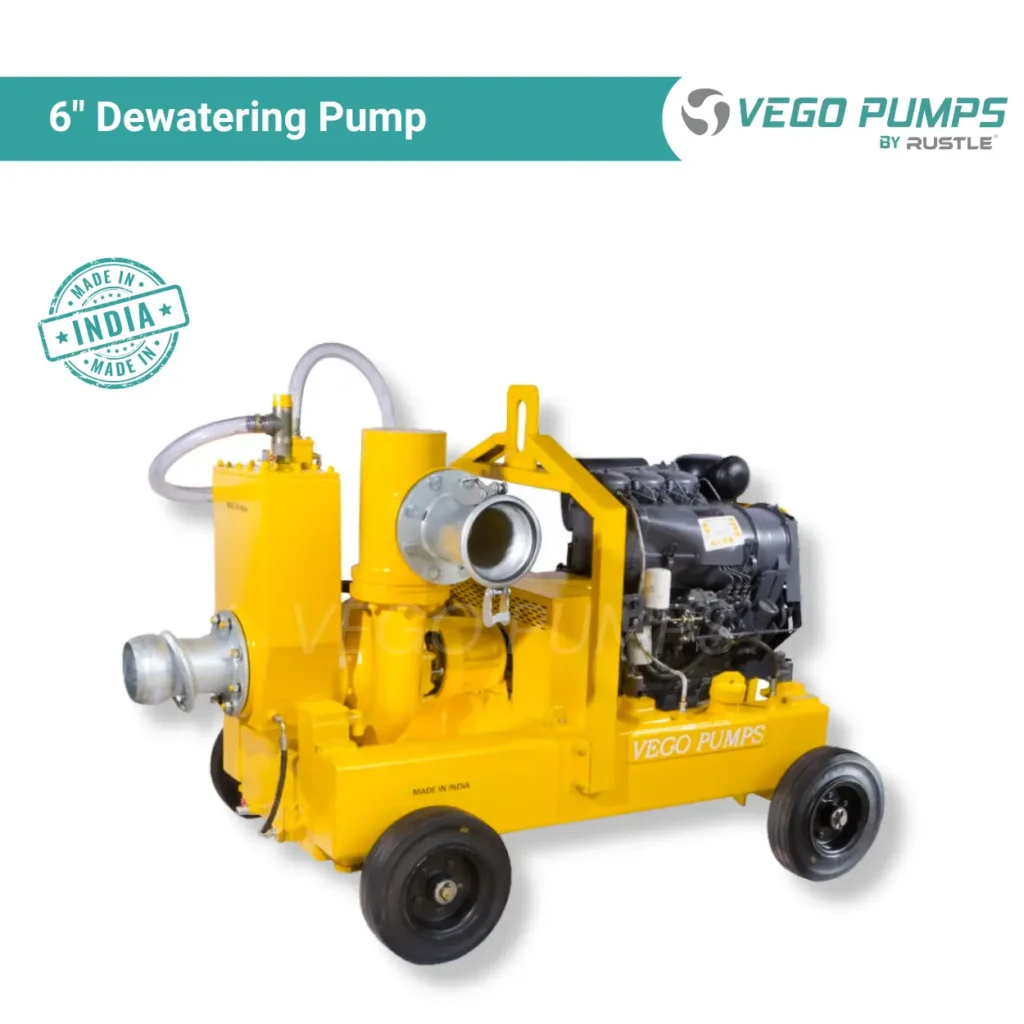
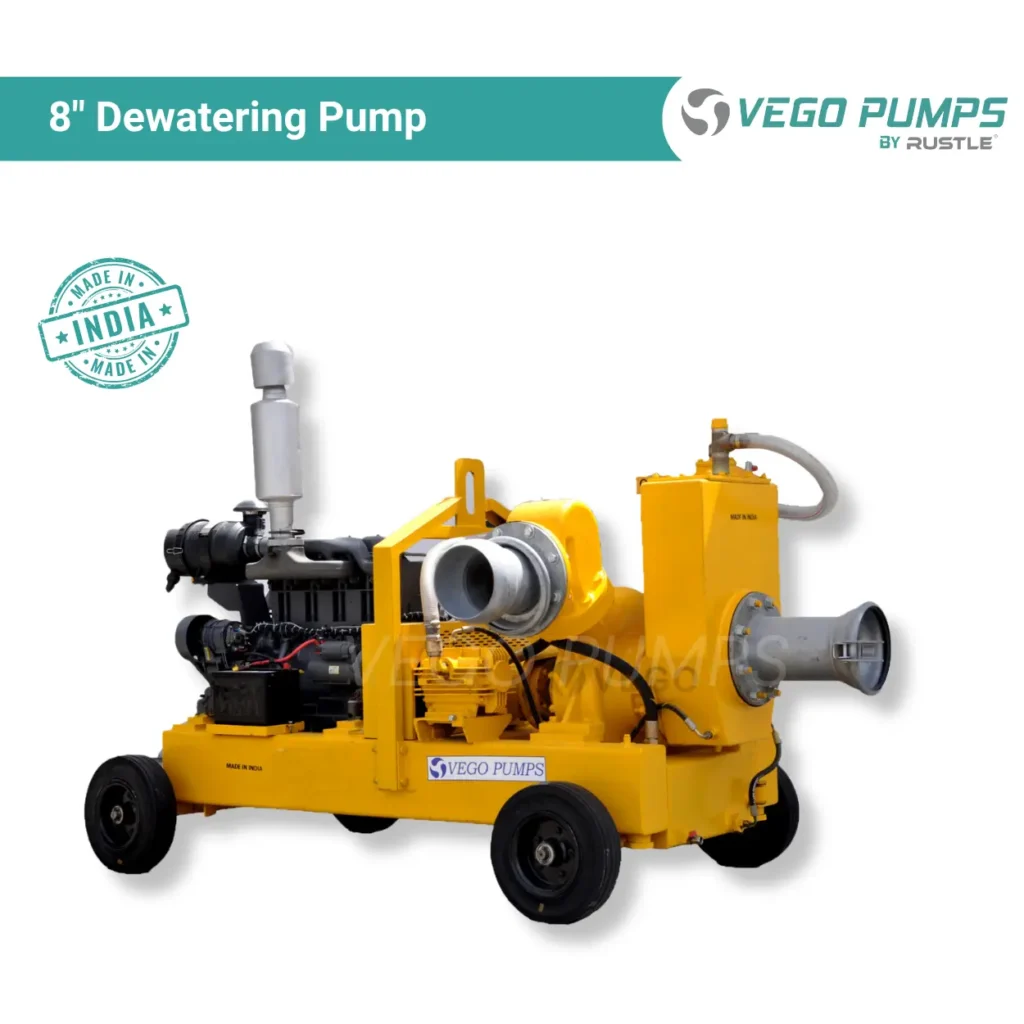
At RUSTLE Dynamics, we manufacture VEGO dewatering pumps in 6-inch to 12-inch sizes, with customised pump solutions available to suit project requirements.
2. What Is a Slurry Pump?
A slurry pump is designed to transfer a mixture of liquid and solid materials, commonly known as slurry.
Unlike ordinary water, slurry may contain sand, mud, mineral particles, coal, gravel and other abrasive materials. These particles can cause significant wear to standard pumping equipment.
Slurry pumps are therefore designed with construction features and material options suited to the type of slurry being handled.
They are widely used in mining, mineral processing, dredging, sand handling and industrial waste transfer.
Common slurry pump applications include:
- Transferring mineral slurry in mining operations.
- Handling sand and gravel mixtures.
- Moving abrasive industrial wastewater.
- Transferring mud and thick liquid mixtures.
- Supporting mineral processing plants.
- Handling solids-heavy industrial materials.
The most important consideration when selecting a slurry pump is not simply the presence of solid particles. Their size, concentration, shape, hardness and abrasive characteristics also matter.
For example, transferring water containing a small quantity of fine sand is different from pumping a thick mixture containing large mineral particles.
3. Slurry Pump vs Dewatering Pump: Key Differences
Although both pump types can handle certain solid-containing liquids, their primary operating requirements are different.
| Comparison | Dewatering Pump | Slurry Pump |
|---|---|---|
| Main purpose | Removing unwanted water | Transferring liquid-solid mixtures |
| Liquid handled | Water, muddy water and suspended solids within design limits | Slurry with higher solid content |
| Typical applications | Construction, mining, flood control | Mineral processing, sand and mud transfer |
| Solids handling | Depends on pump design and specified maximum solids | Designed around slurry particle characteristics |
| Wear considerations | Depends on water quality and solids content | Abrasion and erosion are major considerations |
| Selection priority | Flow rate, head and drainage requirements | Solids concentration, particle size, abrasiveness and flow |
| Common configurations | Diesel, electric and portable | Various industrial slurry pump configurations |
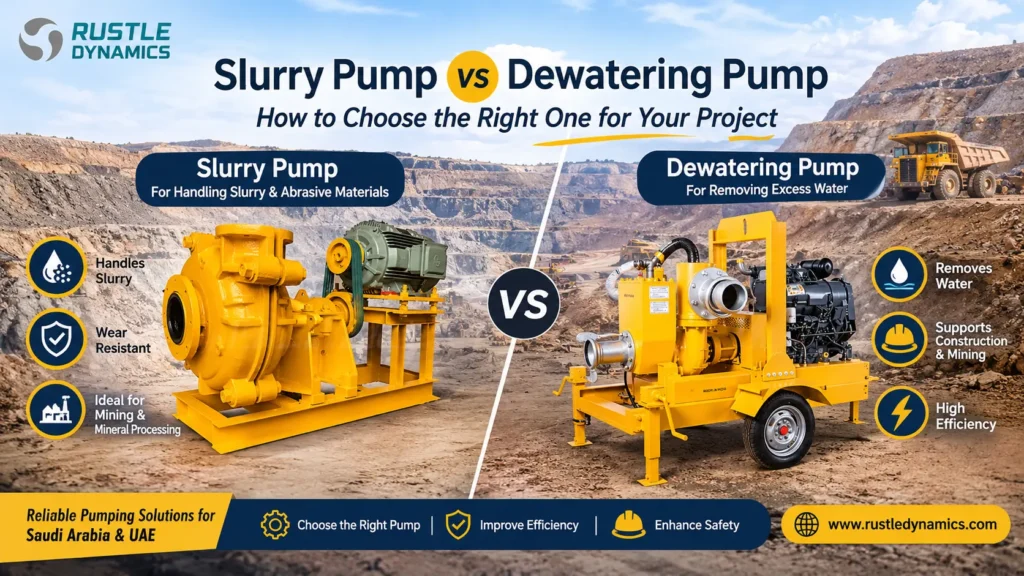
The key difference: A dewatering pump is primarily selected to remove accumulated water, whereas a slurry pump is selected to transfer a liquid mixture containing substantial quantities of solid materials.
Using the wrong pump can increase maintenance costs, reduce performance and cause premature component wear.
4. When Should You Choose a Dewatering Pump?
A dewatering pump is generally the right choice when the main objective is to remove accumulated water from a location.
Consider a construction project where rainwater collects inside a deep excavation. The priority is to remove the water quickly so that workers and machinery can continue operating.
In this situation, a suitable high-capacity dewatering pump may be more appropriate than a slurry pump.
Choose a dewatering pump when:
- You need to remove groundwater from excavations.
- Your project involves rainwater or floodwater removal.
- You need continuous drainage during construction.
- Water contains only the amount and size of solids supported by the pump specification.
- You require portable or trailer-mounted pumping equipment.
- You need diesel-powered pumping for remote project locations.
Example: Construction projects in Saudi Arabia
Large infrastructure developments around Riyadh, Jeddah and NEOM may involve deep excavations, foundation work and underground construction. Depending on site conditions, construction dewatering pumps help contractors manage groundwater and accumulated water.
For these applications, consider diesel dewatering pumps when grid electricity is unavailable or when equipment needs to be moved between work locations.
5. When Should You Choose a Slurry Pump?
A slurry pump is more suitable when the material being transferred contains a significant concentration of solid particles.
For example, mining operations may need to transfer a mixture of water and mineral particles from one processing area to another. Ordinary dewatering equipment may not be suitable for this duty.
Choose a slurry pump when:
- You are transferring mineral-rich slurry.
- The liquid contains a high concentration of sand or abrasive particles.
- The application involves continuous solids transfer.
- The pumped material has high density or viscosity.
- Wear-resistant materials are required for extended operation.
Example: Mining operations in Saudi Arabia and the UAE
Mining and mineral processing activities require pumping equipment suited to the actual material being transferred.
A slurry pump may be needed for mineral processing, while a separate mining dewatering pump may be required to remove groundwater from the mining pit.
This distinction is important: one mining project can require both types of pumps for different operations.
6. Important Factors to Consider Before Selecting a Pump
Before purchasing industrial pumping equipment, project engineers should evaluate the actual operating conditions rather than selecting a pump based only on its discharge size.
Here are six important factors.
1. Type of Liquid
Identify whether you are pumping clean water, muddy water, wastewater or a thick slurry mixture.
This is the first step in deciding between a dewatering pump and a slurry pump.
2. Solid Particle Size
Check the maximum particle size that the pump must handle.
A dewatering pump may handle suspended solids within its specified limits, but it should not automatically be assumed suitable for large or abrasive materials.
3. Required Flow Rate
Calculate how much liquid needs to be transferred per hour.
High-capacity dewatering pumps are useful for large construction excavations, mining pits and floodwater removal.
The required flow rate should be considered together with the actual system head.
4. Total Head and Discharge Distance
The total pumping head includes the vertical lift and losses caused by pipes, bends, valves and other system components.
Selecting a pump based only on maximum flow can lead to poor results if the required discharge head is not considered.
5. Pump Material and Wear Resistance
Material selection is particularly important for slurry applications.
Abrasive materials can wear the impeller, casing and other wetted components. Choose suitable materials based on the pumped liquid and expected operating conditions.
6. Power Source and Operating Hours
Consider whether your project requires diesel or electric pumping equipment.
Diesel water pumps are useful for remote construction and mining locations where electricity may not be readily available.
For long operating hours, also evaluate fuel consumption, maintenance accessibility, spare parts and service support.
7. Selecting the Right Pump for Saudi Arabia and UAE Projects
Construction, mining and infrastructure developments across Saudi Arabia and the UAE have different water management requirements.
A pump suitable for one project may not be suitable for another. Site conditions, water characteristics, operating hours and discharge arrangements should always be evaluated.
Saudi Arabia
Projects in Riyadh, Jeddah, Dammam and NEOM may require industrial dewatering pumps for excavation, infrastructure development and mining-related operations.
Contractors should consider:
- High-capacity pumping requirements.
- Equipment suitability for dusty outdoor environments.
- Diesel-powered options for remote locations.
- Continuous-duty operating requirements.
- Availability of maintenance and genuine spare parts.
United Arab Emirates
Construction and industrial projects in Dubai, Abu Dhabi and Sharjah may require pumping equipment for excavation drainage, underground construction, industrial wastewater and mining-related applications.
Buyers should evaluate:
- Required flow rate and discharge head.
- Water and solid particle characteristics.
- Equipment mobility and installation requirements.
- Power source availability.
- Local service and spare-parts support.
Choosing the right dewatering pump supplier is also important. Work with a manufacturer that can understand your application and recommend a suitable configuration instead of offering equipment based only on pipe diameter.
8. Why Choosing the Right Pump Manufacturer Matters
Selecting the correct pump is only one part of a successful pumping installation. The manufacturer’s technical knowledge, product range, manufacturing quality and after-sales support are equally important.
At RUSTLE Dynamics, our VEGO industrial dewatering pumps are developed for demanding water removal applications across construction, mining, infrastructure and industrial sectors.
Our product range includes:
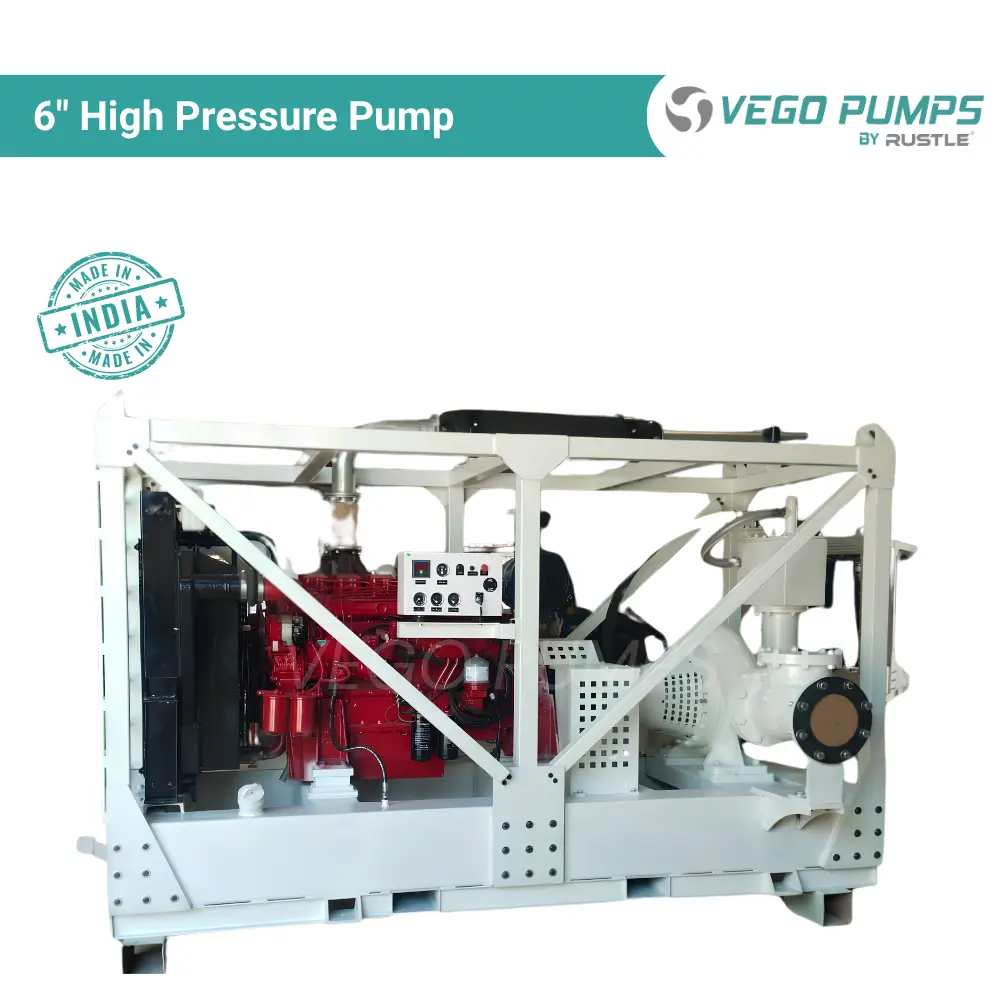
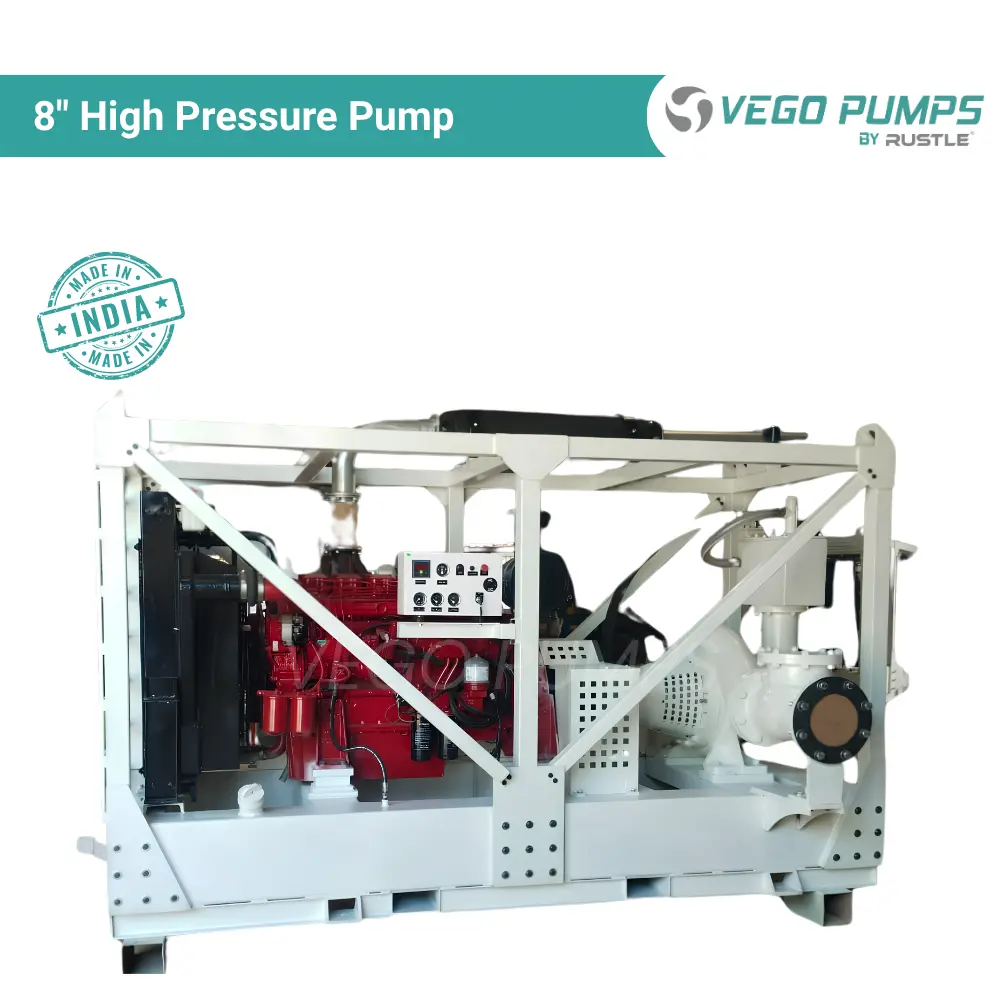
- 6-inch, 8-inch and 12-inch dewatering pumps.
- Diesel-driven pumping solutions.
- Self-priming pump configurations.
- High-capacity pumping options.
- Customised pump solutions based on project requirements.
We understand that every project has different pumping conditions. Flow rate, total head, liquid characteristics and operating requirements should be considered before recommending a suitable pump.
Whether you are looking for construction dewatering pumps, mining dewatering pumps or heavy-duty industrial water pumps, selecting the correct equipment can help improve operational reliability and reduce unnecessary maintenance.
9. Frequently Asked Questions
1. What is the main difference between a slurry pump and a dewatering pump?
A dewatering pump is primarily designed to remove accumulated water, while a slurry pump is designed to transfer liquid mixtures containing higher concentrations of solid particles.
2. Can a dewatering pump handle muddy water?
Yes, certain dewatering pumps can handle muddy water and suspended solids. However, the maximum particle size and solids-handling capability depend on the pump design and manufacturer specifications.
3. Which pump is better for construction sites?
A dewatering pump is generally suitable for removing groundwater, rainwater and accumulated water from construction excavations. A slurry pump is more suitable when transferring thick mixtures containing substantial quantities of solids.
4. Which pump is suitable for mining applications?
Both can be used in mining operations. Dewatering pumps remove groundwater from mining pits, while slurry pumps transfer mineral-rich mixtures during processing and material handling.
5. Are diesel dewatering pumps suitable for remote locations?
Yes. Diesel dewatering pumps are useful for remote construction and mining sites where a reliable electrical supply is unavailable.
6. How do I select the correct dewatering pump capacity?
Consider the required flow rate, total head, suction conditions, discharge pipe size, liquid characteristics and expected operating hours before selecting a pump.
7. Can RUSTLE Dynamics provide customised dewatering pumps?
Yes. RUSTLE Dynamics offers VEGO dewatering pumps in 6-inch to 12-inch sizes and can provide customised solutions based on project requirements and operating conditions.
Conclusion
Choosing between a slurry pump and a dewatering pump depends on what you need to move and where the equipment will operate.
If your main requirement is removing groundwater, rainwater or accumulated muddy water from construction and mining locations, a suitable dewatering pump is generally the right choice.
If you need to transfer a concentrated mixture of abrasive solids and liquid, a slurry pump is more appropriate.
For contractors and industrial buyers in Saudi Arabia and the UAE, evaluating flow rate, head, solids content, power source and operating conditions before purchasing can help avoid unnecessary equipment costs and operational problems.
Looking for a reliable dewatering pump manufacturer?
RUSTLE Dynamics offers VEGO industrial dewatering pumps for construction, mining, infrastructure and industrial water management applications.
Explore our pump range and contact our team to discuss your project requirements.
Website: https://rustledynamics.com/
Contact: +91 99942 04834