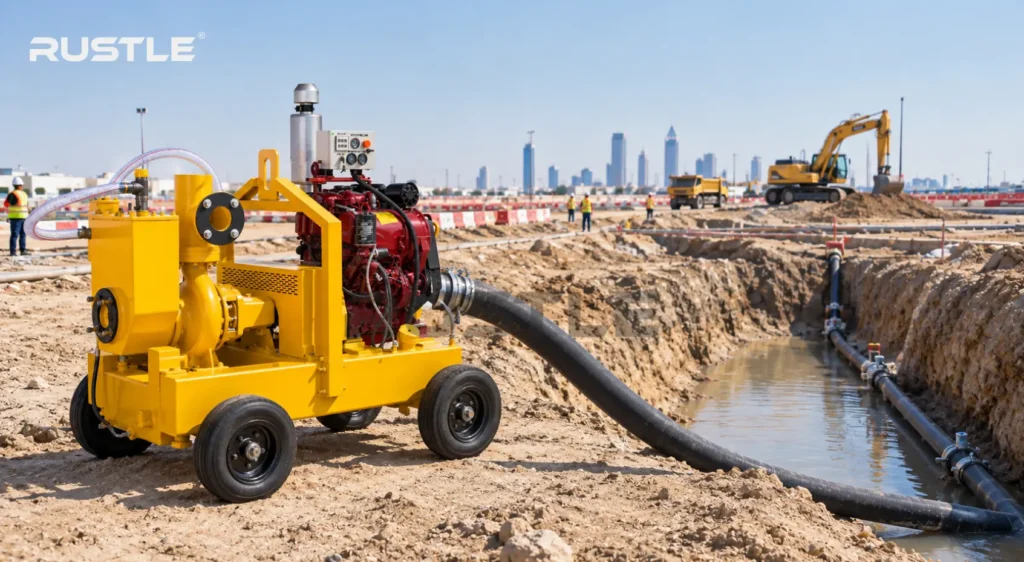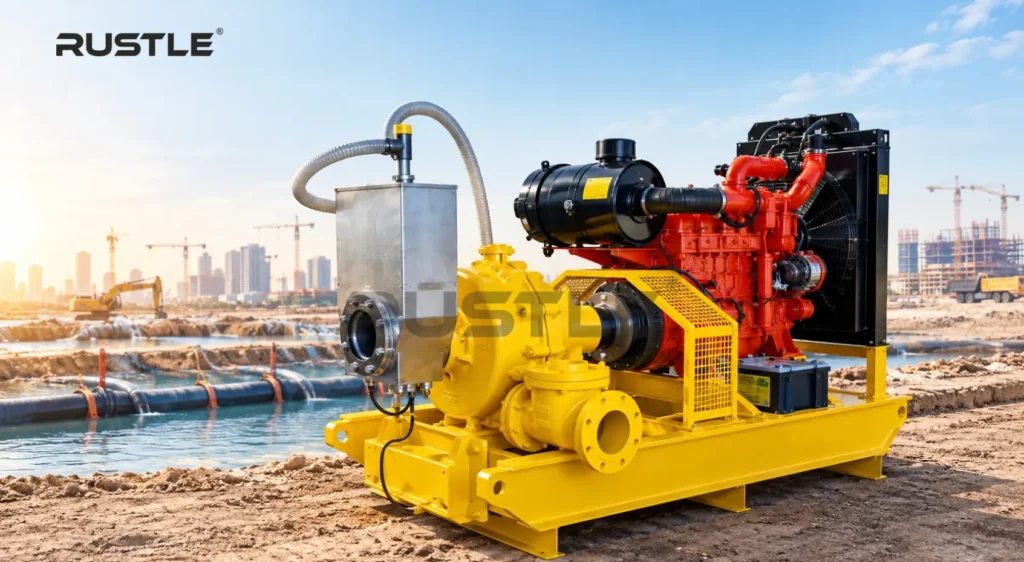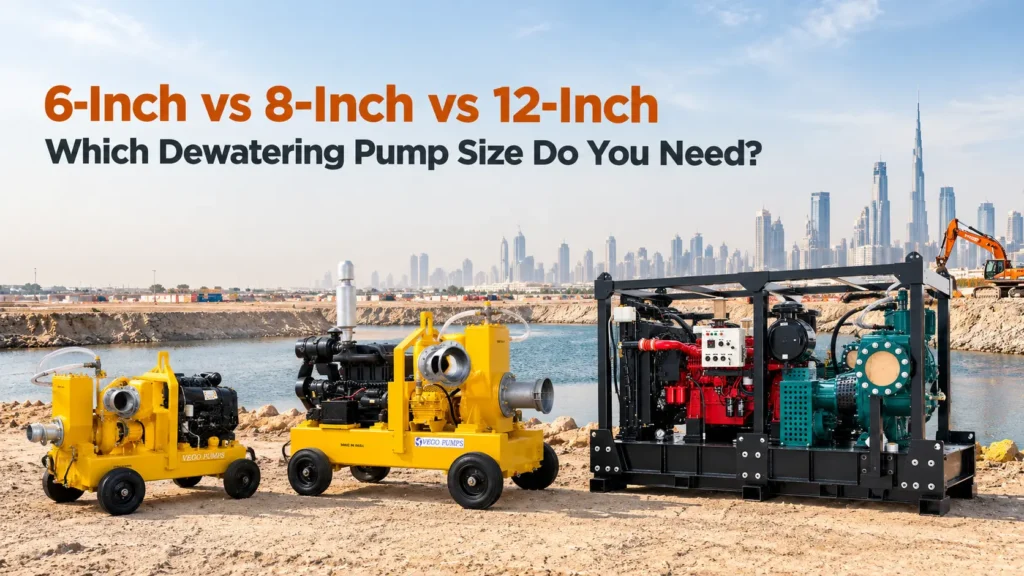
Choosing the right dewatering pump can make a significant difference to your project’s productivity, operating costs, and ability to handle water safely. Whether you are managing a construction site in Riyadh, a mining operation in Saudi Arabia, or an infrastructure project in Dubai or Abu Dhabi, selecting the correct pump size is essential.
A 6-inch pump may be sufficient for smaller excavations, while an 8-inch pump can offer a practical balance between flow capacity and portability. For large construction sites, mining operations, and flood-control projects, a 12-inch dewatering pump may be the better option.
However, the right pump size depends on more than the pipe diameter. Water volume, pumping distance, total head, solid content, and site conditions all influence the final decision.
In this guide, we compare 6-inch, 8-inch, and 12-inch dewatering pumps to help you choose the right solution for your project in Saudi Arabia or the UAE.
Quick Comparison: 6-Inch vs 8-Inch vs 12-Inch Dewatering Pumps
| Feature | 6-Inch Pump | 8-Inch Pump | 12-Inch Pump |
|---|---|---|---|
| Typical application | Small to medium excavation | Medium to large projects | Large-scale dewatering |
| Common use | Building sites, trenches, drainage | Infrastructure, mining, large construction | Major excavation, mines, flood control |
| Flow potential | Lower relative capacity | Medium to high capacity | Higher potential capacity |
| Mobility | Generally easier to transport | Requires more transport planning | Usually needs substantial transport and setup |
| Setup requirements | Comparatively simple | Moderate site planning | More space and access planning |
| Best suited for | Localised water removal | Higher-volume continuous pumping | Very high-volume water removal |
Note: These are general comparisons, not guaranteed performance ratings. Actual flow rate, head, solids-handling capability, and engine requirements depend on the pump model and installation.
1. What Determines the Right Dewatering Pump Size?
Before choosing a 6-inch, 8-inch, or 12-inch pump, understand the conditions in which the pump will operate.
Water volume: How quickly is water entering the excavation, mine, or flooded area? A site receiving continuous groundwater or heavy rainfall may require a higher-capacity pump.
Total pumping head: This includes the vertical lift and friction losses through the discharge pipe or hose. A pump that delivers a high flow rate at low head may perform differently when water must be discharged over a long distance or to a higher elevation.
Water quality: Clean water, muddy water, sewage, and water containing sand or debris require different pump configurations. Check the maximum solids passage and material compatibility before selecting a model.
Operating hours: If your project needs continuous pumping, engine performance, fuel consumption, maintenance access, and spare-parts availability become important considerations.
For projects in Saudi Arabia and the UAE, also consider high ambient temperatures, dust exposure, site accessibility, and the availability of fuel or electrical power.
2. When Should You Choose a 6-Inch Dewatering Pump?
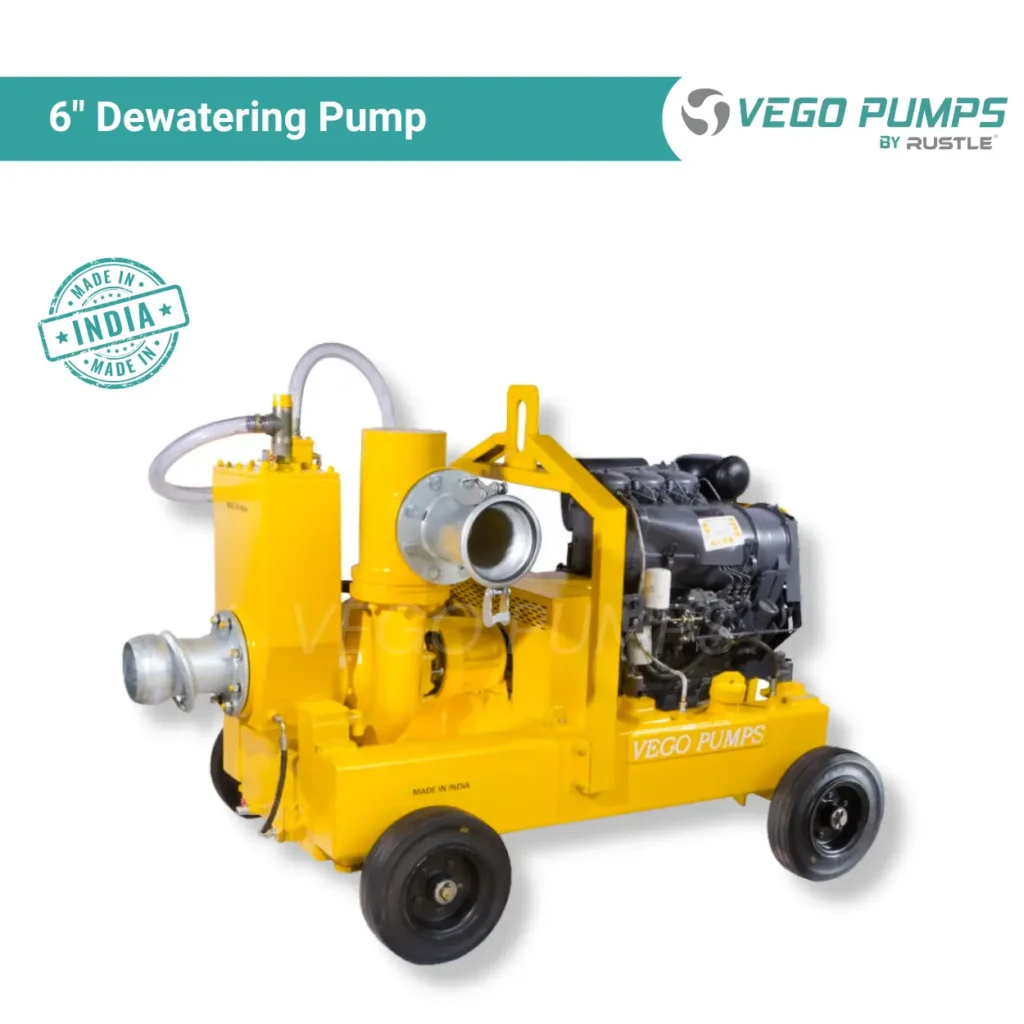
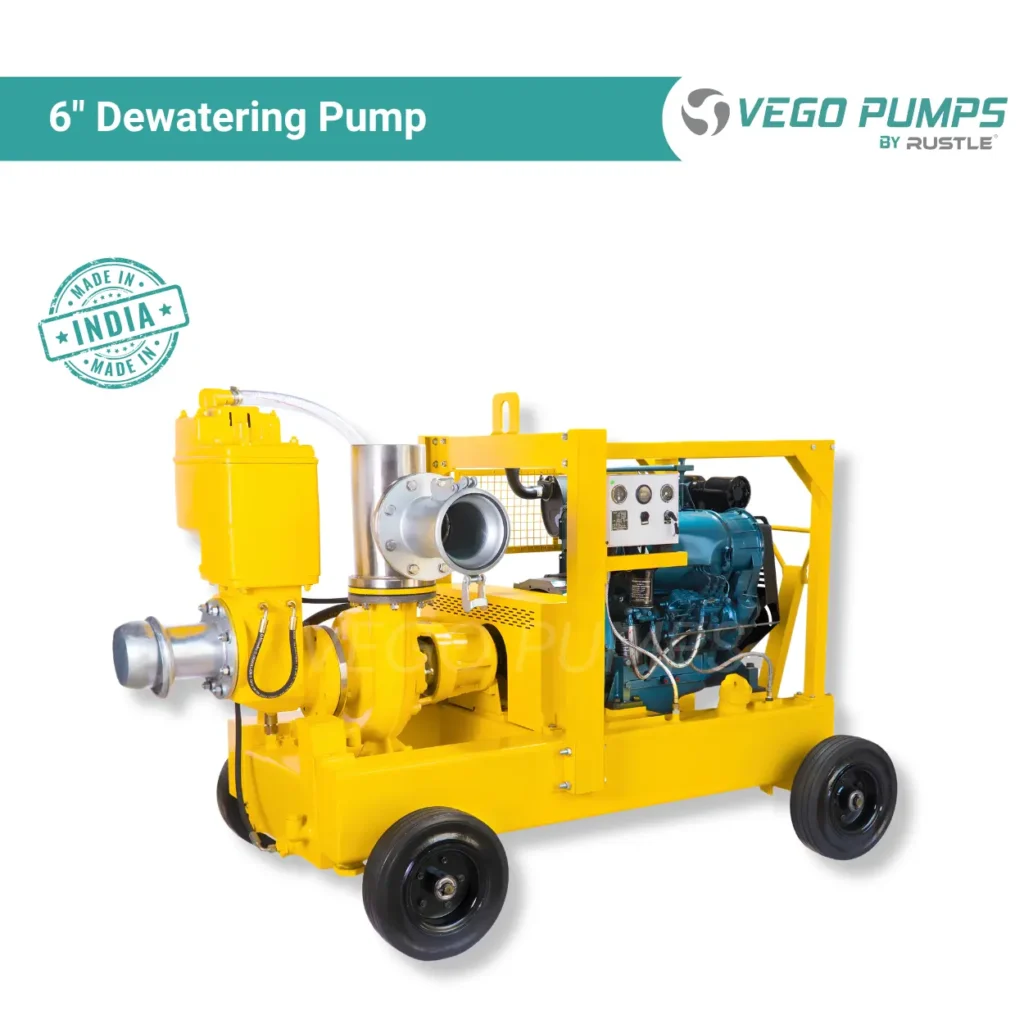
A 6-inch dewatering pump is a practical option for projects that need reliable water removal without the larger footprint of a high-capacity pumping system.
Best applications for a 6-inch pump
- Building foundations and smaller excavations
- Roadside drainage and utility trenches
- Construction-site groundwater removal
- Smaller mining and quarrying operations
- Temporary drainage and localised water accumulation
For example, a contractor working on a building foundation in Jeddah may need to remove groundwater or accumulated rainwater from a relatively confined excavation. A properly selected 6-inch self-priming dewatering pump may provide the required capacity while remaining easier to position and transport than a larger unit.
Advantages of a 6-inch dewatering pump
A smaller pump can be easier to move between work areas and may require less installation space. It can also be a sensible choice when the expected water inflow is moderate and the discharge route is relatively straightforward.
Diesel-driven options are useful where grid power is unavailable, while electric models may suit sites with a reliable power supply.
When is a 6-inch pump not enough?
If water inflow increases significantly, the discharge route is long, or the project requires a high continuous flow rate, a 6-inch pump may struggle to meet the target. In that situation, compare its actual pump curve with the required flow and total head before deciding whether to move to an 8-inch model.
3. When Is an 8-Inch Dewatering Pump the Better Choice?
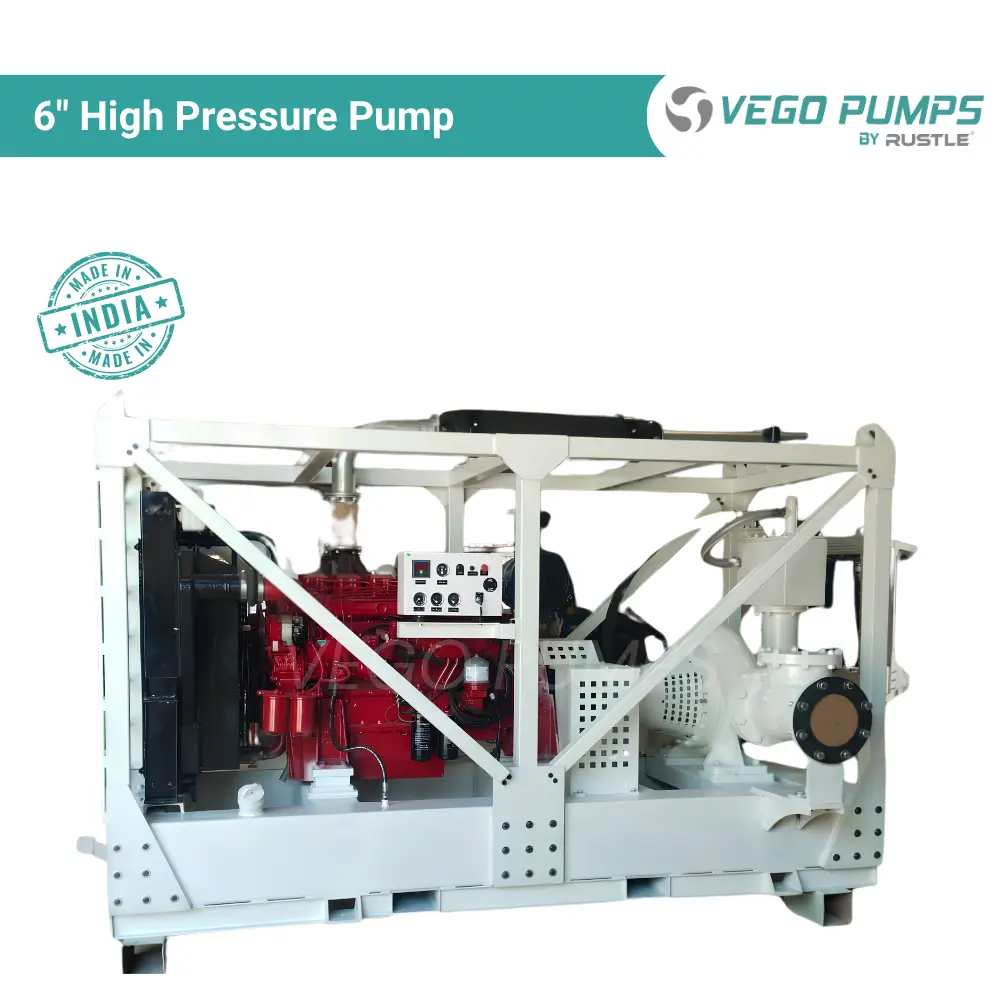
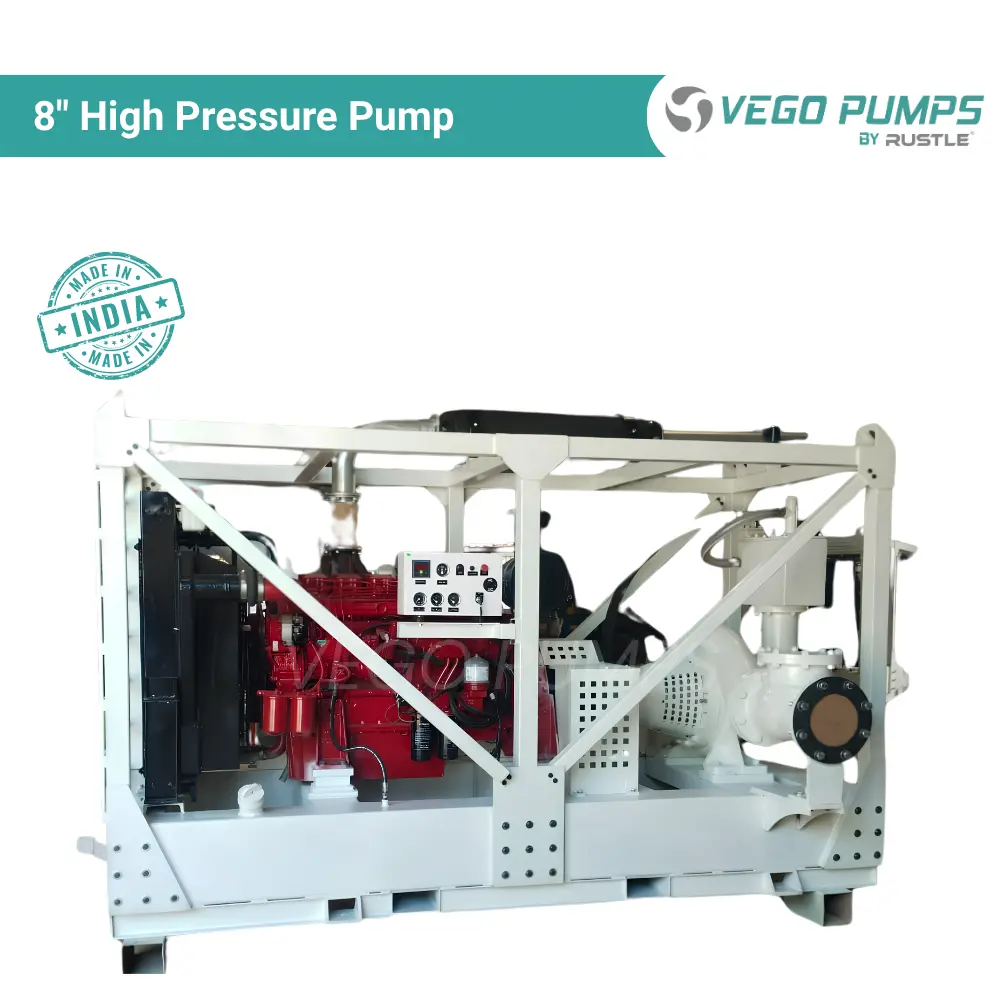
An 8-inch dewatering pump offers a useful middle ground for projects that have greater water-removal requirements than a smaller excavation can accommodate.
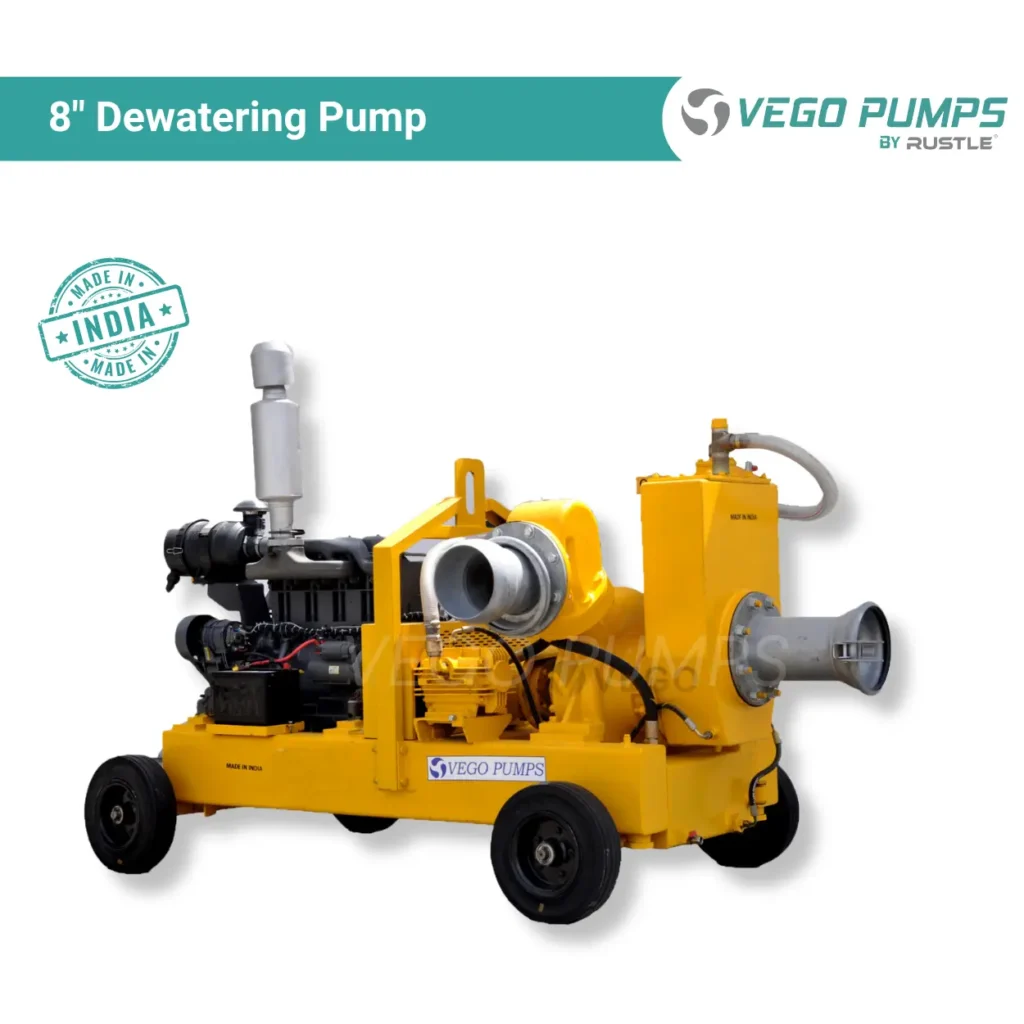
Best applications for an 8-inch pump
- Large construction and infrastructure projects
- Road and highway development
- Mining and quarry dewatering
- Industrial drainage
- Larger excavations and groundwater management
- Selected floodwater-removal operations
Imagine a contractor working on infrastructure development near Abu Dhabi. Water is collecting across a broad excavation, and the team needs to maintain workable conditions throughout the shift. An 8-inch pump may provide a suitable balance between pumping capacity, transport requirements, and operational flexibility.
Why choose an 8-inch dewatering pump?
An 8-inch model can handle more demanding applications when its hydraulic performance matches the site’s requirements. It may reduce the need to deploy several smaller pumps, although the result depends on the actual duty point and site layout.
For contractors managing multiple work areas, transport arrangements, hose connections, and access for maintenance should be considered alongside pump capacity.
An 8-inch pump can also be appropriate for mining operations in Saudi Arabia where water needs to be removed from working areas. However, abrasive slurry or water with large solids may require a specialised pump design rather than a standard dewatering configuration.
When should you move beyond an 8-inch pump?
Consider a 12-inch model when the required flow rate is substantially higher, water inflow is continuous, or the project involves large-scale drainage. Confirm that the larger pump can deliver the required flow at the actual operating head.
4. When Do You Need a 12-Inch Dewatering Pump?
A 12-inch dewatering pump is generally considered for demanding applications where large volumes of water must be moved efficiently.
Best applications for a 12-inch pump
- Large-scale construction and infrastructure
- Major excavation and foundation projects
- Mining operations with high water inflow
- Industrial water management
- Large drainage channels and flood-control operations
- Projects requiring high-volume, continuous water removal
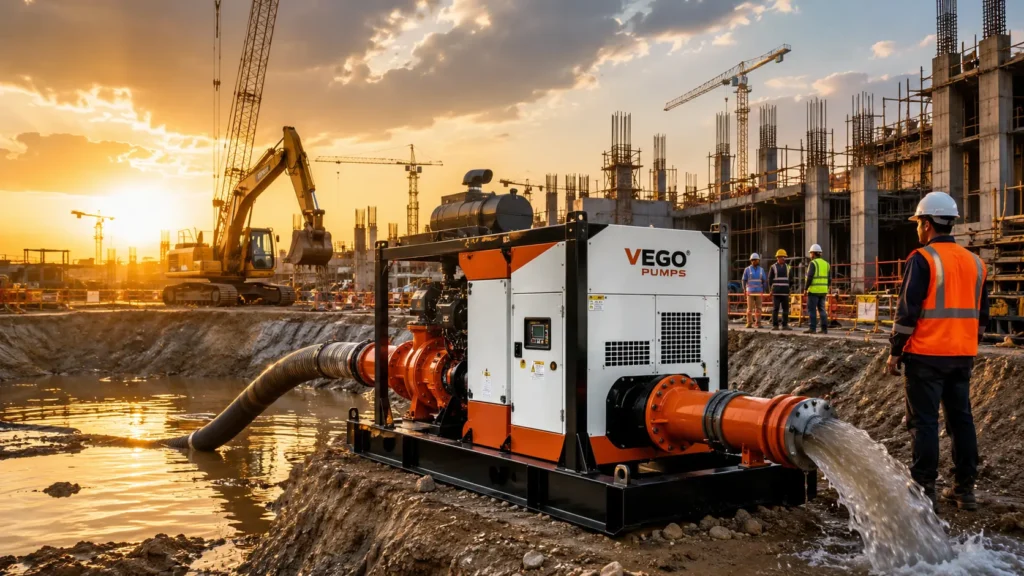
For instance, a large construction project in Riyadh may experience significant water accumulation across multiple excavation areas. If calculations show that smaller pumps cannot maintain the required drainage rate, a suitably configured 12-inch pump may be a more effective solution.
Advantages of a 12-inch dewatering pump
The main advantage is its potential to deliver a high flow rate when the pump, engine, pipework, and site conditions are correctly matched.
A high-capacity pump may reduce the number of pumping units required, simplify some large-scale operations, and help contractors maintain progress during periods of heavy water inflow.
However, a 12-inch pump also needs careful planning. Check transport access, installation space, suction conditions, discharge-pipe sizing, fuel requirements, and the availability of lifting equipment where necessary.
Is a 12-inch pump always better than a 6-inch or 8-inch pump?
No. An oversized pump can increase capital and operating costs without delivering a meaningful benefit if the site does not need its capacity. The best pump is the one that meets your required flow and head reliably, with an appropriate operating margin.
5. How Much Water Can a 6-Inch, 8-Inch, or 12-Inch Pump Handle?
There is no single flow rate that applies to every pump with the same discharge diameter. Two 8-inch pumps, for example, can have different flow and head performance because of their impeller design, rotational speed, engine power, and hydraulic configuration.
As a starting point, establish three figures:
- Required flow rate: Estimate how much water must be removed per hour.
- Total dynamic head: Calculate the vertical lift and friction losses through the complete discharge route.
- Solids-handling requirement: Determine whether the water contains sand, mud, stones, or other debris.
As an illustration, a pump advertised with a maximum flow of 400 m³/hr will not necessarily deliver that flow at every discharge height. Its actual output must be checked against the manufacturer’s performance curve.
For accurate selection, ask your pump supplier for the performance curve at your required duty point rather than choosing solely by the inlet or outlet diameter.
6. Which Dewatering Pump Is Best for Saudi Arabia and the UAE?
Project conditions vary across the Gulf region, so your choice should reflect the actual application rather than the location alone.
Saudi Arabia
For construction projects in Riyadh, Jeddah, and Dammam, consider excavation size, groundwater conditions, drainage requirements, and the distance to the discharge point. Mining and major infrastructure projects may need 8-inch or 12-inch pumps when water inflow is high.
Where temporary drainage is required during heavy rainfall, contractors should estimate the expected inflow and plan for safe discharge and backup capacity.
United Arab Emirates
For construction and infrastructure projects in Dubai, Abu Dhabi, and Sharjah, consider the size of the excavation, the expected water volume, access restrictions, and the available power source.
A 6-inch pump may suit a smaller work area, an 8-inch model may be appropriate for a larger excavation, and a 12-inch unit may be suitable for high-volume drainage. These are starting points, not fixed rules: actual pump selection must be based on site calculations.
For both countries, high temperatures and dusty working conditions make routine inspection, correct maintenance intervals, and suitable engine cooling and filtration important.
7. Five Mistakes to Avoid When Selecting a Dewatering Pump
1. Choosing by pipe diameter alone. A 12-inch connection does not guarantee a particular flow rate or pumping head.
2. Ignoring discharge distance. Long hoses, bends, and elevation changes create friction losses that can reduce performance.
3. Overlooking solids content. Muddy water and abrasive material can require different impeller designs, wear components, or pump types.
4. Selecting without considering operating costs. Fuel consumption, maintenance, transport, and spare-parts availability all contribute to the total cost of ownership.
5. Failing to plan for changing conditions. Rainfall, groundwater inflow, and excavation depth can change during a project. Consider whether standby equipment or additional pumping capacity is necessary.
8. Find the Right Dewatering Pump for Your Project
At RUSTLE, VEGO dewatering pumps are available in 6-inch to 12-inch configurations, with customised pump solutions available for suitable project requirements.
Whether you are looking for a 6-inch dewatering pump for construction, an 8-inch pump for infrastructure work, or a 12-inch dewatering pump for high-volume applications, the selection should start with your required flow rate, total head, water conditions, and operating environment.
Our team can help you assess the application and identify a suitable pump configuration for projects in Saudi Arabia, the UAE, and other export markets.
Planning a construction, mining, or flood-control project? Contact RUSTLE / VEGO Pumps at rustledynamics.com to discuss your requirements.
To help identify a suitable model, share your required flow rate, pumping height, discharge distance, water type, and preferred power source.
Frequently Asked Questions
Is a 6-inch or 8-inch dewatering pump better for construction?
A 6-inch pump may be suitable for smaller excavations and moderate water inflow. An 8-inch pump may be a better choice for larger sites or higher pumping requirements. The correct option depends on the required flow rate and total head.
When should I use a 12-inch dewatering pump?
Choose a 12-inch pump when your calculated water-removal requirement calls for a high-capacity unit, such as for major excavations, mining, or large drainage operations. Confirm the actual performance at your required operating head.
Can dewatering pumps handle muddy water?
Some dewatering pumps can handle muddy water and solids, but the allowable particle size and abrasion resistance depend on the specific model. Check the manufacturer’s solids-passage limit and materials before pumping water containing sand, gravel, or debris.
Which pump size is suitable for flood control in Dubai or Riyadh?
The answer depends on the flooded area, water depth, inflow rate, discharge distance, and available drainage route. A 6-inch pump may suit localised water removal, while larger operations may require 8-inch or 12-inch pumps, multiple units, or a planned combination.
Are diesel dewatering pumps suitable for sites without grid electricity?
Yes. Diesel-driven dewatering pumps can be useful where reliable electrical power is unavailable. Confirm fuel availability, ventilation, emissions requirements, noise restrictions, and safe operating arrangements for the site.
How do I request a dewatering pump quotation from RUSTLE / VEGO?
Provide your project location, required flow rate, total pumping head, discharge distance, water type, solids content, and preferred power source. These details help the team recommend a suitable configuration and prepare a more relevant quotation.