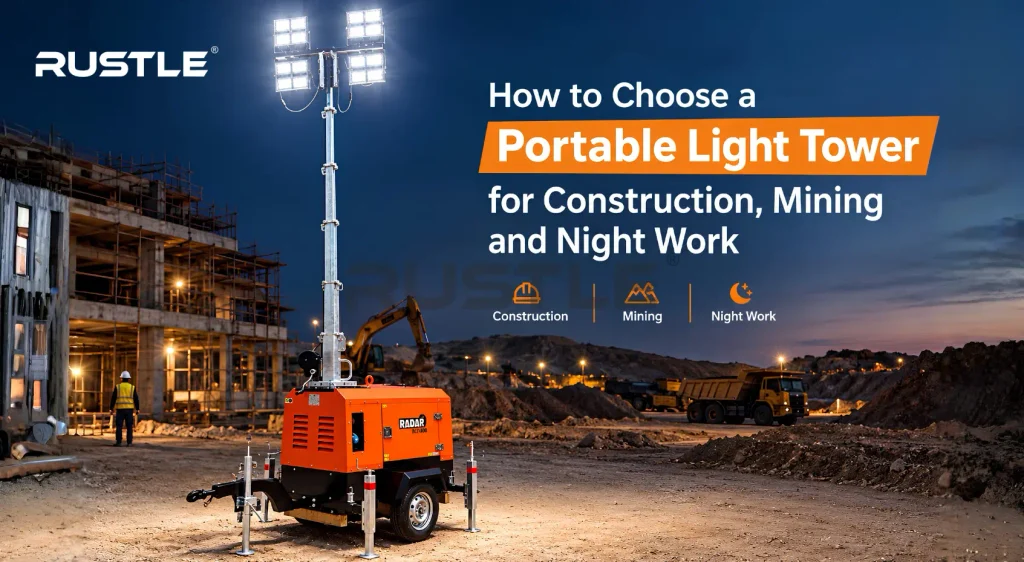
Reliable lighting is essential when industrial work continues after sunset. Whether it is a construction project in Riyadh, a mining operation in Saudi Arabia, an oil and gas facility in Abu Dhabi, or an infrastructure development in Dubai, proper site lighting helps workers carry out their activities safely and efficiently.
However, choosing the right light tower is not always straightforward. Diesel vs Solar vs Hybrid Light Towers all offer different advantages. The best option depends on your working hours, site location, available power supply, operating costs, and lighting requirements.
For remote industrial projects, the decision becomes even more important. A light tower must provide dependable illumination without creating unnecessary fuel expenses, maintenance difficulties, or interruptions to work.
In this guide, we compare diesel, solar, and hybrid light towers to help contractors and industrial buyers in Saudi Arabia and the UAE select the right lighting solution.
1. Why Are Light Towers Important for Remote Industrial Projects?
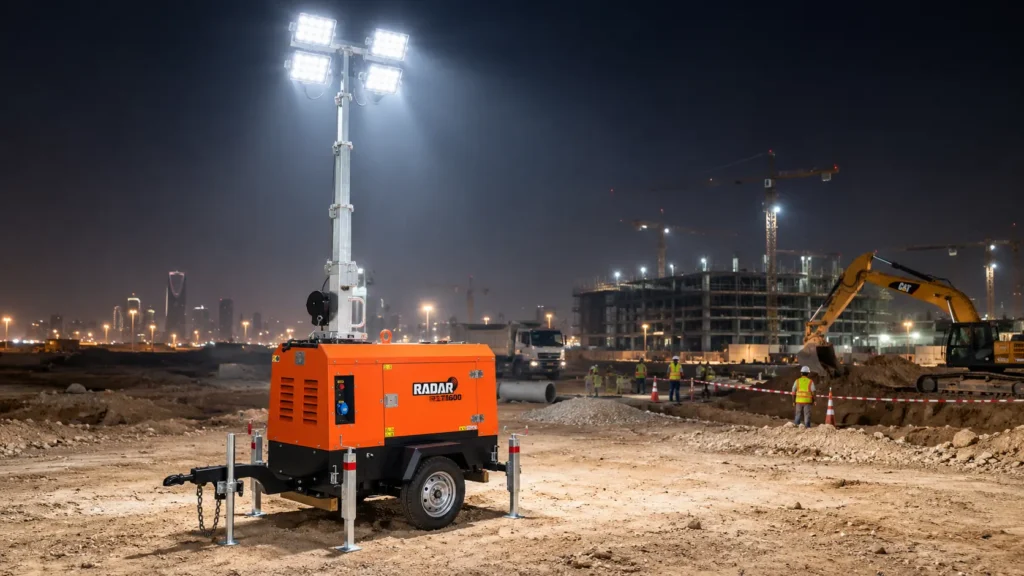
Many industrial projects operate in locations where permanent electrical infrastructure is unavailable or difficult to access.
Construction sites, mining areas, highways, oil fields, ports, and temporary infrastructure projects often require independent lighting systems.
A mobile light tower provides illumination across large working areas without depending entirely on permanent site lighting.
Common applications include:
- Construction and infrastructure development
- Mining and quarry operations
- Oil and gas facilities
- Road construction and highway maintenance
- Emergency response and flood-control operations
- Ports, logistics yards, and industrial facilities
- Remote maintenance and temporary work sites
In Saudi Arabia and the UAE, high temperatures, dust exposure, remote locations, and extended operating schedules make equipment selection particularly important.
2. Diesel Light Towers: A Reliable Choice for Extended Operations
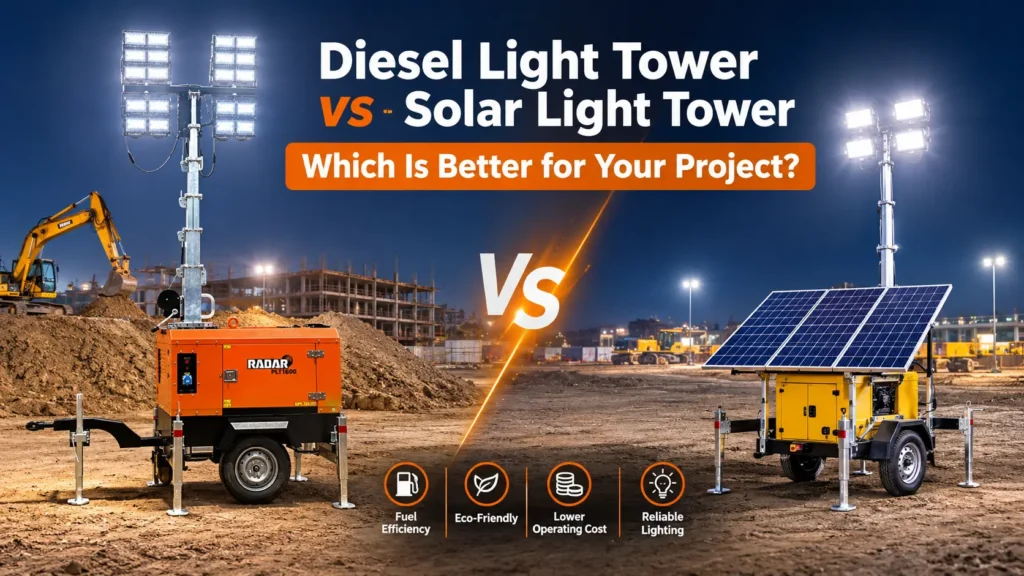
Diesel light towers use a diesel engine to generate electricity, which powers the lighting system. They are widely used in construction, mining, industrial maintenance, and other applications where independent power generation is required.
For remote projects without access to a reliable electrical connection, diesel-powered lighting can be a practical solution.
Key advantages of diesel light towers
Independent operation: Diesel light towers can operate without depending on grid electricity, provided fuel is available.
Suitable for extended work schedules: They can support night-shift operations and long working hours, depending on fuel-tank capacity and operating conditions.
Flexible deployment: Trailer-mounted and mobile configurations can be transported between different project locations.
Established technology: Diesel engines and generator systems are familiar to many industrial maintenance teams.
What should you consider?
Fuel consumption is one of the main operating expenses of diesel light towers. The engine also requires regular servicing, oil changes, filter replacement, and other maintenance.
Noise and exhaust emissions may also be important considerations, particularly near residential areas, enclosed locations, and environmentally sensitive sites.
For example, a mining contractor operating in a remote area of Saudi Arabia may prefer a diesel light tower when the project requires extended illumination and there is no dependable electrical supply.
A diesel model can be a suitable choice when consistent operation is the priority and fuel logistics are manageable.
3. Solar Light Towers: An Energy-Efficient Lighting Option
Solar light towers use photovoltaic panels to collect sunlight and convert it into electrical energy. The electricity is stored in batteries and used to power LED lighting when required.
Unlike conventional diesel models, solar light towers do not need diesel fuel to generate electricity for their lighting system.
Key advantages of solar light towers
Reduced fuel dependency: Solar-powered lighting can reduce or eliminate the need for diesel consumption for illumination.
Lower routine engine maintenance: Since a solar lighting system does not require a diesel generator engine, it avoids engine-related servicing.
Quiet operation: Battery-powered lighting operates without the noise of a diesel generator.
Renewable energy: Solar panels use available sunlight, making them an attractive option for projects looking to reduce their dependence on fossil fuels.
Are solar light towers suitable for Saudi Arabia and the UAE?
Both countries receive substantial sunlight, making solar-powered lighting worth considering for suitable outdoor applications.
However, sunlight availability alone does not determine performance.
Battery capacity, solar panel output, charging time, LED power consumption, and required operating hours all influence how well a solar light tower performs.
For example, a road maintenance project in Dubai that requires lighting for a limited number of hours at night may benefit from a properly sized solar light tower.
However, a remote mining project requiring continuous illumination throughout the night and during extended periods of poor charging conditions may need additional battery capacity or another power source.
What are the limitations?
Solar light towers depend on sufficient energy storage and charging conditions. Several consecutive cloudy days, dust-covered panels, battery ageing, and high lighting demand can affect available operating time.
In dusty industrial environments, regular solar panel cleaning is also important.
Before purchasing a solar light tower, check its battery autonomy, charging requirements, rated lighting output, and expected performance under local environmental conditions.
4. Hybrid Light Towers: Combining Diesel and Solar Power
Hybrid light towers combine two or more energy sources, commonly solar panels, battery storage, and a diesel generator.
The solar panels generate electricity during daylight hours, while batteries store energy for nighttime lighting. Depending on the system design, a diesel generator can provide additional power when battery energy becomes insufficient.
This arrangement can help balance operating reliability and fuel efficiency.
Key advantages of hybrid light towers
Reduced diesel consumption: Solar energy and stored battery power can reduce generator operating hours, depending on the system configuration and lighting demand.
Flexible power management: The system can use stored energy and generator backup according to its operating controls.
Suitable for changing site requirements: Hybrid systems can be useful where lighting demand varies between working shifts or project stages.
Potentially lower operating costs: Reduced generator runtime can help lower fuel and engine maintenance expenses compared with an equivalent diesel-only operating arrangement.
Where are hybrid light towers useful?
Hybrid light towers can be considered for large construction sites, mining projects, oil and gas facilities, and remote infrastructure developments.
For example, a construction project in Abu Dhabi may require lighting throughout the night while operating in a location with limited electrical infrastructure. A hybrid light tower can use stored solar energy for lighting and rely on generator backup when additional energy is required.
The actual benefits depend on battery capacity, solar generation, generator sizing, lighting demand, and operating schedules.
5. Diesel vs Solar vs Hybrid Light Towers: Quick Comparison
| Feature | Diesel Light Tower | Solar Light Tower | Hybrid Light Tower |
|---|---|---|---|
| Primary energy source | Diesel generator | Solar panels and batteries | Solar, batteries and generator |
| Fuel requirement | Required | Not required for lighting | Depends on generator usage |
| Noise | Engine noise | Quiet operation | Depends on generator operation |
| Engine maintenance | Required | No diesel engine servicing | Required if generator is included |
| Night operation | Depends on fuel and system capacity | Depends on stored battery energy | Depends on battery and generator backup |
| Environmental impact | Fuel combustion emissions | No operational exhaust from solar lighting | Potentially reduced generator emissions |
| Best suited for | Extended remote operations | Suitable outdoor sites with adequate solar charging | Sites requiring flexibility and backup power |
Note: Actual performance varies by manufacturer, model, battery capacity, lighting configuration, and operating conditions.
6. Which Light Tower Is Best for Saudi Arabia and the UAE?
There is no single light tower that is ideal for every industrial project. The right choice depends on the working environment and the project’s lighting requirements.
For construction projects in Riyadh and Jeddah
Large construction projects may require dependable lighting across excavation areas, material storage zones, access roads, and equipment operating areas.
Diesel light towers can be useful for extended operations where fuel supply is available. Hybrid models may be worth considering where reducing generator runtime is an important objective.
For mining and remote industrial projects in Saudi Arabia
Mining operations often take place far from permanent electrical infrastructure. Equipment must support demanding working schedules and changing site conditions.
Diesel light towers can be suitable where extended operation is required. Hybrid systems can provide another option when solar charging, battery storage, and generator backup are properly designed.
For infrastructure projects in Dubai and Abu Dhabi
Road construction, building developments, and industrial maintenance may have different lighting schedules.
Solar light towers can be considered for applications with predictable nighttime lighting requirements and sufficient daytime charging. Hybrid systems may offer additional flexibility for projects with changing energy demands.
7. Five Important Factors to Check Before Buying a Light Tower
Before choosing a diesel, solar, or hybrid light tower, consider these five points.
1. Required operating hours
Determine how many hours the lighting system must operate every night. A project requiring 4–6 hours of lighting has different energy requirements from one requiring 10–12 hours.
2. Lighting coverage
Check the required working area, mast height, LED floodlight output, beam distribution, and illumination levels. Do not select equipment based only on the number of LED lamps.
3. Site conditions
Dust, high temperatures, wind, uneven ground, and frequent transportation can affect equipment selection and maintenance requirements.
4. Total operating cost
Consider the purchase price, diesel consumption, battery replacement, servicing, transportation, and expected equipment life.
5. Service and spare-parts availability
For remote industrial projects, access to technical support and genuine spare parts is important. Equipment downtime can affect project schedules and operating expenses.
8. How to Choose the Right Light Tower for Your Project
A simple way to make the decision is to start with your daily lighting requirements.
- Choose a diesel light tower when extended operation, independent power generation, and established engine technology are priorities.
- Choose a solar light tower when your lighting schedule matches available battery capacity and solar charging conditions, and reducing fuel dependency is important.
- Choose a hybrid light tower when you need a combination of stored solar energy and generator backup for changing operating requirements.
At RUSTLE, we understand that industrial lighting requirements differ from one project to another. Our Radar Light Tower solutions are intended for demanding industrial and infrastructure applications.
Whether you are managing a construction site in Saudi Arabia, a mining operation in the UAE, or a remote industrial project, selecting the right lighting equipment starts with understanding your actual working conditions.
Looking for an industrial light tower for your next project?
Visit RUSTLE Dynamics to explore our light tower solutions and discuss your requirements with our team.
Frequently Asked Questions
1. Which is better: diesel or solar light towers?
Diesel light towers are suitable for extended operations where fuel is available, while solar light towers are useful when battery capacity and solar charging can meet the required lighting hours. The best option depends on your application.
2. Are solar light towers suitable for Saudi Arabia and the UAE?
Yes. The region’s strong solar potential makes solar light towers suitable for many outdoor applications. However, battery capacity, dust accumulation, charging conditions, and nighttime operating hours must be considered.
3. What is the main advantage of a hybrid light tower?
A hybrid light tower combines battery storage and solar generation with generator backup in many configurations. This can reduce diesel generator runtime while maintaining an additional power source when needed.
4. How many hours can a light tower operate at night?
Operating time depends on the model, fuel-tank capacity, battery storage, lighting power, and system configuration. Always check the manufacturer’s rated runtime and battery autonomy.
5. Which light tower is best for remote mining projects?
Diesel and hybrid light towers are both worth considering for remote mining operations. Diesel models can support extended operation with adequate fuel supply, while hybrid models may reduce generator usage when solar charging and battery capacity are sufficient.
6. Are LED light towers better for industrial applications?
LED lighting can provide efficient illumination, long service life, and lower power demand compared with many traditional lighting technologies. Actual performance depends on LED quality, optical design, and the required illumination levels.
7. What should I check before purchasing an industrial light tower?
Check lighting output, coverage area, mast height, operating hours, energy source, fuel or battery capacity, environmental protection, transport configuration, maintenance requirements, and spare-parts availability.